

 daniel chigunwe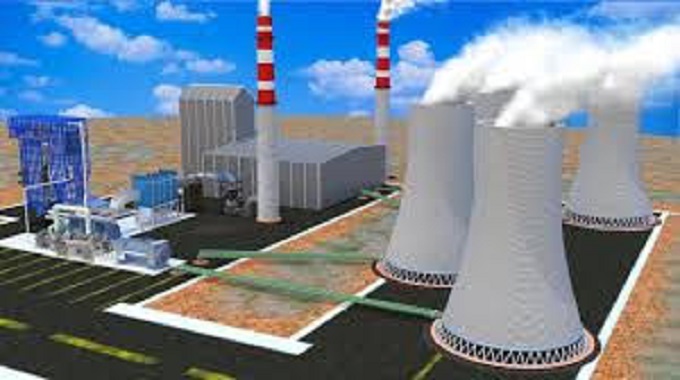
Business Writer
THE construction of Sabi Star Mine’s 15 megawatt (MW)thermal power plant in Buhera, Manicaland Province, is 90 percent complete with the project set for commissioning next year.
At the moment, the lithium mine is running on a heavy-duty diesel-powered generator costing the mine nearly US$1 million per month.
The power plant will reduce grid dependence, which affects operations due to limited generation capacity in the country, which has been worsened by low water levels at Kariba, following the El Nino-induced drought.
Zimbabwe’s largest power sources are Hwange Power Station, a coal-fired plant, and Kariba Power Station, a hydropower facility.
The Government recently upgraded the two facilities output capacity, but droughts, faults and growing demand often conspire to render that insufficient.
Constrained internal generation capacity means State power utility Zesa Holdings must balance demand and supply through rationing.
While the Government is working on measures to increase power generation, it has issued several licences to independent producers to complement its efforts.
Sabi Star mine manager, Engineer Oswald Makonese, said the thermal power station, which will cost US$25 million, will begin in January next year.
“The power plant is now 90 percent complete and we expect to start the commissioning processes in January next year.
“We are spending close to US$1 million per month to run the mine on a diesel-powered generator and we are looking forward to cutting down our operational costs once we switch to the low-cost thermal power plant,” he said.
Construction of the thermal power plant began last year.
“The mine system has a requirement of 12MW and there are plans to feed the additional 3MW into the national grid for the benefit of the near-by community.
“The over-arching benefit of the project is that it has already created employment for hundreds of people in Buhera.
“The development of this infrastructure will provide a boost to the local economy through the income multiplier effect,” said Eng Makonese.
On the potential hazards of thermal effluence to villagers in the nearby communities, he said, a mitigation plan was already in place.
“The plant has flue gas conditioning equipment including a 60 metres tall chimney. This includes a Flue Gas Desulphurisation (FGD) system and electrostatic precipitators.
“The FGD process is designed to remove a significant percentage of the sulphur dioxide contained within the flue gases in order to comply, for example, with the current SI 72 of 2009.
“We anticipate that FGD will remove up to 99 percent of the particulate matter,” he said.
Sabi Star is owned by Max Mind Investments (Zimbabwe) Private Limited, a subsidiary of Chinese firm Shenzhen Chengxin Lithium Group.
The US$130 million lithium project was commissioned by President Mnangagwa last year and employs 600 people currently.
Sabi Star Mine started as an exploration project in 2015, culminating in a bankable feasibility study being completed in 2021 and preliminary construction works started in June 2022.
The current delineated resource gives a mine life of seven years, but through the existing exploration activities, the lithium producer plans to double the mine life.



 Online Reporter