Online Reporter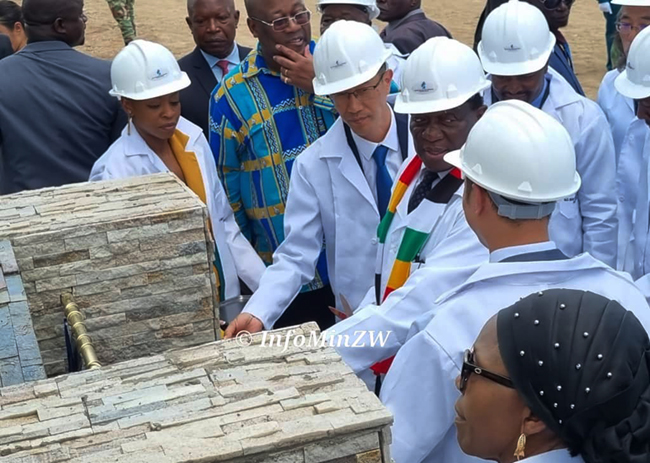
Samuel Kadungure
News Editor
BY 4AM, the Gaza-Sabi Star Road is already awake.
It is no longer the bone-jarring track that once swallowed tyres and tested the patience of every traveller.
Today, it stretches for 37 kilometres as a graded gravel road, carrying schoolchildren headed for class, nurses reporting for duty, women taking produce to market and the steady rumble of haulage trucks ferrying lithium from the heart of Buhera to global markets.
Dust still rises behind the trucks. But so does something else: opportunity.
In the arid southern reaches of Buhera, where drought has dictated the rhythm of life for generations, Sabi Star Mine, operated by Max Mind Investments, has done more than excavate for minerals. It has planted itself in a community long accustomed to hardship, becoming a catalyst for change in one of the country’s most climate-vulnerable regions.
Yet the mine’s growing footprint has not escaped scrutiny.
On July 6, 2026, the Buhera Residents Network Trust (BRNT) appeared before the Parliamentary Portfolio Committee on Environment, Climate and Wildlife, alleging environmental degradation, water contamination, excessive dust pollution and the inadequate handling of families displaced by mining activities.
The petition drew national attention and reignited a familiar debate: Can mining-led development improve lives without compromising communities and the environment?
BRNT architect, Mr Leonard Mabasa, was careful to position the petition within that broader context.
“This is not an attack on mining itself. Zimbabwe’s mining sector is the cornerstone of the economy. Lithium is among our most prized exports,” he said.
The challenge, he argued, was ensuring that economic gains did not come at the expense of local communities.
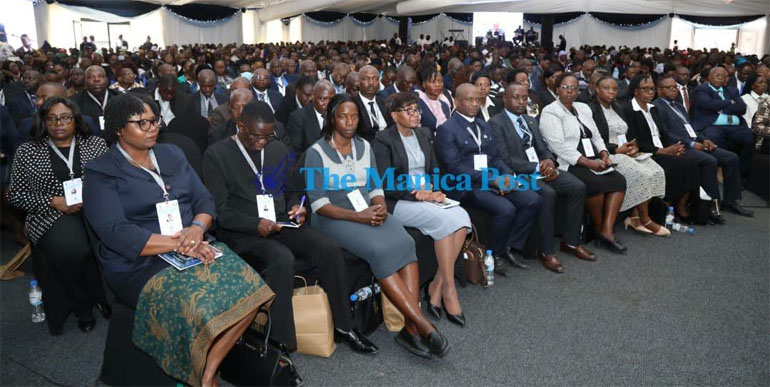
Seeking answers beyond the written submissions, the parliamentary committee, chaired by Honourable Samson Matema, travelled to Buhera last Sunday on a fact-finding mission covering Wards 11, 12 and 14.
The delegation met traditional leaders, councillors, villagers and mine officials. They inspected relocation sites, community infrastructure and mining operations. Their task was simple in principle, though complex in practice: reconcile the claims made in the petition with the realities on the ground.
What they found was not the desolate landscape depicted in some accounts.
Instead, they encountered a mining project that, while not without challenges, is reshaping the socio-economic landscape of southern Buhera.
“The committee wanted to reconcile what it received from the petitioner and Sabi Star Mine. 43 families were displaced, which is a normal development-induced displacement process. Guided by the Kampala Convention, governments and other stakeholders have a responsibility to assist and protect affected communities. The question was: Were these people assisted and protected?
“After touring the resettlement areas and hearing testimonies from those directly affected, his assessment was cautiously positive. However, there are areas that require continuous monitoring and improvement,” he said.
Unlike many corporate presentations built on promises and projections, Sabi Star Mine’s case was presented in tangible terms, measured in roads, houses, classrooms and water infrastructure.
The mine has invested approximately US$170 million into its lithium operations, producing an estimated one million tonnes of raw ore annually.
When the open pit required land, the mine relocated 43 families from Mkwasi and Tagarira villages. Twenty-three chose Murambinda Township, while the remainder chose nearby villages.
In Murambinda, modern three-bedroom houses were constructed at a total cost of US$1 063 282, including statutory fees to Buhera Rural District Council, purchase of stands, and construction.
Each house sits behind fencing installed at US$37 206. Electricity infrastructure cost US$45 630 and water reticulation US$64 113. Solar-powered boreholes for relocated families cost US$64 598.
For those who chose to stay in villages, rural houses were built at US$1 077 411, also paid US$65 300 disturbance allowances and compensation for assets. The mine paid US$106 661 to those whose land fell within mining claims to open new fields.
When eight graves – three adults and five children – were exhumed from Mkwasi Village, the mine spent US$11 188, engaging professional undertakers, compensating families US$1 500 per adult and US$1 000 per child, under supervision of traditional leaders.
“All exhumations and grave relocations were supervised by traditional leaders and conducted in the presence of affected families,” said management, adding that 10 young people from relocated families were offered jobs at the mine.
Buhera is dry. Sabi Star responded by drilling water. Thirty solar-powered boreholes across North Buhera Constituency – 10 in schools, 20 in villages. Another 17 were also sunk, four of which struck water.
Additional 10 solar boreholes were drilled to support nutrition gardens, where women and youth now grow vegetables for the mine canteen.
For relocated families in Murambinda, the mine purchased a 140-metre power cable to repair a borehole, and spent US$80 709 repairing broken water reticulation systems.
A new community clinic, built for US$132 190, now serves people, who previously walked more than 12km for healthcare.
The mine donated US$51 847 in medical equipment and US$10 994 to make it operational.
Local schools were painted and refurbished at US$112 397, while ECD play centres received construction materials.
The mine constructed the 37km Gaza–Sabi Star Road. It invested US$461 911 to expand it into a double-lane carriageway. It also repaired 16km of Dorowa Road and 10km of Chiweshe Road for US$31 768.
During the El Niño drought, 30 tonnes of maize were distributed to 600 families. Grocery hampers reached 120 elderly people and people with disabilities.
US$71 218 was set aside for various community and stakeholder needs. Collectively, these projects created hundreds of permanent jobs, and critically, skilled technical roles once reserved for foreign specialists are now held by trained local youths – welders, lab technicians, and equipment operators.
It is industrial transfer in real time.
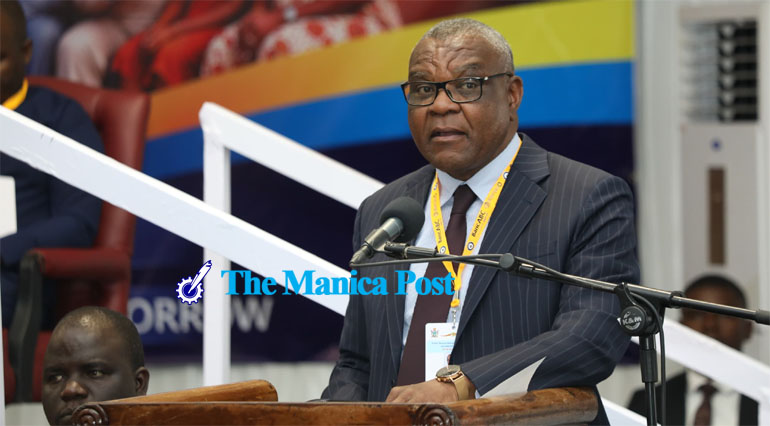
“What was consistent in Ward 11 and 12 is the issue of dust raised from lithium carrying trucks. There is urgent need for dust suppression mechanism,” said Honourable Matema.
Sabi Star has already imported and tested dust suppressants from China, and hosted EMA compliance auditors.
On water, BRNT allegedly sampled points near tailings dams and reported cadmium, lead and mercury.
The mine is working with EMA to monitor all discharge points, and publish quarterly results to the community and traditional leadership. It has also committed to lining new containment facilities to modern standards.
The BRNT petition also called for legislative reform – Water Act, EMA Act, Mines Act – and higher fines.
The committee agrees the laws are outdated. But to pin that national failure on one investor – Sabi Star – is misdirection.
Honourable Matema noted another gap – engagement.
“We found serious fragmentation. BRNT petitioned Parliament without exhausting local remedial processes. Headman Nemhari and Chief Nyashanu were not aware that a group of people petitioned Parliament purporting to represent their subjects. There is less engagement at different layers of leadership. Because of the need of this investment, it is important to have engagement between the mine and all the stakeholders,” he said.
In Ward 14, some grievances are administrative.
Title deeds for relocated families are pending because statutory rates were not paid.
“The law says they can only access title deeds when cleared. It emerged that the 23 families did not pay anything towards rates to Murambinda Town Board,” said Honourable Matema.
That does not erase genuine concerns.
At Murambinda, a granny now cooks in a kitchen with a tap. Three years ago she fetched water from a shallow well five kilometres away.
“We were scared when they said we must move. But look, my children have a proper house. There is electricity. The clinic is 10 minutes away. My son is working at the mine as a fitter,” she said.
In Mukwasi, Mr Siyapela Mulandeli acknowledged positive impact of the mine, but urged it to address the dust problem.
A former airtime vendor and now a lab technician at the mine, Mr Pride Chingoma, said: “They trained us. Now I can test lithium grade myself. This is a skill I will have for life.”