Online Reporter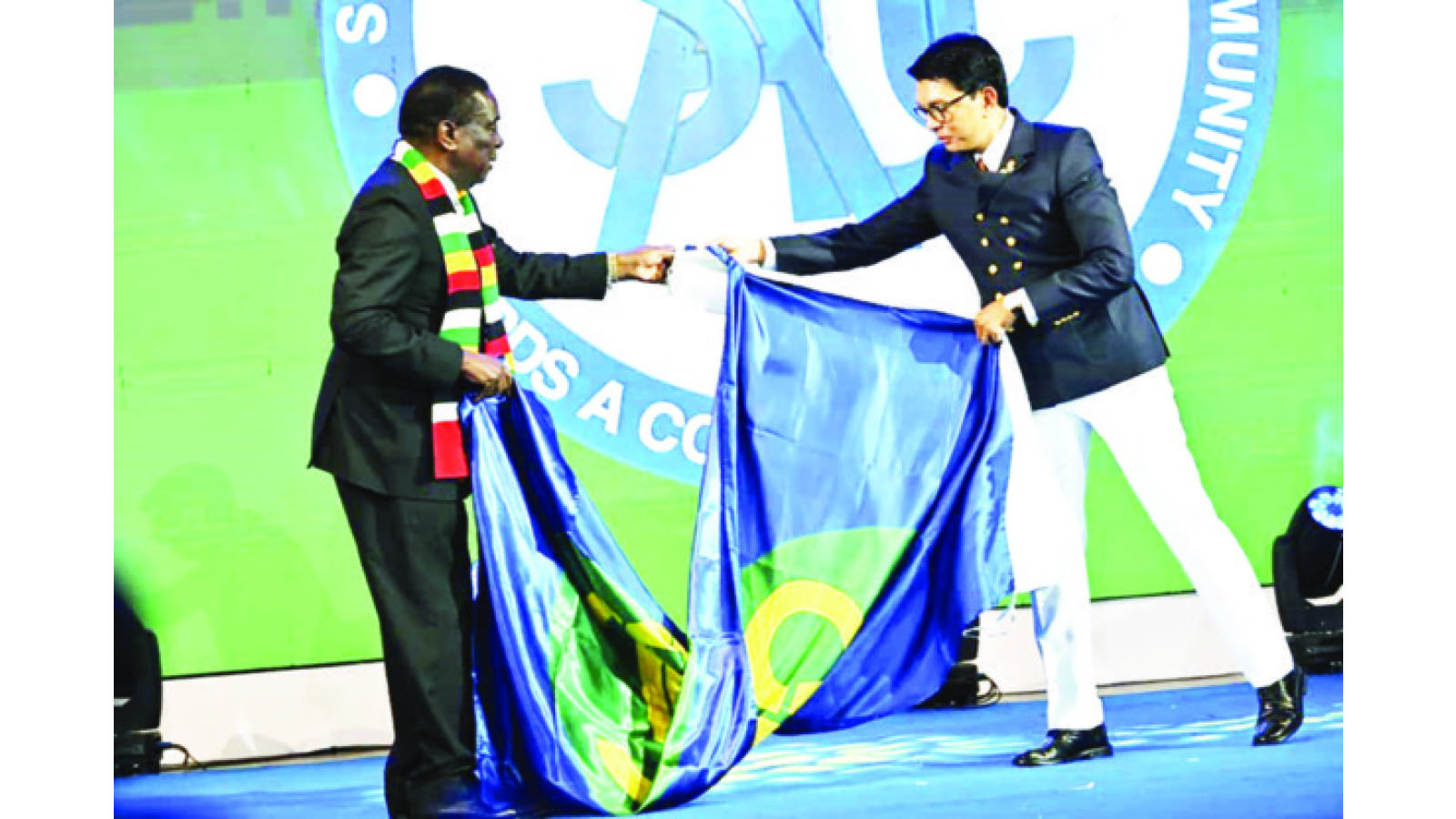
Innocent Mujeri-Correspondent
NOW that Zimbabwe has handed over the SADC Chairmanship, there can be no doubt that President Mnangagwa’s tenure has been a defining one in the history of the regional bloc. From the moment he assumed the Chair in August 2024, President Mnangagwa made it clear that his vision was to push food security, infrastructure development and regional integration to the top of the agenda, and he pursued these goals with the kind of tenacity and clarity of purpose that forced the region to move forward. This was not a ceremonial chairmanship where issues are discussed and forgotten; this was a year of hard decisions, bold initiatives and tangible results.
President Mnangagwa placed food security at the very centre of his leadership. He never got tired of reminding SADC that the prosperity of the region can only be built on full stomachs and self-sufficient households. Under his guidance, food security stopped being mere rhetoric and became a practical priority. He consistently held up Zimbabwe’s own Pfumvudza/Intwasa conservation farming model as a climate-smart agricultural system that works even in drought years. He did not just talk about it; he pushed it as a regional blueprint for how African farmers can defeat hunger using their own knowledge and resilience. President Mnangagwa’s leadership meant that the SADC Regional Vulnerability Assessments were no longer about compiling reports but about translating data into real preparedness and resilience. For the first time in years, food security became the heartbeat of regional planning, and that is President Mnangagwa’s legacy.
At the same time, President Mnangagwa understood that hunger cannot be defeated without development, and development cannot be achieved without infrastructure. He pushed SADC to think and act in terms of energy, transport, water and communications connectivity. His own country demonstrated this drive through the completion of the modern Trabablas Interchange, which unlocked regional road traffic flow, and the commissioning of Hwange Units 7 and 8, which injected badly needed energy not only into Zimbabwe but into the wider SADC grid. President Mnangagwa used these achievements as a platform to challenge the region to accelerate cross-border projects, reminding everyone that integration is meaningless without roads, electricity and shared infrastructure. Even Zimbabwe’s bold development of a new administrative capital at Mt Hampden, complete with a Parliament and Diplomatic Village, sent a powerful message of confidence and ambition. Under President Mnangagwa, infrastructure was not seen as prestige projects but as the backbone of integration.
But President Mnangagwa’s chairmanship was not only about food and development; it was also tested by the flames of conflict. The eastern Democratic Republic of Congo exploded once again into instability, and the region turned to SADC for leadership. President Mnangagwa did not hesitate. He convened extraordinary summits, he reaffirmed the principles of the SADC Mutual Defence Pact, and he guided the extension of the regional mission in the DRC to show solidarity with a member state under siege. Later, with wisdom and courage, President Mnangagwa steered the decision to strategically withdraw troops while maintaining political and diplomatic support for Kinshasa. It was a delicate balance between principle and pragmatism, and he handled it with authority. His co-chairing of the historic Joint SADC–EAC Summit in Nairobi was another masterstroke, proving that President Mnangagwa believes in African unity and African solutions to African problems. Under his chairmanship, SADC demonstrated that it is not a toothless bloc but a custodian of regional peace and security.
President Mnangagwa also elevated the issue of environmental stewardship. Hosting the SADC Transfrontier Conservation Areas Summit in Harare, he gave priority to biodiversity, eco-tourism, anti-poaching measures and community-driven environmental governance. He understands that the region’s future depends not only on factories and roads but also on the protection of its forests, wildlife and natural heritage. By embedding conservation into the development agenda, President Mnangagwa expanded the meaning of sustainable development in SADC.
Institutionally, President Mnangagwa strengthened the very foundations of the bloc. His visit to the SADC Secretariat in Gaborone in December 2024 was not symbolic; it was a direct call for speed and discipline in implementing regional programmes. Under his watch, the acquisition and commissioning of the new SADC Secretariat headquarters was completed, giving the bloc a permanent and dignified home. He pushed for energy diversification, telling the region to look beyond coal and hydro and embrace solar, wind, gas and bioenergy. That insistence on modernisation and foresight is part of the enduring mark he leaves behind.
On the continental stage, President Mnangagwa ensured that SADC did not remain inward-looking but engaged with Africa and the world. He used his chairmanship to remind member states of the opportunities presented by the African Continental Free Trade Area, urging them to see intra-African trade as the new engine of growth. He also positioned the bloc to participate with confidence at global platforms, such as Expo 2025 Osaka, ensuring that SADC would showcase its investment opportunities and cultural strength to the world.
What also stood out in his tenure was his insistence on inclusive development. At the African Regional Forum on Sustainable Development in Kampala, President Mnangagwa spoke with conviction about youth empowerment, job creation, artificial intelligence, climate finance and value-chain development. He was not speaking in abstract terms but pointing SADC towards a future where technology, innovation and people are the engines of growth. For him, inclusivity was not charity; it was the only viable path to durable prosperity.
Looking back now that Zimbabwe has handed over the Chairmanship, the record speaks for itself. Under President Mnangagwa, food security became a living agenda, infrastructure was pushed as the foundation of integration, peace and security were defended with courage, conservation was prioritised, institutions were strengthened, energy diversification was advanced, continental cooperation was deepened and inclusive development was elevated. President Mnangagwa did not allow the Chairmanship to become a ceremonial rotation; he turned it into a season of action, delivery and vision.
The truth is that President Mnangagwa’s leadership has shown the region what is possible when a chair treats SADC not as a platform for rhetoric but as an instrument for results.
His tenure will be remembered as a year in which Southern Africa moved with confidence towards food self-sufficiency, deeper integration and collective stability. President Mnangagwa has handed over the baton, but the legacy he leaves behind is one of decisiveness, boldness and results. In a region that too often delays and dithers, his Chairmanship was refreshing and commanding.
As history records this chapter, President Mnangagwa’s chairmanship of SADC will stand out as a moment when the bloc found both focus and courage. He showed that with vision and determination, Southern Africa can chart its own course, anchored on food security, infrastructure, peace and inclusive growth. That is the story of President Mnangagwa’s year at the helm, a story of leadership that dared to act and delivered results that will echo long after the handover.