Trust Freddy
Herald Correspondent
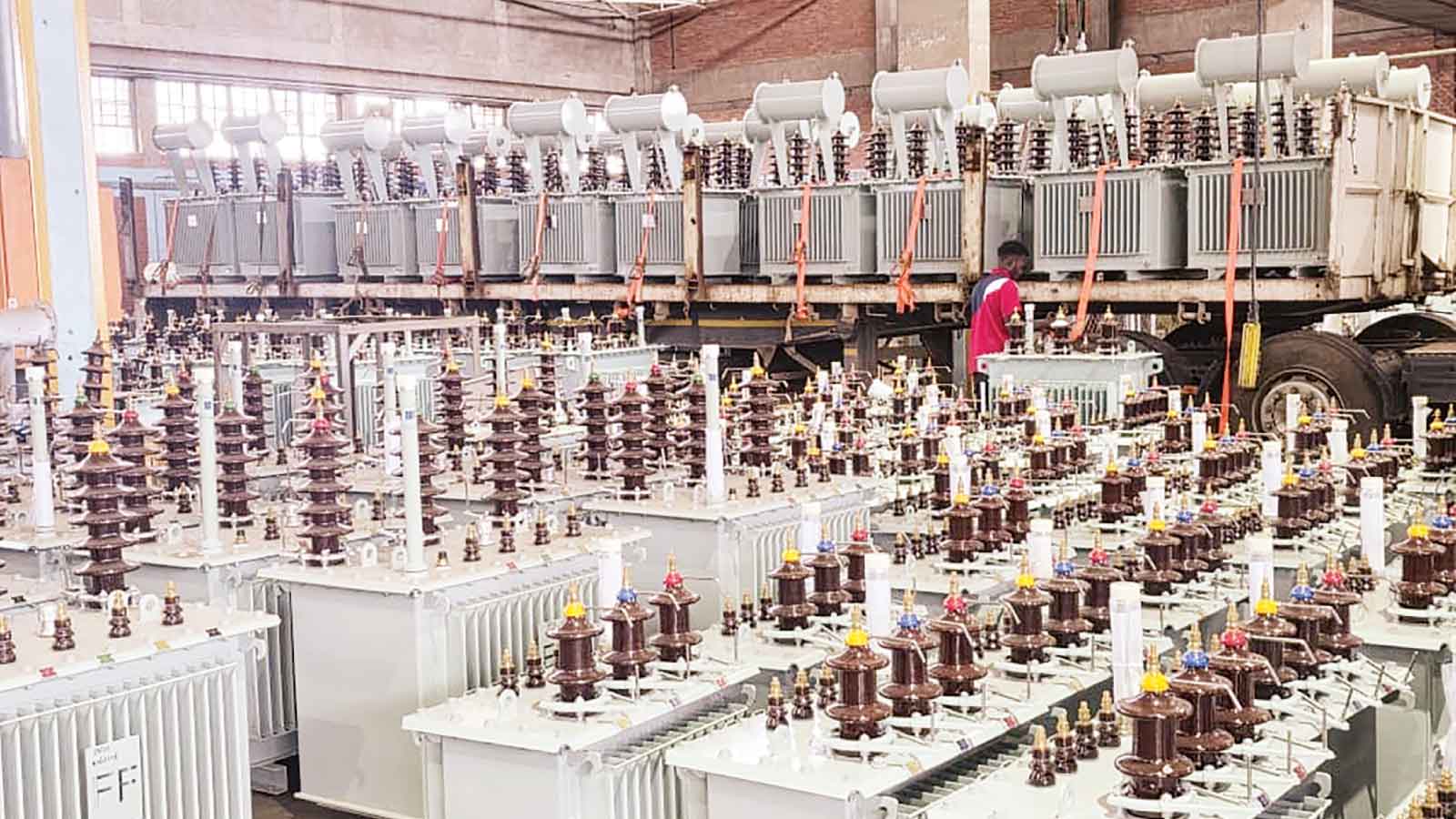
ZIMBABWE has surpassed its electricity transformer production targets for the first half of the year, manufacturing 1 944 units against a target of 1 374, a development that has anchored a massive capital equipment export drive across the African continent.
The high-volume output by ZESA Enterprises (ZENT), the engineering and manufacturing subsidiary of power utility ZESA Holdings, represents a 41 percent over-performance.
The entire batch of 1 944 distribution transformers has already been delivered to the Zimbabwe Electricity Transmission and Distribution Company (ZETDC) to strengthen the national grid and accelerate national electrification.
Buoyed by the production surplus, ZENT has scaled up its regional commercial offensive, securing and fulfilling major power infrastructure contracts in five countries within the Southern African Development Community and East Africa.
ZENT business development and commercial executive, Mr Burusa Mandipezano, confirmed that the company is actively leveraging its excess capacity to satisfy burgeoning regional infrastructure demand.
“So far, we have supplied to DRC (Democratic Republic of Congo), we supplied to Lesotho, and at the back end of last year 2025, we supplied to Zesco of Zambia about 170 transformers,” Mr Mandipezano said.
“We also have an order to supply 500 transformers to Rwanda, which we have done almost 30 percent now, and we are continuing to supply. We have supplied 500 transformers again to EDM of Mozambique, which we are finalising at the end of this month.”
Mr Mandipezano added that advanced engagements are already underway with the Botswana Power Corporation (BPC) and electricity authorities in Malawi to export subsequent manufacturing surpluses.
ZENT operations director, Engineer Shepherd Madhorobha, said the plant’s assembly lines cover distribution transformers ranging from small-scale 10kVA units up to heavy-duty 1.6MVA systems.
To sustain both local grid requirements and international orders, the company’s Harare fabrication plant has increased its operational velocity to maintain a daily output of 13 to 15 completed units. This translates to upwards of 250 distribution transformers per month.
ZENT acting managing director, Dr Godfrey Mugaviri, said targets set under the National Development Strategy 2 (NDS2) and Vision 2030 have driven the operational turnaround.
He projected total production to comfortably breach the 3 000-transformer threshold by year-end, contingent on the continuity of structured funding lines.
“Our aspiration as a company is to support the electrification strategy of the entire country and ensure that we improve the quality of life of all Zimbabweans,” Dr Mugaviri said.
Looking into the immediate future, Dr Mugaviri revealed that Cabinet has approved the establishment of a brand-new spin-off company under ZENT.
This new enterprise will expand Zimbabwe’s industrial footprint by manufacturing smart electricity meters and electric vehicle (EV) charging units.
“Eventually, we should be able to manufacture the cubicle and also manufacture the smart meters and manufacture everything that is associated with ensuring that we improve revenue,” he added.
The firm, Dr Mugaviri said, has already proved its high-volume capacity by completing the delivery of an order of 6 500 specialised metering cubicles to ZETDC.
The increase in production has also translated into employment and skills development opportunities, with the company maintaining apprenticeship programmes aimed at nurturing future industry professionals.