admin
admin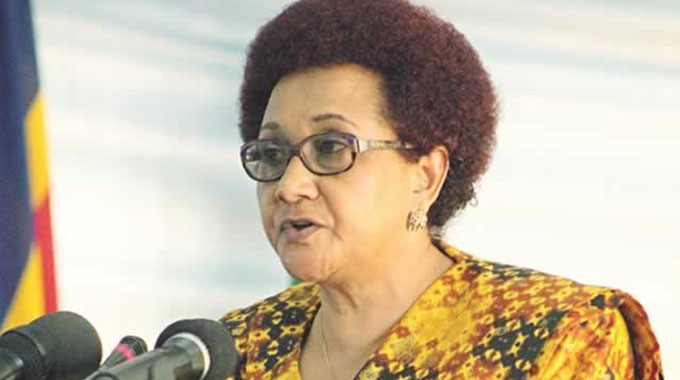
Roselyne Sachiti Features, Health & Society Editor
Gender-based violence (GBV) is a societal thorn than pricks and hurts the most vulnerable, especially women and girls.
In many countries in the Southern African Development Community (SADC), GBV in all its forms — physical, emotional, financial, among others — affects women more than men, a major worry for member states and development partners alike, especially in humanitarian situations.
As the Covid-19 pandemic preys on communities worldwide, cases of GBV have spiked in SADC countries, notably South Africa, Zimbabwe, Malawi and Botswana.
Cases that have been attended to by the police and development partners in the SADC member states paint a gloomy picture of why the region needs to respond with urgency, share notes on good practice to end this scourge.
The regional bloc is worried and has taken a front seat in speaking out against GBV.
In a statement released last week, “Covid-19 and Gender Based Violence and Domestic Violence”, SADC Executive Secretary Dr Stergomena Lawrence Tax expressed deep concern over the increase.
She noted that since the onset of Covid-19 pandemic, cases of domestic violence have been rising significantly across the globe, particularly following the lockdown measures instituted by governments to contain the spread of the virus.
“Clearly, the SADC region has not been spared,” said Dr Tax. “The UN Women report shows that some countries around the world, particularly those highly affected by Covid-19, have registered up to 30 percent increase in reported domestic violence cases and around 33 percent increase in emergency calls for gender-based violence, with women and girls being the victims of these acts.”
Dr Tax’s worry emanates from the reality that the situation is not only appalling, but stands against the very spirit and principles enshrined in the SADC Protocol on Gender and Development, Regional Strategy and Framework of Action for Addressing GBV (2018-2030) and the Regional Strategy on Women, Peace and Security (2018-2022), which collectively seek to sustainably empower and protect women and girls from sexual and gender-based violence.
“SADC recognises that in the midst of combating this unprecedented Covid-19 pandemic, it is easy to overlook the abuses that women and girls encounter during this crisis,” she said.
“While it is very important for governments and stakeholders to focus on measures to contain Covid-19, and law enforcement establishments to focus on enforcing Covid-19 regulations and measures in the communities, domestic violence should not be neglected.”
Dr Tax pointed out that under the lockdown, domestic violence cases tend to increase as security, health, and finance concerns heighten socio-economic tensions.
“Women that have been in abusive relationships are now forced to be at home with their abusers for a prolonged period, making it difficult for them to reach out for help due to the presence of the abusive partner at home,” she said.
Dr Tax said social distancing in itself makes it difficult for women victims to reach out to their usual support systems, particularly friends and other family members.
“In addition, the Covid-19 quarantine centres and temporary accommodation facilities for the homeless have the potential of being a breeding ground for sexual and gender-based violence, if not managed appropriately,” Dr Tax said.
She further expressed worry, saying pandemics like Covid-19 can make reporting of abuses harder due to the disruption of public services and limited access to communication facilities such as phones and helplines.
Dr Tax emphasised why it is, therefore, important for the SADC member states to provide flexible and innovative tools for reporting, counselling services, and support to domestic violence.
“These tools must be clearly communicated to enable those affected to access and utilise them,” she said. “In response to this crisis, particularly during lockdown, shelters and places of safety for victims of abuse must be considered an essential service and should be expanded as needed.”
This, she pointed out, is in line with Article 20 of the SADC Protocol on Gender and Development, which obliges member states to put in place measures to eliminate gender-based violence.
“Implementation of this provision is guided by the Regional Strategy and Framework of Action for Addressing Gender Based Violence (2018-2030) and the Regional Strategy on Women, Peace and Security (2018- 2022), which collectively seek to sustainably empower and protect women and girls from sexual and gender-based violence,” said Dr Tax.
In the statement, she also urged the public and private sectors, civil society, media and community leaders to work together during the Covid-19 crisis, while considering the differential impact of the crisis on women and men, boys and girls.
“With collective efforts and commitment, we can avoid a double crisis of Covid-19 and gender-based violence, and the associated far-reaching consequences to our society,” said Dr Tax. “We must all redouble our efforts on zero tolerance to gender-based violence as we fight this devastating Covid-19 pandemic.”
In the first week of the lockdown in South Africa more than 87 000 cases of GBV were reported to the police, according to Police Minister Bheki Cele.
“This is a very serious matter, the last number we received from the report of the NATJOINTS was 87 000 people have phoned reporting gender based violence,” Minister Cele said.
In Botswana, the Botswana Daily News reported that police were disappointed that since the lockdown, they had been receiving a lot of GBV cases.
“From March 23 to 29 this year we registered two murder cases, 24 armed robberies, two threats to kill, 31 defilement and four indecent assault cases across the country. These crimes were committed within seven days,” the country’s Deputy Police Commissioner Dinah Marathe was quoted as saying.
She said what was disturbing was the fact that out of the cases, seven involved children under the age of 13, who were abused by their fathers, stepfathers and cousins.
Then in Malawi, according to Malawi 24 News, as students are home due to Covid-19 lockdown in schools, Creative Centre for Community Mobilisation (CRECCOM) involved the District Social Welfare Office of Chitipa district to look into issues of gender-based violence and child abuse that might hinder vulnerable groups in the district like girls and women.
Cases of child marriages and child trafficking at T/A Kameme involving four girls were discovered.
“One is from Chinthekwe Community Day Secondary School, and three from surrounding primary schools in the T/A, and are in Tanzania working as housemaids,” the story said.
In Zimbabwe, organisations like Musasa Project have been offering support to victims and survivors of GBV.
Between March 30 when the lockdown began and April 9, Musasa had received 764 GBV cases across all its platforms.
This is a spike in terms of GBV cases reported during the lockdown as in a month, Musasa normally records 500 to 600 cases. The organisation recorded more numbers in a short space of 11 days than they normally do in a month.
According to Relief Web “Zimbabwe Situation Report, 21 April 2020”, since the start of the lockdown, national GBV hotlines have recorded a call increase of over 90 percent.
The child helpline received an increase of 43 percent in the daily calls.
According to UNFPA East and Southern Africa Region (UNFPA ESARO), even before the Covid-19 pandemic, the region had high rates of sexual violence against women and girls.
In seven countries, around 20 percent of those aged 15 to 24 years reported they had experienced sexual violence from an intimate partner.
UNFPA ESARO further points out that most countries in the region do not reflect their commitments — as expressed in numerous international conventions and treaties they are party to — in national legislative policy and action.
“Even where national legislation on GBV exists, law enforcement agencies such as the police and judiciary are largely unaware of women and children’s rights. In humanitarian crises, there is usually little reference to and funding for GBV prevention and response in emergency plans,” it adds.
With the above examples, which are a drop in the ocean, SADC is rightly worried about the safety of the most vulnerable during the Covid-19 pandemic.
There is need for SADC member states to share notes and step up action to effectively deal with GBV now and also in the future.
Twitter @RoselyneSachiti



 Online Reporter