Online Reporter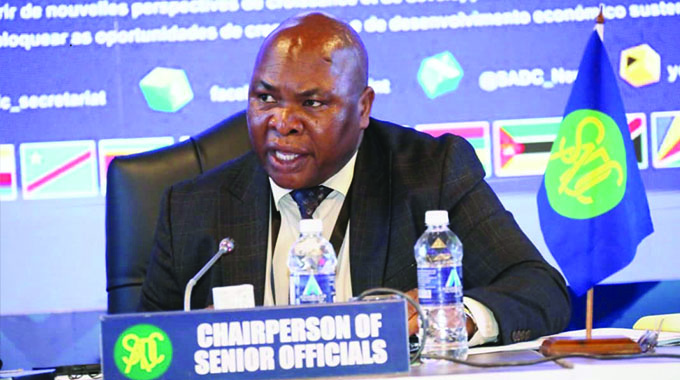
Rutendo Nyeve, Victoria Falls Reporter
THE Southern African Development Community (SADC) regional bloc is intensifying efforts to foster regional integration and harmonise policies in response to pressing economic challenges, including the impact of geopolitical tensions and US-imposed tariffs on member economies.
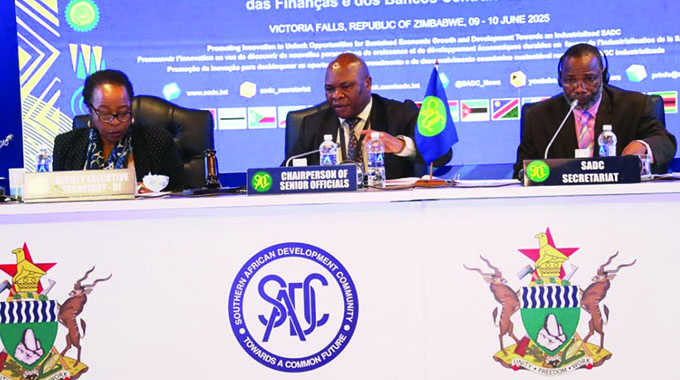
This week, SADC is convening a high-level Committee of Ministers of Finance and Investment and the Peer Review Panel in Victoria Falls. The week-long gathering brings together key decision-makers to advance financial market integration, macroeconomic stability, and sustainable development across the 16-member bloc.
The meetings are being held under the theme: “Promoting innovation to unlock opportunities for sustained economic growth and development towards an industrialised SADC.”
Chaired by Zimbabwe, which holds the SADC leadership, the event began with a meeting of senior officials from Ministries of Finance and Central Banks on Monday. This precedes the crucial Meeting of Ministers of Finance and Investment and Central Bank Governors scheduled for Thursday and Friday.
Zimbabwe’s Chief Director in the Ministry of Finance, Economic Development and Investment Promotion, Mr Joseph Mverecha — who chairs the SADC Senior Officials Committee —outlined the key agenda items in an exclusive interview with Zimpapers.
Mr Mverecha emphasised that regional integration remains a top priority for SADC, particularly under the Finance and Investment Protocol.
“Regional integration is a crucial and integral component of the finance and investment protocol agenda.
“This meeting of senior officials is advancing discussions on the key issues necessary to promote regional integration and cooperation,” he said.
However, he noted that the bloc faces significant external headwinds, particularly from geopolitical tensions and US trade policies. The administration of US President Donald Trump has imposed tariffs on various global goods, including those from Africa, disrupting trade flows and affecting SADC economies both directly and indirectly.
“The region has been, and continues to be, affected by geopolitical tensions, particularly due to measures taken by the US administration regarding tariffs imposed on the global community, which are directly and indirectly impacting our economies.”
Mr Mverecha also highlighted a sharp decline in overseas development assistance, particularly from the United States, as another critical concern. This reduction has placed considerable strain on vital sectors such as health, education, and public services across SADC nations.
“The international community, led by the United States, has significantly reduced overseas development assistance, and this has impacted key sectors of our SADC economies,” he said.
In response, SADC officials are formulating strategies to mitigate these challenges, including collective engagement with the US to advocate for policy reversals. Zimbabwe, as SADC chair, is championing dialogue over confrontation.
Mr Mverecha noted that President Mnangagwa’s administration has consistently pursued a foreign policy of engagement, seeking mutually beneficial resolutions with all nations, including the United States.
“The President has a vision to engage every country. We are friends to everyone. We are enemies to no one, and as Zimbabwe, we are carrying this message to SADC,” he said.
He revealed that Zimbabwe’s Ministry of Finance, Economic Development and Investment Promotion is actively engaging US authorities on the tariff issue.
“The Minister of Finance, Economic Development and Investment Promotion, along with the ministry team, is working diligently to engage the US administration on the tariff issue. We believe that constructive dialogue is the way forward and that a mutually beneficial resolution can be reached through such engagement.”
SADC Deputy Executive Secretary for Regional Integration, Ms Angele Makombo N’Tumba, said the geopolitical landscape presents an opportunity for the region to enhance the integrity and resilience of its financial systems. She stressed the importance of developing strategies to sustainably finance regional infrastructure projects, particularly through development finance mechanisms.
“This is the right time for the region to strengthen its ties. The level of intra-trade is very low, so maybe we should start by putting our own house in order — reducing barriers, harmonising timeframes, and streamlining processes.
“We need to reduce bureaucracy and the red tape at our borders. Given the current geopolitical challenges, now is the time to look within, address our issues, and agree that this is the moment to put our house in order,” she said.
Ms N’Tumba said that developments in the West serve as a wake-up call for the region to streamline its internal processes and boost intra-SADC trade.
She noted that increased trade within the bloc would spur development, raise incomes and help alleviate poverty.
Recommendations from the Senior Officials’ meeting will be presented to SADC finance ministers and central bank governors, who are expected to adopt a unified stance on engaging the US and other global players.
With Zimbabwe at the helm, SADC is pushing for a co-ordinated response to shield regional economies from external shocks while advancing integration. The outcomes of this week’s meetings could shape the bloc’s economic diplomacy strategy for years to come.
@nyeve14