

 admin
admin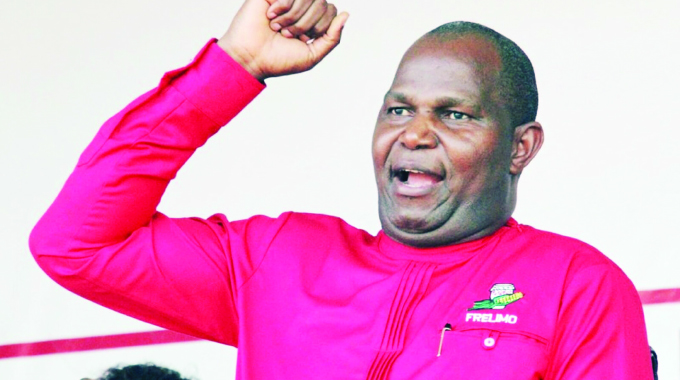
Dr Gwinyayi Albert Dzinesa, Correspondent
SADC Chairperson, President Mnangagwa, has urged Mozambique’s electoral stakeholders to abide by the country’s Constitutional Council’s confirmation of the victory of Cde Daniel Chapo and the ruling party Frelimo in the October 9 general elections.
Mozambique has been engulfed in destructive post-election violence after the main opposition candidate, Venâncio Mondlane, disputed the outcome and called for nationwide protests against alleged electoral fraud.
Thus, President Mnangagwa stated that SADC expected the decision of Mozambique’s supreme electoral body to “provide a constitutional way forward for the country, and facilitate the way to greater peace, normalcy and stability in the interest of all Mozambicans.”
He reiterated the 16-member bloc’s readiness to assist Mozambique in duly consolidating its electoral democracy.
President Mnangagwa’s statement chimed in with the communiqué issued by the Extraordinary SADC Summit of Heads of State and Government convened on November 20, 2024, in Harare which discussed the post-election violence in Mozambique. Then, the Summit “…reaffirmed its unwavering commitment to work with Mozambique in ensuring peace, security and stability through the relevant structures of the SADC Organ on Politics, Defence and Security Cooperation.”
SADC Organ on Politics, Defence and Security Cooperation
The Summit of Heads of State and Government held on June 28, 1996, in Gaborone, Botswana, established the SADC Organ on Politics, Defence, and Security Cooperation.
The Organ is responsible for promoting political stability, peace and security in the SADC region.
The Organ is coordinated at the level of Summit. Like the Summit, it is managed by an annually rotating Troika comprising the current Chairperson, the incoming Chairperson (the Deputy Chair at the time), and the outgoing Chairperson. The Organ chair cannot be held concurrently with that of the SADC Summit. The Chairperson of the Organ reports directly to the SADC Summit.
A Ministerial Committee of the Organ (MCO), comprising ministers from each Member State responsible for defence, foreign affairs, public security/policing, and state security/intelligence, coordinates the work of the Organ and its structures.
The Organ structures, operations, and functions are regulated by the Protocol on Politics, Defence, and Security Cooperation. The Protocol emphasises peaceful methods to resolve crises, including preventive diplomacy, negotiations, conciliation, mediation, good offices, arbitration, and adjudication by an international tribunal.
Mediation, Conflict Prevention and Preventative Diplomacy Structures of the Organ
The SADC Organ’s Mediation, Conflict Prevention, and Preventative Diplomacy (MCPPD) structures were established formally in 2014 by the Summit.
According to the MCPPD Inception Guidelines, the purpose of the structures is to “strengthen SADC’s preventative diplomacy, conflict prevention, mediation, and resolution capacity; undertake all actions necessary to facilitate effective conflict mediation; carry out fact-finding missions in situations of potential conflict as directed by the Organ Troika or Summit; assist and advise the Organ Troika and parties in conflict as they prepare for dialogue, negotiation, or mediation.”
The three-tiered regional MCPPD architecture consists of the Panel of Elders (PoE), the Mediation Reference Group (MRG), and the Mediation Support Unit (MSU).
Panel of Elders
The Panel of Elders (PoE) is the top structure within the SADC MCPPD configuration. The Panel comprises five eminent persons with the necessary experience to undertake preventive diplomacy and mediation efforts.
The high-profile figures, including former heads of state, government ministers, and former representatives of international organisations, are appointed by consensus between SADC Member States.
The PoE is supposed to lead or support SADC mediation processes and facilitate confidence-building measures between or among the conflict parties during peace processes.
Mediation Reference Group
The Mediation Reference Group (MRG) comprises nine members, including three from civil society, with expertise in conflict resolution, mediation, and preventative diplomacy. The members are nominated by Member States.
The MRG’s mandate is to provide expert advice to SADC envoys and mediators. Its tasks include undertaking fact-finding missions in situations of potential conflict as directed by the Organ Troika, assisting and advising the Organ Troika, PoE or SADC envoys and parties as they prepare for and conduct dialogue, preventative diplomacy and mediation in the region.
The MRG plays a crucial role in deepening knowledge and understanding of specific challenges to dialogue and mediation in the SADC region by serving as a platform for analysing interventions and collective learning.
It recognises the importance of working with the SADC Electoral Advisory Council (SEAC) to operationalise the SEAC Strategy for the Prevention of Electoral Related Conflicts, including promoting Member States’ compliance with SADC principles and guidelines for democratic elections.
Mediation Support Unit
The MSU serves as a secretariat for the PoE and MRG. It aims to assist SADC to improve its processes of mediation and preventative diplomacy by, among others:
- providing dedicated professional, logistical, technical, and administrative support to SADC envoys, mediators, and their teams, the PoE and MRG;
- deepening skills in dialogue, mediation and preventative diplomacy through appropriate research, information dissemination and collective learning events;
- backstopping dialogue, mediation and preventative diplomacy initiatives with timely information derived from comprehensive analysis;
- maintaining a database of external experts and institutions that could be called upon to provide services and technical support to appointed mediators, and
- collaborating with the Regional Early Warning Centre to alert the PoE of impending conflicts.
Dr Gwinyayi A. Dzinesa is a senior faculty member of Africa University, and a Senior Research Fellow at the Institute for Pan African Thought and Conversation (IPATC), University of Johannesburg. The opinions and thoughts expressed in this piece are the author’s only and don’t reflect the views of affiliated institutions.



 Online Reporter