admin
admin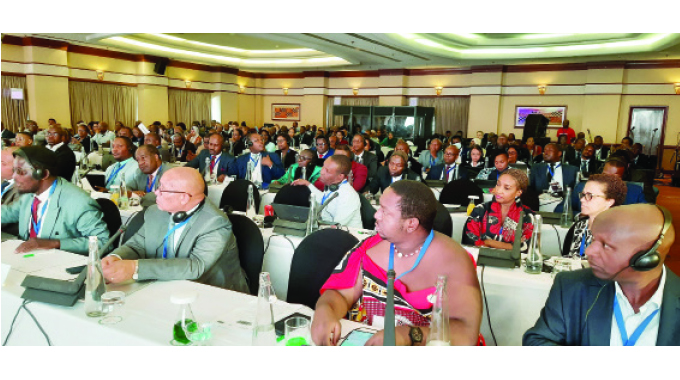
Leonard Ncube, Victoria Falls Reporter
MINISTERS and Deputy Ministers from 13 of the 16 Sadc member states had by yesterday arrived in Victoria Falls for a two-day high level tripartite dialogue on labour migration governance in Southern Africa.
The meeting’s major objective is to identify gaps and key challenges facing labour migration within the region and possible areas of cooperation.
The International Labour Organisation (ILO) and International Organisation for Migration (IOM) are jointly facilitating the meeting which ends today when President Mnangagwa is expected to address the delegates.
The indaba is expected to come up with concrete recommendations to be submitted to the Sadc Council of Ministers and then to the Sadc Summit where a decision will be made by Heads of State.
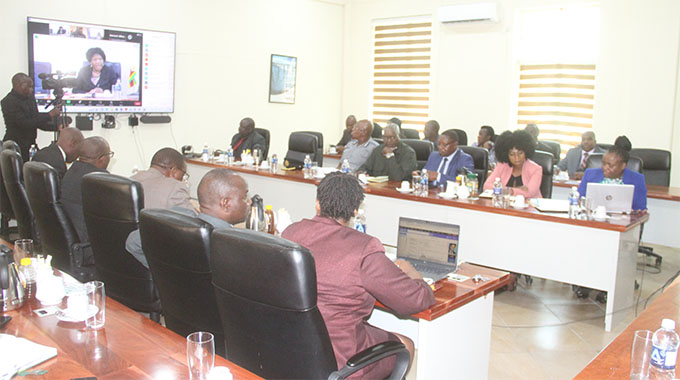
Yesterday delegates were divided into three working groups to discuss labour migration governance, protection of human and labour rights of migrant workers and gender responsive and evidence based labour migration policies.
The delegates called for the crafting of gender responsive policies to protect women and children who are the worst affected by irregular migration and unfair labour practices.
They also said there was a need to establish migrant information centres for documentation and protection of all migrants.
Public Service, Labour and Social Welfare Permanent Secretary Mr Simon Masanga said migration issues have become topical within the Sadc region and around the globe, with irregular migration and movement of unaccompanied people rife in the region.
He said there is a need for tripartite agreements to promote organised migration.
Mr Masanga said Government already has its foot on the pedal pushing for bilateral migration agreements after launching the Labour Migration Policy a year ago.
“Tomorrow (today) we have the official opening session in the afternoon when the Head of State President Mnangagwa is expected to officiate. We will also have solidarity statements to show that as a region we are committed.
“Gender is a topical issue even at Sadc level and every programme that is developed by Sadc should have a gender sensitive aspect. Our own labour migration policy has a specific gender aspect including disability issues,” he said.
There are numerous push and pull factors for migration which have been escalated by globalisation.
Mr Masanga said Government is developing a National Migration Policy spearheaded by the Ministry of Home Affairs and Cultural Heritage.
He said through operationalisation of the Labour Migration Policy Government seeks to go into bilateral labour agreements with host countries.
This is meant to protect people who have been hoodwinked into human trafficking and slavery after being promised lucrative deals.
“We have identified a number of countries that are attracted to skills in Zimbabwe and we want to assist our skilled citizens by creating what we call migrant information centres where we have information about the destination countries.
“We have people who have been abroad in the Gulf Region and in the first two years they worked for free to compensate those who sponsored them in terms of air tickets and other facilities and we had to bring back more than 110 women a few weeks ago after we also compensated the sponsors because the working conditions were very harsh,” said Mr Masanga.
He said Zimbabwe recently sent more than 170 teachers and other specialists to Rwanda through a bilateral agreement and would want to do the same with other countries.
“Going forward we need to expand the bi-lateral labour migration agreements and so far we have requests from Angola, Botswana and United Arab Emirates,” he said.
Mr Masanga said engagements are underway with Botswana and South Africa to address challenges that Zimbabweans working in the two neighbouring countries face.
Zimbabwe has ratified a number of ILO conventions and is working on ratifying agreements on promoting occupational health and safety as well as Convention 190 on violence at the workplace.
ILO director Dr Joni Musabayana said the forum is important for the region as it seeks to help promote orderly migration.
He said regular migration has social security benefits for the workers whose skills are also recognised.
“The challenge today is that most migrants, particularly the undocumented present a major security challenge for the sending and receiving countries. This conference therefore seeks to discuss how best to manage movement and identify source countries,” he said. – H-@ncubeleon.



 Online Reporter