

 admin
admin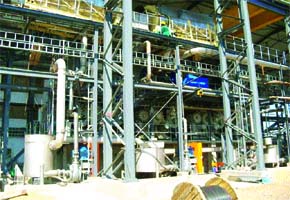
 Harare Bureau
SOME Sadc countries are scrambling for Chisumbanje ethanol as the world embraces environmentally-friendly fuels with indications that South Africa, Mozambique, Botswana, Zambia and Malawi have already approached Green Fuel with a view to sealing deals. The development comes barely a week after Zimbabwe raised its ethanol blending ratio with petrol to 10 percent and the figure is gradually set to increase.
Zimbabwe uses 1,5 million litres of petrol daily and with such blending ratio of 90 percent, unleaded petrol and 10 percent ethanol, it means only 150 000 litres of ethanol will be used out of over half a million litres produced daily.
Green Fuel which runs the Chisumbanje Ethanol Plant is a joint venture company between the Agricultural Rural Development Authority (Arda), Macdom Investments and Rating.
In an interview on the sidelines of a tour of the Chisumbanje Ethanol Plant by visiting Tanzanian People’s Defence Forces Chief, General Davis Adolf Mwamunyange on Wednesday, Green Fuel general manager Mr Graham Smith said other countries were after the country’s ethanol. “We have been approached by Zambia, Malawi, Mozambique, Botswana and South Africa which have introduced blending of petrol to ethanol at varying levels,” he said.
Mr Smith said Green Fuel had the potential to become a key regional exporter of ethanol, earning the country millions of dollars.
The company, whose operations were strangled by the inclusive Government, is now up and running with the capacity to produce 120 million litres of ethanol a year. “This is phase one of the project. In the next seven years we would be producing 500 million litres of ethanol per year. The 500 million litres will be enough to substitute the country’s petrol requirements by 100 percent,” Mr Smith said.
He said the company had plans to expand into the lowveld which would further increase its ethanol production capacity. The company has 60 000 hectares of land in the Middle Sabi and a further 60 000 hectares at Naunetsi in Mwenezi.“We have a further 60 000 hectares in the Mwenezi region that can produce another 500 million litres a year. We will become a key exporter of ethanol in the region,” Mr Smith said.
He said South Africa, which introduced mandatory blending, was “a key market hungry for energy”.
Some of these regional countries such South Africa are experiencing rapid increase in vehicle population growth, yet they do not have conducive climatic conditions to grow sugar cane to process ethanol for blending.
Mr Smith said the Chisumbanje Ethanol Plant has brought a lot of benefits to the country, creating employment for 4 500 people and all these workers are Zimbabweans.
“We do not have a single foreigner as an employee here. Everyone is Zimbabwean,” he said.
The company has also installed irrigation schemes benefiting 4 000 villagers in the arid Sabi Valley.
Mr Smith said Zimbabwe had the best climate for sugarcane production in the world that could turn the country into a major global ethanol producer after powerhouses such as Brazil. He said the Zambezi Valley and areas around Limpopo were all suitable for the production of sugarcane.
Mr Smith applauded the Zanu-PF government for backing the ethanol project saying the inclusive Government worked against it.
“The Minister of Energy at that time (Elton Mangoma) saw it fit not to back the project. We sat for almost two years. Ethanol project all over the world succeed when there is Government backing,” he said.
Government last week announced plans to increase the ethanol-petrol blending ratio of up to 20 percent by March next year.
During the time when Energy and Power Development Ministry was under MDC-T, the plant was closed and opened several times, leading to the wastage of hundreds of tonnes of sugarcane meant for ethanol.


 Online Reporter
 derick.khumalo