Chronicle Editor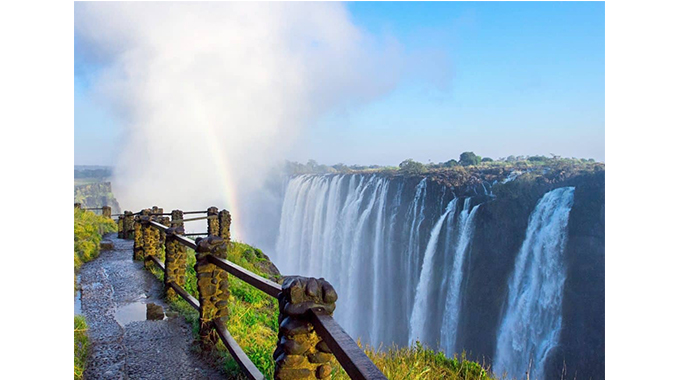
Khumbulani Vodloza Sibanda
FOR some time, if not decades, tourism has been dubbed a “low hanging fruit,” meaning tourism rewards are easily enjoyed or realised without much difficulties.
In 2020, the fruit has shifted positions. It is now a high hanging fruit requiring new methods to pluck it or to bring it down. Unfortunately, life has to go on in towns like Victoria Falls (Zimbabwe), Livingstone (Zambia) and Kasane (Botswana). Tourism is the oxygen that drives these towns. The oxygen supply is now limited, hence most of these towns are suffocating or are on the verge of collapsing.
People from these towns largely rely on tourism for livelihoods, directly or indirectly. Even the local authorities for these towns are equally driven and sustained by tourism. The enormous toll of Covid-19 on international tourism has now become clear, with World Tourism Organisation’s (UNWTO) latest data showing the loss up to May was already three times that of the 2009 global economic crisis.
The latest edition of the UNWTO World Tourism Barometer shows that the near-complete lockdown imposed in response to the pandemic led to a 98 percent fall in international tourist numbers in May, when compared to 2019. The barometer also shows a 56 percent year-on-year drop in tourist arrivals between January and May. This translates to a fall of 300 million tourists and US$320 billion lost in international tourism receipts more than three times the loss during the global economic crisis of 2009.
Southern Africa is not spared. Towns like Victoria Falls, Livingstone and Kasane are among the hardest hit. Livelihoods shattered, and jobs lost. The pertinent question at stake is how then livelihoods in these towns can be sustained in the Covid-19 era and beyond. Following the closure of borders and suspension of international airlines, tourism suffered a major blow. The communities that relied much on tourism are still in a state of shock and disbelief following the disappearance of tourists from their areas.
For decades, tourism has been a source of livelihood for these people. The way forward for towns that were partially shut because of the Covid-19 pandemic is a well-researched and thought-out diversification of economic activities. This will cushion these localities in trying times like these. The alternative industries that can be set up in areas such as Victoria Falls and others that rely on tourism as primary industry, is manufacturing.
At present, products such as bread, cooking oil, detergents, mealie-meal, stationery, building material and stock feed among others are not made in Victoria Falls. This could be the case in Livingstone and Kasane. The mentioned products are transported either from Harare about 875km and Bulawayo about 435km to Victoria Falls for consumption.
Apart from basic commodities, the new manufacturing sector would also include value addition in wildlife products for both the local and export markets. Areas that can be pursued or intensified include game meat processing and packaging, that is biltong. Others include wildlife leather processing and subsequent manufacturing of items such as bags, jewellery, belts, hats and jackets.
The presence of teak wood in some of these tourism areas presents an opportunity for organised timber processing and furniture making. Teak furniture has a ready export market in European countries. The existence of forests also makes registered and organised charcoal-making practical. Available land can also be turned into agriculture land with a bias towards horticulture.
Wildlife photography can be enhanced as well, with the intention of even selling DVDs to would-be tourists and media outlets during times like these, in the process generating alternative revenue.
To make this happen, local authorities such as Victoria Falls Municipality and Hwange Rural District Council (the administrative district in which Victoria Falls is located), need to be visible at trade fairs both locally and abroad, luring investors to start projects outside tourism.
Investor friendly by-laws and investment laws can be put in place as well to attract investors. The ease of doing business in these areas need to be enhanced to attract investments.
The ultimate goal is for goods and services to come out of Kasane to Gaborone or Francistown, Victoria Falls to Harare or Bulawayo and Livingstone to Lusaka or Copper Belt. The bigger score could even be Victoria Falls to Iran or Livingstone to Turkey or Kasane to Belgium.
Most big towns have a large population that also makes a large market readily available. Goods and services should flow in both directions from resort and big towns to balance the economies. The scope of these businesses should not be localised. Exports should be prioritised and made as well from these resort towns. Once these towns are economically viable, tourism’s longevity can be guaranteed as it is equally supported by other economic activities.
Tourism can be bankrolled or lean on the manufacturing sector at its lowest ebb waiting for its turn or opportunity to rise again.
Despite the lockdown, cargo movements have not been restricted as the case with tourists. If other industries were in place, life would not have been as miserable as it is in resort towns in the region. Cargo should be going places at the moment despite tourism downturn.
When narratives such as these are presented, environmentalists would be expected to bring up arguments like possible noise, environment and air pollution as well as encroachment in forests and wildlife sanctuaries. Yes, this is a possibility, but the greater good in this case is livelihoods which are at stake at the moment, hence the need for alternatives.
As part of solutions to possible concerns from environmentalists, modern or smart technologies such solar, 3D and nano-technologies can be enlisted. These are cleaner and smarter substitutes. More so, setting up industries in traditional tourist resort towns would also add industrial tourism to the bucket list of travellers. For instance after a boat cruise or game drive, tourists can end the day by observing how peanut butter or how stationery is made. What an icing on the visitors’ day.
Whatever could be said in whatever manner or context, an alternative economic activity ought to be birthed in resort towns to cater for difficult time such as the Covid-19 era.
The establishment of Victoria Falls as a financial hub, mainly the establishment of the Foreign Currency-only Stock Exchange is one way Government is addressing the issue. This will avoid a repeat of incidences that took place in some mining towns which became dormant upon the closure of the mines which influenced the establishments of the towns.


 Online Reporter