admin
admin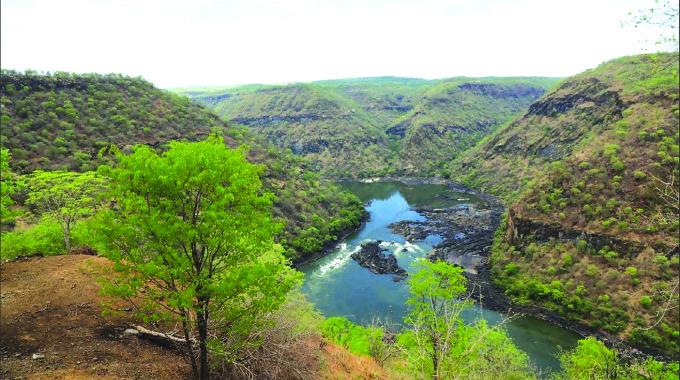
Nelson Gahadza Senior Business Reporter
Southern Africa’s solutions to the region’s power deficit challenges lie within its borders, requiring cooperation and support from regional finance institutions, experts have said.
Most Southern Africa Development Community (SADC) member state economies have over the years faced electricity deficits, which have hurt socio-economic development in the region.
Addressing journalists, in the company of Mozambican leader Filipe Nyusi in March this year, on the need for collaboration to tackle the regional power deficit, President Mnangagwa said the region had a power deficit of about 35 000 (MW) megawatts.
The economic sectors of any country are heavily dependent on a sustainable, consistent energy supply and this has been a major concern as regional utilities resort to load shedding to manage the crisis.
The block is heavily endowed with favourable conditions for hydro, thermal, and solar energy production.
Research has shown that Southern Africa receives on average more than 2 500 hours of sunshine per day and average solar radiation levels of between 4,5 and 6.5 kWh/m2 in one day, creating opportunities for solar investments.
The region also has abundant coal reserves to generate thermal power, and in the face of calls for reduced carbon emissions by 2050, the block has several water bodies with the potential to generate enough electricity to power the economies.
The proposed US$4,5 billion Batoka hydroelectric project, located on the Zambezi River and being implemented by the Zambezi River Authority (ZRA), a bi-national organisation equally owned by the governments of Zimbabwe and Zambia, becomes a key priority to manage energy deficiencies for the two economies.
The project will contribute an additional 2,400 MW of power generation capacity to the power supply infrastructure of the two countries at its peak, a key step forward in tackling the ever-increasing energy supply gap in both countries.
Zimbabwe recently commissioned a huge investment in thermal energy in Hwange Power Station units 7 and 8 financed through US$1,5 billion in financial assistance from China and the project increased the country’s power generation capacity by 600 MW.
While Harare recently added 600MW to the grid, combined domestic generation of just 1 000MW of available capacity remains far short of national demand, which peaks at between 1 800MW and 2 200MW, depending on the season.
Zimbabwe had, until completing the addition of two units at the 1 050MW Kariba South hydropower station in 2018 and Hwange Power Station expansion this year, not invested significantly in power generation infrastructure.
Private investors also shied away from the country’s energy sector amid concerns over sub-economic tariffs, which have since been addressed resulting in immediate investor interest in the electricity sector, especially renewables.
The ZRA is also expected to develop additional water storage infrastructure along the stretch of the Zambezi River located along the common border between the republics of Zambia and Zimbabwe.
ZRA chief executive Engineer Munyaradzi Munodawafa, in an interview during the tour of the Batoka Hydro project site recently said in Zambia, the suppressed demand was estimated at 2 890 MW, while Zimbabwe required about 4 369 MW by 2030.
“Clearly, more is required to meet our projected demand. The Batoka project has strong continental and regional support and is a priority under the African Union Development Agency and New Economic Partnership for Africa’s Development (AUDA-NEPAD) and Programme for Infrastructure Development in Africa (PIDA) priority list.
“The project transmission lines speak to the regional integration agenda, giving access to regional power markets in the Southern Africa Power Pool (SAPP), Eastern Africa Power Pool (EAPP) and Central Africa Power Pool (CAPP),” he said.
He highlighted that with the call for reduced carbon emissions by 2050, Batoka fits in very well, being a clean energy source, and the project will help the two countries and indeed the region scale down production on their thermal power plants, which have been a source of carbon emissions.
“In terms of job creation, the project will generate over 8000 job opportunities during the construction phase, with more secondary and induced job opportunities for both the public and private sectors.
“This will assist in skills transfer for many locals through a deliberate capacity-building program that will be implemented,” he said.
According to Engineer Munodawafa, the creation of an additional reservoir is a climate resilience strategy that will help the two countries and the region store enough water to support not only power generation but also the agriculture and tourism sectors.
“These factors will be contributing directly to a significant upliftment of the economies of the two countries,” he said.
Based on preliminary engagements, the ZRA chief executive said, regional and domestic financing institutions are interested in participating in the project, and the river authority is updating its Domestic Resource Mobilisation strategy with the help of AUDA-NEPAD, which will speak to the participation of these institutions in raising the required project funds.
The Batoka Gorge, which is 47 kilometre downstream of the Victoria Falls along the Zambezi River, is the proposed site for the 2,400 MW Batoka hydro energy scheme. The project, co-owned by Zimbabwe and Zambia, will improve the two countries’ power supply infrastructure, easing power shortages. Both countries are members of SADC, and their energy contribution to the regional power pool will help in the enhancement of regional economic production.
Zimbabwean state power utility, Zesa chairman Dr Sydney Gata, highlighted that power supply in the short to medium term will continue to be a challenge, with the major issue being the hydrology issue related to the Zambezi River, which seems to have been affected by climate change.
He said that given the impression that there is 1050 MW of installed capacity at Kariba South, the utility has been directed to use only 300 MW of capacity, which means losing 750 MW, which is 50 percent of the base dependable ZESA capacity.
“In light of this development, which is the turning point in the energy economy in Zimbabwe, we have already received two power station proposals from Independent Power Producers (IPP) companies that want to entirely finance their own power stations, coal power base load plants, and deliver them to their plants, most of them to ZESA.
“They will aggregate to about 1 600 MW, almost three times the size of Hwange 7 and 8, and the utility is also sitting on over 100 small renewable energy IPPs.
“The government is going to introduce guaranteed capacity to some of them, but the ones who have been shortlisted and accepted as eligible for integration with our power system come to 800 MW.
“If those are supported by the government, then we should have the capacity to offset all power imports and load shedding,” he said.
Dr Gata said these developments were very significant, not only because they leave Zimbabwe capable of energising its projected vast industrialisation but also because increased capacity so much that within the next three to four years, Zimbabwe will be a net exporter of electricity in the region.
The newly established Hwange units 7 and 8 show the chimney (painted red and white) and the cooling tower (painted grey and blue). The two units added 600 MW to the national grid, improving the country’s energy supply situation. Countries in the region are facing power shortages due to rising demand for energy, and this project will support regional economies through the regional power pool.
ZRA environmental safety and health officer, Kwanga Miyanza, told this publication that climate change has resulted in reduced energy generation at Kariba.
However, he said the authority adopted the conjunctive river management system, which is a climate-resilient solution that involves putting up multiple dams along the stretch of the river.
“We will use the water multiple times to generate electricity, and this will ensure the same water that has been used upstream to generate power is banked in a further downstream dam.
“During the high-flow season, we run at full capacity at Batoka and bank water for Kariba, which will be used at a later stage,” he said.
Harnessing solar energy is increasingly becoming dominant as renewable energy technologies now dominate the licensed power projects in line with Zimbabwe’s quest for cleaner and more sustainable power supplies.
According to Zimbabwe’s energy regulator, the Zimbabwe Energy Regulatory Authority (ZERA), Zimbabwe could become a net exporter of power within the SADC region should the country harness the concentrated solar power potential of 39.5 gigawatts (GW), which far exceeds the country’s needs.
An update from ZERA shows that as of November 30, 2023, a total of 14 independent power producers (IPPs) with a capacity of 95,99MW were currently contributing to the country’s national grid, along with several other projects at different levels of implementation.
Southern Africa Power Pool (SAPP) Coordination Centre executive director, Engineer Stephen Dihwa, said harnessing solar energy made sense, but that this should be balanced with ensuring that other supply types are flexible to fill the gap when the sun is not shining on the panels.
“This includes the use of existing hydropower and thermal plants and adding some form of energy storage,” he said.
The SAPP is a cooperation of the national electricity utilities in Southern Africa under the auspices of the SADC.
The members of SAPP have created a common power grid between their countries and a common market for electricity in the SADC region.
One of the main goals of SAPP is to increase the accessibility of electricity to rural communities as well as improve the relationships between the member countries.
According to Eng Dhiwa, currently, there is connectivity among nine of the countries with interconnectors at various voltage levels and hence, different capacities.
“9 countries are currently interconnected. A project is in progress to connect the 10th,” he said.
He highlighted that utilities should coordinate the development of generation and transmission projects in the region to ensure a regional balance of supply and demand.
“They should then have an efficient system to trade excess electricity in any of the member countries,” he said.
Eng Dhiwa said Zimbabwe’s recent investment in thermal energy will improve power supply and reduce imports, which could be channelled to other countries that still have deficits.
He said Zimbabwe will also have the opportunity to sell excess energy during certain times of the day and once again support those in need while they earn additional revenue.
Several SADC member states have adopted renewable energy policies that are at different stages of implementation.
Malawi’s National Energy Policy document published in 2018 sets out the ambition for the proportion of renewable energy to increase to 16 percent by 2025, 23 percent by 2030, and 28.9 percent by 2035.


 Online Reporter