

 admin
admin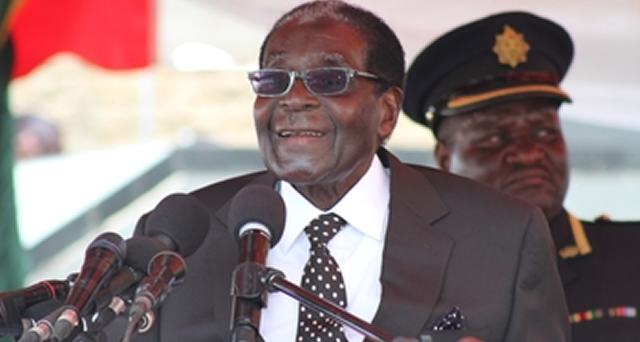
Lovemore Ranga Mataire Senior Writer
ZIMBABWE is set to host the next SADC regional Heads of State and Government meeting in August this year.
President Mugabe is expected to assume the chairmanship of the regional body whose thrust is to enhance economic integration and growth.
While President Mugabe’s chairmanship could grant Zimbabwe an opportunity to fashion the regional bloc to pursue beneficiation and value addition of natural resources policies, one should not be blind to the myriad challenges that have stalled effective regional economic integration in the past.
This year’s theme is “Sadc Strategy for Economic Transformation: Leveraging the Region’s Diverse Resources for Sustainable Economic and Social Development”.
The theme seeks to bring to the fore the need for the region to maximise its status as world’s leading producer of minerals such as diamonds, platinum and gold.
No one doubts the well intentioned vision of Zimbabwe in calling for maximisation of mineral resources in the region as a catalyst for economic development.
But a closer look at the myriad challenges that confront the region suggests the need for more introspection if economic integration is to become a reality.
Since its formation in 1992 as the Southern African Development Co-ordination Conference (SADCC), the regional body has failed to effectively translate its approved protocols into workable and achievable springboards for economic development mainly because of member states’ low gross domestic product (GDP).
Regional integration has always been the wish of many in the world with early manifestations being in Europe and America as efforts to respond to the needs for political unification and expansion called forth by capitalism.
In the case of Africa, regional integration’s main premise was and has remained as a means to encourage trade and secure economies of scale in light of the global economic onslaught.
Regional integration is thus a desirable imperative in that it has the potential to promote economic growth and reduce poverty through increased exports of domestic goods.
Historically, Sadc was mooted as a way of circumventing apartheid South Africa and also to deal with economic stagnation and backwardness.
South Africa’s independence meant that the original principles of the regional body had to be dovetailed to the dynamics of its status as the economic powerhouse of the region.
Realising the importance of political stability as a recipe for economic development, the group sought not just to strengthen and create genuine and equitable economic links but also to align policies on various governance issues.
Naturally, member states envisaged regional integration as a panacea to economic development within and to bolster the bloc’s negotiating influence on the global stage.
In short, Sadc’s vision is to promote economic and social development through cooperation, and to promote freedom and social justice anchored on the common values and principles between the peoples of Southern Africa.
The group’s agenda is informed by the need to achieve economic growth, self-reliance as well as sustainable utilisation of natural resources.
So as Heads of State and Government gather in Zimbabwe in two months’ time, it is critical that delegates review the challenges faced by the region in implementing some of its noble policies and agreements and to find ways of remedying those challenges.
One of the challenges faced by Sadc is to review the setting up of over-ambitious targets which the body has failed to meet. A good example is the Sadc Trade Protocol signed by 11 out of 15 member states in 2000, which sought to liberalise 85 percent of intra-regional trade by 2012, form a customs union for the region by 2010, all of which have been missed.
Other targets that are yet to become a reality include the establishment of a common market by 2012 and a monetary union by 2016, both of which are unlikely to be achieved.
The other challenge that has hindered the effective cohesion of Sadc is the issue of multiple membership of regional economic communities by member states.
The holding of multiple memberships dates back to colonial times and seems to have been influenced by the first wave of regional integration based on the model of the European Economic Community.
The overlapping of membership has not just created confusion, conflict of interest and duplication but also poses a serious burden on the taxpayer.
South Africa, Botswana, Lesotho and Swaziland are members of SACU (Southern African Customs Union) while Namibia and Swaziland hold memberships of three regional integration agreements and are part of the Common Monetary Area which includes South Africa and Lesotho, and also participate in the Regional Integration Facilitation Forum (RIFF).
The issue is further compounded by the fact that the majority member states of Sadc are also members of COMESA.
This creates problems in the event that the region decides to form a customs union, taking cognisance that no one country can concurrently belong to two regional economic communities at one time.
Given this multiple membership to regional economic groups, confusion and policy incoherence becomes inevitable.
But not everything is gloomy in SADC. SADC has been able to inculcate a sense of regional belonging as well as a tradition of consultation among people and governments of Southern Africa.
The regional body managed to put in place the SADC Programme of Action – which covers co-operation in various economic sectors.
Under this programme, a number of infrastructural projects have been undertaken to rehabilitate roads, rail and harbours as a way of improving communication, transportation and carriageways across the region.
These achievements have provided a foundation on which the region can make progress towards integration.
As Zimbabwe prepares to host the Heads of State and Government meeting in August, it is hoped that delegates should introspect on the need for thorough planning in order to make the issue of intra-trade, a customs union and a common regional currency become a reality.



 Online Reporter