

 admin
admin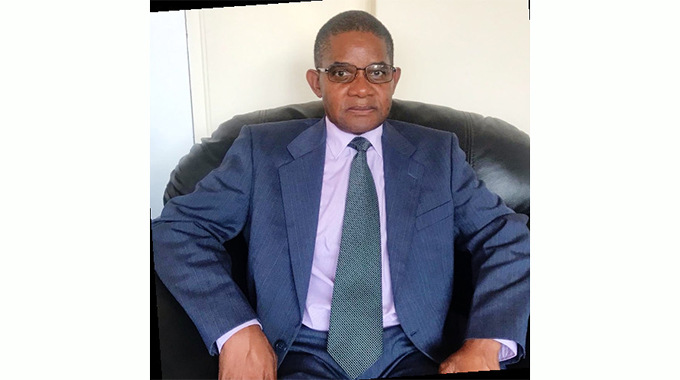
Sifelani Tsiko-Agric, Environment & Innovations Editor
SADC countries should embrace new technology and innovations in the conservation, collection and handling of plant genetic resources to boost agricultural production and ensure the ability of seeds to survive long periods of dry storage, a senior Government official says.
Dr Dumisani Kutywayo, chief director, Department of Research and Specialist Services in the Ministry of Lands, Agriculture, Fisheries, Water and Rural Development said this at a regional training workshop on plant genetic resources management organised by the SADC Plant Genetic Resources Centre (SPRGC) in the capital, Harare.
“We need to embrace new technologies such as tissue culture in conservation of genetic resources,” he said. “For many years, we had neglected our vegetatively propagated plant species and now we are taking care of them using appropriate technologies such as tissue culture.
“It is important to continue to promote the use of advanced technologies and tools while leveraging interdisciplinary institutional linkages in research at the national, regional and international levels.
“SPRGC remains strategically placed to foster such linkages and this workshop is a great example.”
Plant genetic resources include traditional and modern varieties, crop wild relatives, genetic stocks, breeding lines and weedy species.
Experts say this forms the genetic basis for the improvement and selection of crops through breeding.
This science of seed gene – banking – storing seeds under dry and cold conditions is an important of conservation plant genetic resources which help farmers and breeders to select best accessions to build resilience to climate change in agriculture.
“Plant genetic resources are the critical resource for improving crop productivity and thus key to the realisation of our regional primary goal to achieve sustainable agricultural productivity,” Dr Kutywayo said.
“Plant genetic resources are at the centre of provision of diversified agri – food systems, adaptation to climate change and building resilience amongst the vast farming community in the region.”
Plant genetic resources gene-banks such as SPGRC in Lusaka, Zambia are important in the storage and duplication of seed samples to ensure that food crop varieties are not lost at local and regional due crises like war and natural catastrophes.
“Our recent experiences on the value of plant genetic resources are drawn from the case of cyclone Idai which struck Zimbabwe and our neighbours Mozambique and Malawi in 2019. We had to rely on the germplasm from the Gene-bank to restore local seed systems and food security in the affected communities of Chimanimani in the eastern parts of the country,” said Dr Kutywayo.
The chief Government researcher also said community-based conservation systems such as seed banks are critical in maintaining plant genetic resources and improving accessibility and availability to farmers in disaster situations.
SPGRC head, Dr Justify Shava said training of regional curators was critical for the collection, conservation and utilisation of plant genetic resources within the SADC region.
“As the SPRGC we are a unit under food and agriculture of SADC. Training is very critical for us to carry out our work effectively,” he said.
“This capacity building workshop is important for us to sharpen the skills of our curators in terms of enhancing the collection, conservation, utilisation and the adoption of new technologies in the management of plant genetic resources.”
The SADC region, he said, had made great strides in the collection, documentation, storage and duplication of accessions in various gene-banks within the region.
“To date, the region has collected over 63 000 different accessions of crops which form the core sources of food for the SADC People. These are safely stored in various gene-banks in the SADC region with some duplicated at the regional gene-bank in Lusaka and the Svalbard Global Seed Vault in the Svalbard Archipelago in the North Pole as a risk mitigation measure for the SADC region,” Dr Shava said.
“Whatever we are keeping, we duplicate it and send some seed for storage at the Svalbard Global Seed Vault in the north pole in case of disaster in our region. Gene banks worldwide including our region send duplicates of their seeds to Svalbard.
“Each country or institution owns their own deposits, but if a disaster strikes our region, seed samples can be made available to us all. We are risk proof now.”
SADC countries are being supported extensively to manage their plant genetic resources by the UN Food and Agriculture Organisation (FAO), International Treaty on Plant Genetic Resources for Food and Agriculture (ITPGRFA), the Convention on Biological Diversity, Consortium of International Agricultural Research Centres (CGIAR), the International Institute of Tropical Agriculture (IITA) and the Community Technology Development Organisation (CTDO), a Zimbabwe-based NGO.
Zimbabwe agronomist and CTDO director, Andrew Mushita, said seed security was a very vital component of attaining food security within the region and in Africa as a whole.
“We should ask important questions when it comes to seeds. Our leaders should recognise and appreciate seed security as a vital component of achieving food security not only here in Zimbabwe, SADC, but in Africa and elsewhere across the world,” said the veteran agronomist.
“Who controls and owns the seed? This is the most important question in the fight for production and seed control. What is the share of Africa in terms of the billions made from seed production? We do not appear on the top list and we are not benefiting much from it.
“All we want to do is to import. We do not seem to have any meaningful strategy to reclaim Africa’s share.”
He said it was worrisome that Africa is still grossly food – insecure and a net importer of food.
“When we talk about seed systems, we are talking about the right to life itself. Whoever controls seeds, controls life. Multinational seed companies now control the bulk of our seed companies in the region. They are buying control of our plant genetic resources,” Mushita said.
“If these companies or the governments in the west are in conflict with our own governments, they will pack and go, leaving us exposed. We should not leave the control and production of seed in private global corporations.
“We need to put all seeds into the hands of our local communities in our region.”
Mushita said SADC countries and others in Africa are facing pressure from industry to align seed legislation with the International Union for the Protection of New Varieties of Plants (UPOV), dominated by multinational corporations.
“Most of the seed companies in South Africa, Zimbabwe and elsewhere across our region are now owned by multinationals like Monsanto, DuPont Pioneer, Syngenta, Limagrain and others,” he said.
“These multinationals have aggressively brought in policy and legal changes to ensure that the profits and interests of companies investing are protected through enforcement of intellectual property rights. All this supported the corporations, taking away the farmers’ rights over seeds.”
All this, Mushita said, eroded the food sovereignty, security and self – sufficiency of millions of local communities in the SADC region.
“Seed can no longer be exchanged without legal consequence. Our farmers have saved, exchanged and bred seeds to suit local conditions since time immemorial. They are the real owners of the seed but sadly private seed companies now grow and consolidate their focus on a narrower range of seeds and of commercially lucrative crops such as maize, which reduces agricultural biodiversity,” he said.
But there is hope.
Mushita said SADC countries should build more community seed banks repositioning the farmer to take charge of all efforts to conserve indigenous crop varieties and increase farmers’ access to the seed.
This, he said, will boost efforts by smallholder farmers to conserve local crop varieties critical for the survival of the region’s indigenous food crop base.
“Seed security is equal to food security. Seed is an important security matter. We should never underrate the importance of community seed banks in our region,” the veteran agronomist said.
“We need to promote community seed banks and local seed varieties to help our farmers cope with climate change and become food secure. We should have our own seed system. Nobody will work for our interest, they will try to control our seed and what we eat.”



 Online Reporter