admin
admin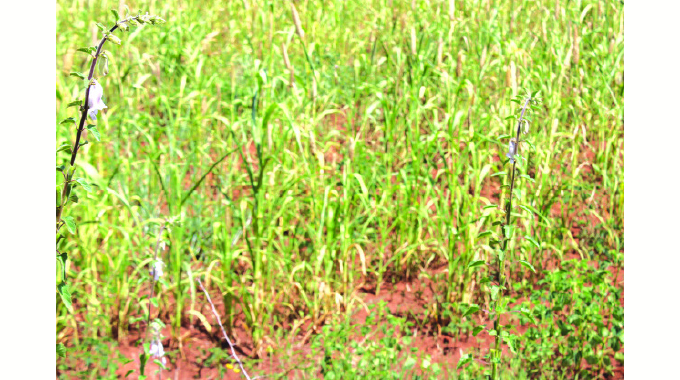
Phyllis Kachere-Deputy News Editor (Convergence)
As a mother of four, Ms Sekai Matutu (31) and her sister Janet (19), comfort their wailing toddlers after being vaccinated against measles at Chemvana Primary School site in Mwenezi district’s Ward 8.
They then gaze at the blazing sun, wondering what will become of their wilting millet crop back home.
“We had planted almost a hectare of millet when the rains came in November, but all that is wilting,” said Ms Matutu.
“We have a rainfall challenge in this area. We used to get enough rain and we would get a good harvest, especially of traditional grains like sorghum, millet and rapoko.
“But these past years, seasons have changed and rains have become more erratic. Here in Ramela, in Ward 8, the rains fell twice or thrice this season and now the crops are wilting. Definitely, there is no harvest this season again.”
With no harvest this season, it means most households in the district face an exacerbated food insecurity situation.
Ward 5 Councillor, Tinashe Yingi, said most households in the Mwenezi district faced a critical food shortage.
“Most households in Mwenezi are food insecure,” he said.
“Government, through the Department of Social Welfare, has now started distributing maize, which is the staple food here. Some Government partners like the Red Cross have also chipped in with cash distributions to vulnerable households.”
According to the Zimbabwe Vulnerability Assessment Committee (Zimvac) 2022 Report, the country is experiencing food insecurity, with 5,6 out of 16,6 million people (33 percent) having insufficient food consumption, and a projected 38 percent of the rural households were cereal insecure at the peak of the lean season (October to December 2022).
In response, the Zimbabwe Red Cross Society (ZRCS), with support from the International Federation of Red Cross, is implementing a Hunger Crisis Response project in Mwenezi District targeting 850 households in wards 5, 8 and 14.
Unfortunately for the Matutu sisters, they did not make it into the ZRCS register for cash.
In an interview, Chemvana Clinic in Ward 8 of Mwenezi acting District Development Coordinator Ms Nyaradzo Tongofa made a special appeal to extend the programme to the ZRCS and its partner the International Federation of Red Cross.
“As the district’s leaders, we are grateful to the Red Cross and its partner, the International Federation of Red Cross for extending a helping hand to Mwenezi,” she said.
“We are a district that is suffering most from the effects of climate change. We are in an arid area and climate change has compounded our hunger challenge.
“We are grateful for the three months which is the duration of this Hunger Crisis Response Programme cash disbursement during this normally lean period in terms of household food insecurity. But we have a special appeal for you to please extend the length and increase the number of beneficiaries.”
Extending and expanding the cash disbursement programme will ensure that more vulnerable households like the Matutus will benefit.
In an interview, ZRCS secretary general Mr Elias Hwenga said the eligibility criteria used was to pick the most vulnerable people in the communities which included the elderly people, children in child-headed families, people living with disabilities, pregnant and lactating mothers, people with chronic illness and malnourished children in the red-zone.
“The duration would be for 14 months (November 2022 to December 2023),” he said.
“The project components include Food Security and Livelihoods, Direct Cash Assistance through a money transfer agency every month on a transfer value of US$13 per person. This is for up to five family members.
“Water, Sanitation & Hygiene would be implemented to ensure that community-managed WASH services are provided to the target population to reduce health risks and improve food security and livelihoods.”
Headman Chihlava, Mr Solomon Sithole, appealed to the Government to consider setting up irrigation plots in Mwenezi district using water from Manyuchi Dam.
“We are facing a drought situation here,” he said.
“Even traditional crops like millet and sorghum have come under severe moisture stress and this will affect the harvest.
“Some heavy rains that fell last week have prompted some to replant, but for the rest, they no longer have the seed. While we are grateful for the assistance that has come to the people through Government and the Red Cross, we wish this could be extended and expanded to include more vulnerable households.”


 Online Reporter