Online Reporter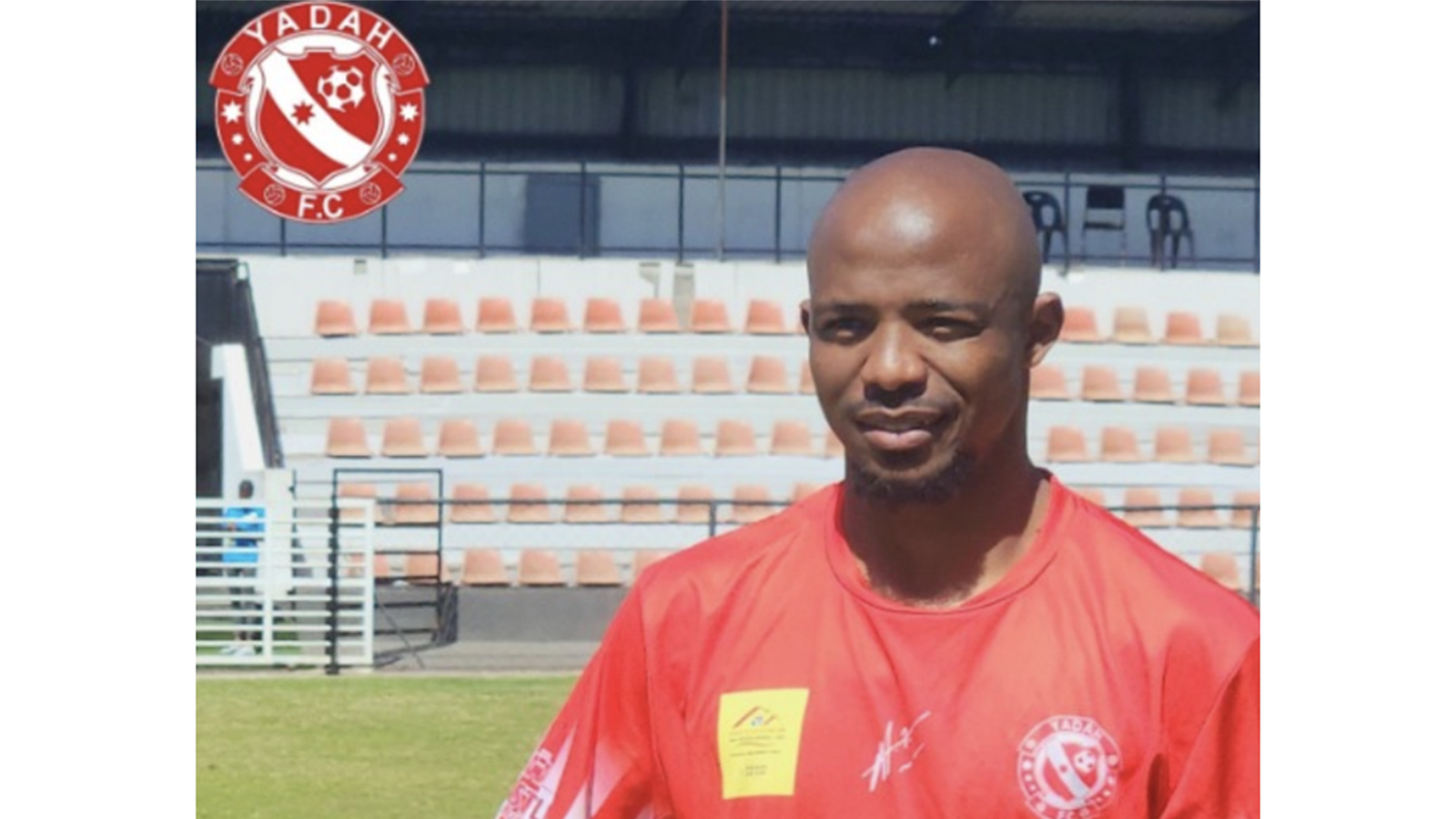
Veronica Gwaze-Zimpapers Sports Hub
THE sun slips behind the stands at The Heart Stadium, dragging long shadows across the car park where Sadney Urikhob stands beside his car.
Inside, the noise has died down.
Outside, frustration lingers like smoke after a fire.
Yadah have just lost 2-1 to visiting TelOne, a defeat that has plunged the Miracle Boys into the Premiership relegation zone.
For the Namibian striker, it feels like the ground is shifting beneath his boots.
Sweat still clings to his face, mixing with dust and disappointment.
A few fans walk past in silence. Some shake their heads and others just glance his way and keep walking.
Their silence cuts deeper than any insult.
Urikhob watches them go, the weight of their expectations pressing on his shoulders.
A year ago, he thought Zimbabwe would give him a new beginning.
Now, it feels like he is running out of road.
“I am not okay,” he admits softly.
“The situation I find myself in is not what I pictured when I left my country. I just wanted to revive my career.”
When Urikhob arrived in Zimbabwe at the start of 2024 to join Dynamos, his mission was clear.
He wanted to restart his career with one of the continent’s most storied clubs and reclaim the respect he once commanded in Namibia and South Africa.
He knew what came with wearing the Glamour Boys’ famous blue jersey — expectation, scrutiny and a fan base that demands nothing less than success.
Still, that did not scare him.
He signed a one-year deal, carrying little more than a suitcase and a fierce desire to matter again.
But his start was slow and awkward.
Supporters had to wait until matchday 13 before he finally scored.
That goal broke the tension, and something shifted.
His confidence returned.
By midseason, Urikhob had become a regular in Lloyd Chigowe’s side.
He ran himself into the ground every week, pressing defenders, creating space and lifting the crowd’s mood.
He finished the season with five goals and played a vital role in Dynamos’ successful defence of the Chibuku Super Cup.
For a man many had written off as a gamble, it felt like redemption.
“I wanted to stay at Dynamos longer because of their profile,” he says.
“I had improved so much in the second half of the season, so a little more time in the same camp would have been good for me. But they (Dynamos) were silent until the season ended.”
Then came Scottland, Zimbabwe’s new football money machine, armed with ambition and deep pockets.
They offered him a two-year deal and the promise of a glittering new chapter.
His agent urged him to sign, and though hesitant, he did.
It did not go as planned.
Scottland’s squad was full of established stars, and the Namibian found himself slipping down the pecking order.
Over 17 matches, he only got 40 minutes of football and scored once.
“By midseason, I had become frustrated because things did not go as planned,” he admits.
“I was hoping for more game time or fair treatment at least. I just wanted to start one game, especially after scoring, but it didn’t happen. Still, I am grateful for the opportunity.”
Determined to fight his way back, Urikhob cancelled a planned trip home to Namibia during the midseason break to train on his own.
He hoped extra effort would earn him a lifeline.
Instead, he was loaned out to Yadah.
“I was a bit disappointed, but I had to accept the reality,” he says.
“Now that I am with Yadah for the remainder of the season, I am just looking to restart again next year.”
His voice softens when he talks about his family.
“I had rescheduled my trip for the international break to visit them, just to recuperate a bit and come back stronger,” he says.
“But since I wasn’t making the starting 11, I decided I needed to stay and work harder. So, I cancelled again.”
Now, every game in Yadah colours feels like a personal test, a battle not just against relegation, but against time, doubt and fading relevance.
As the season winds down, his future is still uncertain.
When his loan ends in December, he must return to Scottland and confront the reality of limited options in a team filled with big-name players.
At 33, Urikhob is no rookie.
His touch, intelligence and eye for goal remain intact.
But football can be cruel to players of his age, especially those trying to prove they still belong.
The man who once set stadiums alight in Namibia and South Africa is still fighting for minutes on Zimbabwean soil.
His dream of revival flickers, refusing to die, even as the odds stack up again.
The question that lingers like twilight over The Heart Stadium car park is: Will Urikhob ever relaunch his career, or will he remain forever on the edge of greatness, close enough to feel it, but never quite close enough to hold it?