Tinaye Agere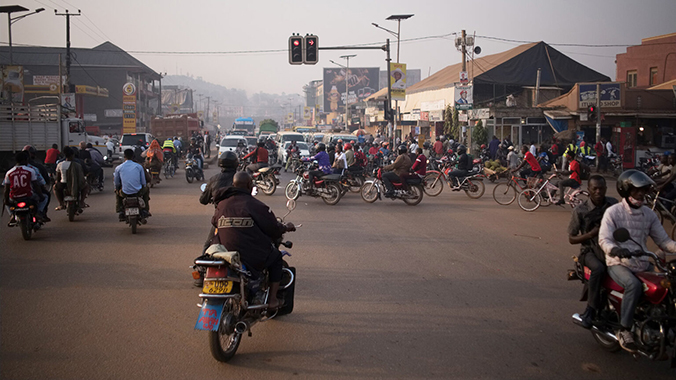
OVER the past two decades, the number of motorcycles — both two- and three-wheelers — in Sub-Saharan Africa has risen rapidly.
This growth has been made possible by the availability of low-cost motorcycles from China and India. Additionally, it has been generated largely by the informal commercial use of motorcycles, with riders charging a fare to carry passengers and deliver goods.
A report titled “The wheels of change: Safe and sustainable motorcycles for Sub-Saharan Africa”, done by Amend, together with the FIA Foundation and FIM, was recently launched.

The research found out that there are at least 27 million registered motorcycles in Africa — up from under five million in 2010.
An estimated 80 percent of the motorcycles are being used as passenger taxis or for delivery services.
In many countries, economic, social and other forces strongly influence the increasing number of commercial motorcycles; chief among them are continued population growth, rapid urbanisation, poor roads, lack of infrastructure for walking and cycling and limited employment opportunities for young men.
The growth is likely to continue in the coming years, or to even accelerate, with the likely spread of motorcycles into new countries and increases in private ownership.
Urban residents use motorcycle taxis to get to their shops and offices, weaving through African cities’ notorious traffic jams.

Children are taken to school on them. Farmers use motorcycles to get their produce to the market along bumpy village tracks. Health workers use them to access remote villages. Pregnant women are taken to hospitals on them.
Commercial motorcycles have created millions of jobs across the continent, mostly for riders — typically young men who struggle to find other forms of employment and who often become the breadwinners in their families.
Along with an estimated 27 million motorcycle taxi and delivery riders, millions of motorcycle owners, mechanics and spare parts salespeople make a living through the sector.
Riding a taxi or delivery motorcycle is a precarious occupation that also poses risks for passengers and pedestrians.
In some African countries, deaths of motorcycle riders account for more than half of all road deaths. In Togo, the figure is over 70 percent. More than half of all child pedestrians injured on the roads in Dar es Salaam, Tanzania, are hit by a motorcycle.

While road traffic death rates are falling in other parts of the world, in Africa, they are rising — driven partly by motorcycle-related deaths. Along with the risk of injury, there are wider negative environmental, health and social impacts. Ambient air pollution — which includes pollution from motorised vehicles — contributed to the deaths of over 350 000 people in Africa in 2019.
Despite their small engines, motorcycles can also cause noise pollution. As well, motorcycles are sometimes associated with crime, from minor theft to armed robberies, vigilantism and banditry, and exploitation of both passengers and riders.
Amend and partners’ report contains the action agenda that highlights the highest-priority opportunities to save lives, improve environments and enhance livelihoods:
- Including motorcycles in a safe and sustainable transport policy, coordinating with the transition from petrol engines to electric motorcycles.
- Introducing motorcycle helmet standards, developing testing facilities and improving enforcement.
- Developing effective and affordable motorcycle rider training programmes, tying training to testing and licensing.
- Mandating anti-lock braking systems (ABS) on all motorcycles imported, assembled, manufactured and sold.
- Considering motorcycles in road infrastructure design.
During the launch of the report, Saul Billingsley, executive director of the FIA Foundation, said: “In the rapid growth of motorcycle use, we see the balance between lives and livelihoods played out on the streets.
“Motorbikes provide relatively cheap transportation, but they are expensive for society in injury and environmental damage.
“With some African cities predicted to double in size in the coming decade, there is an urgent need for an action agenda that mitigates these negative impacts, with a focus on motorcycle helmets, ABS and electrification, while planning for a low-carbon future based on widely available, clean public transportation.”
The report’s lead author, Amend programme director Tom Bishop, said: “The motorcycle sector has run away from the control of governments, of policy, of legislation.
“That is why we have put together this report, looking at issues of safety, but also issues of economics, electrification, mobility, access and planning.”
George Njao, director-general of Kenya’s National Transport Safety Authority, said: “The report gives an action plan on what is to be done. It gives a step-by-step framework, and it gives tangible ways of implementation.”
The launch of this report was a first step in supporting African countries and communities in mitigating the risks of motorcycle use. — Wires



 Online Reporter