daniel chigunwe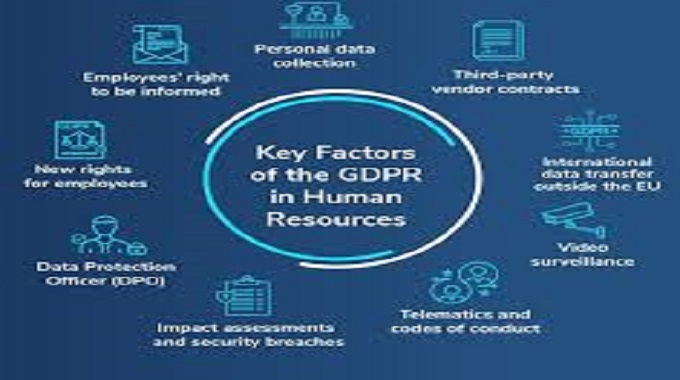
Peace Sithole
In today’s digital age, the handling of personal data has become a critical concern for organisations across various industries.
Human Resources (HR) departments, in particular are entrusted with sensitive employee information, ranging from personal details to financial records.
As technology advances and data breaches become increasingly common, ensuring data privacy and compliance in HR has become paramount.
This article explores the importance of safeguarding employee data, the challenges faced by HR departments and the strategies they can adopt to maintain data privacy and compliance.
Data privacy refers to the protection of personal information from unauthorised access, use, or disclosure.
Compliance, on the other hand, involves adhering to legal and regulatory requirements governing data protection.
In HR, maintaining data privacy and compliance is crucial to establish trust, protect employees’ rights, and mitigate the risk of costly legal repercussions.
One of the primary challenges faced by HR departments is the sheer volume of data accumulated over time.
From job applications and performance evaluations to payroll information and medical records, HR systems store a vast amount of sensitive information.
The digital nature of these records presents both opportunities and risks. While technology facilitates efficient data management, it also exposes organisations to potential data breaches and cyberattacks.
Data breaches can have severe consequences for employees and employers alike.
Identity theft, financial fraud and reputational damage are just a few of the risks associated with unauthorised access to personal information. From a legal standpoint, organisations that fail to protect employee data may face substantial fines and lawsuits.
Therefore, it is imperative for HR departments to implement robust data privacy measures. To ensure data privacy and compliance, HR departments should adopt a comprehensive approach that encompasses both technical and organisational measures.
Firstly, implementing secure data storage and transmission protocols is essential. This includes encryption, firewalls and secure servers to protect data from unauthorised access.
Regular security audits and vulnerability assessments can help identify and address potential weaknesses in the system.
Secondly, HR personnel must receive adequate training to handle employee data responsibly. Training programmes should cover topics such as data protection regulations, secure data handling practices, and incident response protocols.
By equipping employees with the necessary knowledge and skills, organisations can create a culture of data privacy and compliance.
Additionally, HR departments should develop and enforce strict data access controls.
Limiting access to sensitive information to only authorised personnel significantly reduces the risk of data breaches. Implementing strong authentication mechanisms, such as multi-factor authentication, adds an extra layer of security.
Regularly reviewing and updating access privileges based on employees’ roles and responsibilities is crucial to maintain data privacy.
Furthermore, organisations should establish clear data retention and disposal policies. Retaining employee data for longer than necessary increases the risk of unauthorised access.
By defining specific retention periods and securely disposing of data once it is no longer needed, organisations can minimise the potential harm caused by data breaches.
Compliance with data protection regulations, such as Data Protection Act Chapter 11:12, is another crucial aspect of data privacy .
HR departments must familiarise themselves with the relevant legal requirements and ensure their practices align with these regulations.
This includes obtaining explicit consent from employees for data collection, providing transparent privacy notices and facilitating employees’ rights, such as the right to access and correct their personal information.
In conclusion, data privacy and compliance in HR are of utmost importance in the digital age. HR departments must prioritise the protection of sensitive employee information to establish trust, safeguard employee rights and avoid legal consequences.
By implementing robust technical and organisational measures, providing adequate training and adhering to data protection regulations, organisations can effectively safeguard employee data.
Ultimately, a commitment to data privacy and compliance will not only protect employees but also contribute to the overall reputation and success of an organisation in the long run.

Peace Sithole works in the Ministry of Health and Child Care. He has t Degree HRM, Dip HRM IPMZ, Dip Payroll Management IPTA, Dip Education, Executive certificate in labour law conciliation and arbitration, certificate in project, programme monitoring and evaluation, certificate in human resources metrics and analytics, OHS.He can be contacted on 0773474899



 Online Reporter