Online Reporter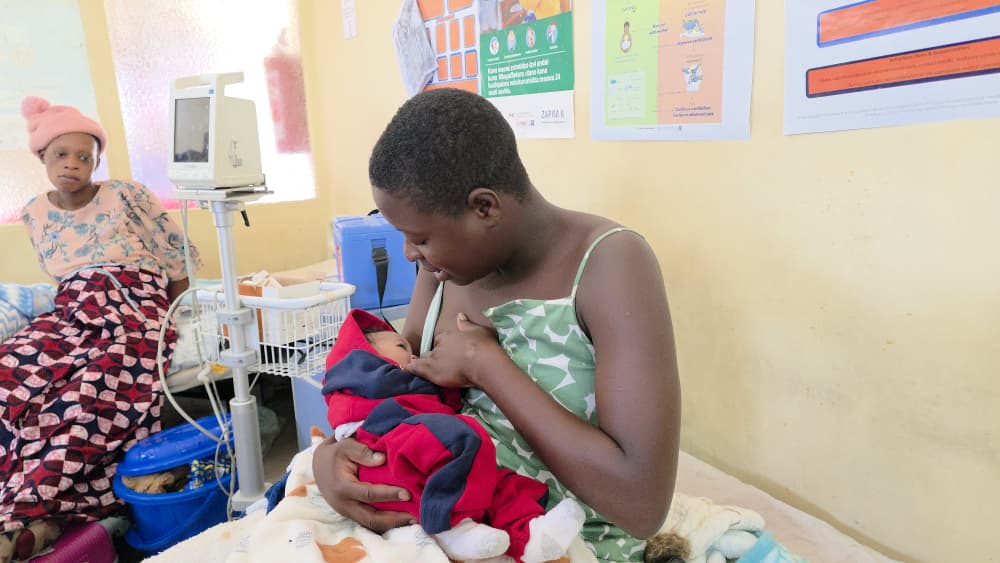
Rumbidzayi Zinyuke in Mutare
Sakubva District Hospital has recorded significant progress in reducing maternal and perinatal deaths, following a series of interventions by the Government and its development partners aimed at strengthening maternal health care.
The hospital, which serves a high volume of patients from Mutare district, conducts an average of 120 deliveries per week, with about 40 to 45 of these being caesarean sections.
Despite the workload, the institution has seen remarkable improvements in maternal outcomes.
Mutare District Medical Officer, Dr David Muchirewese, said the hospital had cut maternal deaths from five recorded last year to just one so far this year.
Perinatal deaths have also shown a steep decline, with the district recording zero in recent weeks, down from an average of 30 to 40 per month.
“This is a very significant improvement from the previous years. In fact, for the past four to six months, we have consistently reported zero perinatal deaths,” he said.
“This progress has been largely due to various interventions, including staff training, new equipment, and improved infrastructure.”
The hospital recently benefited from the installation of a 45kVA solar plant with lithium batteries under the Solar for Health Programme, ensuring an uninterrupted power supply for critical services.
Renovations and re-equipping of the theatre with new lights, anaesthetic machines, tables, and accessories have also boosted emergency response capacity.
Dr Muchirewese said the upgrades had allowed the hospital to conduct emergency caesarean sections within the recommended 30-minute timeframe, saving more lives.
“We trained all our nurses, midwives, and doctors in emergency obstetric, maternal, neonatal and child care,” he said.
“Regular skills drills have helped us prepare for complications, enabling us to respond quickly and effectively.”
To further enhance maternal care, the hospital also received 20 new beds for its postnatal ward, improving comfort and recovery conditions for mothers after delivery.
Dr Muchirewese noted that these improvements reflect the Government’s continued drive to strengthen health systems and ensure safe motherhood across the country.
For many mothers, the modernised theatre has made the difference between life and death.
Ms Memory Mtetwa of Dangamvura said she owed her baby’s survival to the swift intervention of the medical team.
“When I went into labour, I was at 8cm dilated. When I tried to push, I was told that my baby was not crowning,” she said.
“Suddenly, the nurses could not feel the baby’s heartbeat, so they had to call in the doctors. I was put on oxygen and quickly taken to the theatre for an emergency caesarean section, and my baby survived.
“If I had delayed, I would have lost my child. I want to encourage other women to quickly come to the hospital and not fear going into the theatre.”
For Ms Michelle Munyama from Marange, the theatre services saved both her and her baby.
“Coming to the hospital helps to save both the mother and child. Having an operation saved my life and that of my child,” she said.
“This is my second baby. I had a C-section with my first baby, so I was scheduled for another caesarean section with this one.”
Ms Ruvimbo Chizikani from Sakubva said she had gone past her due date and had to have a cesarean section.
“My due date was overdue, and I was at 42 weeks. I started feeling labour pains on Tuesday and I came to hospital,” she said.
“When I got here, I was quickly taken to the theatre and my baby was delivered. I want to encourage women to attend antenatal classes and also to quickly come to hospital.”
These interventions are part of broader efforts by the Government to improve service delivery and ensure universal health coverage, so that no mother or child is left behind.