Ray Bande
Senior Reporter
SAKUBVA District Hospital in Mutare has undergone a major transformation into a specialised maternal and neonatal healthcare centre, a move expected to significantly improve the quality of care for the nearly 400 mothers who deliver at the facility every month.
The hospital, where up to half of all deliveries are conducted through caesarean section, has completed extensive renovations that include the refurbishment and equipping of its labour ward, the commissioning of two fully functional operating theatres fitted with modern anaesthetic machines, and the construction of a central pharmacy warehouse.
To meet growing demand and ease pressure on infrastructure, the facility has renovated and equipped its labour ward, commissioned two fully functional operating theatres, built a central pharmacy warehouse and installed a 45kW solar power backup system.
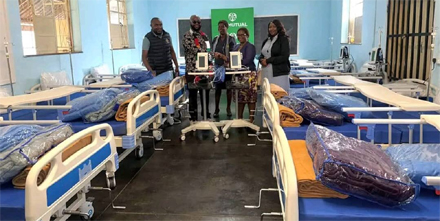
The hospital has also received a significant donation from Old Mutual comprising 20 modern hospital beds, five advanced patient monitors, two stretcher beds, two airport-style waiting benches, 100 bedsheets and 200 heavy blankets.
Mutare District Medical Officer, Dr David Muchirewesi, said the changes were driven by unprecedented increases in patient numbers and the need to improve maternal and neonatal healthcare delivery.
“As a key referral facility serving Mutare City Council clinics and surrounding rural health centres, the hospital handles an average of 400 deliveries monthly, with approximately 180 to 200 performed through caesarean section. The measures we have implemented seek to expand maternal and neonatal care capacity, modernise surgical facilities and ensure uninterrupted delivery of quality healthcare services,” he said.
As part of the reorganisation, eye care services previously offered at the hospital were transferred to Victoria Chitepo Provincial Hospital, creating much-needed space for the expansion of maternity services.
The relocation enabled the hospital to establish a new 15-bed maternal ward and a six-bed extension, adding 21 beds dedicated to maternal care.
“The strategic relocation freed up critical space, allowing us to expand our maternal care infrastructure. Surgical capacity has also been doubled through the addition and full equipping of a second operating theatre, significantly reducing turnaround times for emergency obstetric procedures,” said Dr Muchirewesi.
He emphasised that despite the operational changes, the institution remains Sakubva District Hospital and has not undergone a name change.
However, Dr Muchirewesi acknowledged that the district still urgently requires a fully-fledged district hospital capable of providing a broader range of secondary healthcare services.
“It is important to note that Sakubva currently offers only maternity services, yet a district hospital is expected to provide comprehensive services including medical and surgical admissions, radiology, rehabilitation, dental care and laboratory services. We therefore respectfully call upon Government to expedite construction of the long-awaited district hospital to address the inequitable distribution of secondary healthcare facilities across the district,” he said.
Dr Muchirewesi said the latest restructuring became necessary after the facility experienced a sharp rise in patient volumes that strained available space and resources.
“With around 400 births every month and a referral footprint covering city clinics and 45 rural health centres, immediate structural and operational realignments were necessary to preserve patient dignity, maintain infection control standards and ensure timely clinical intervention,” he said.
He said the upgraded infrastructure and additional equipment will improve patient comfort, strengthen monitoring of high-risk pregnancies and ensure rapid responses to obstetric emergencies.
“The improvements will help reduce maternal and perinatal mortality, enhance patient privacy and dignity, and ensure emergency surgical procedures are performed within internationally accepted timeframes,” he said.
The hospital’s capacity has also been strengthened through recent recruitment of healthcare personnel following Government’s unfreezing of posts.
“We have benefited from the recent recruitment drive and have appointed doctors, radiographers, nurses, social workers and laboratory scientists to help bridge the human resources gap and improve service delivery,” said Dr Muchirewesi.
Sakubva District Hospital serves as the secondary referral centre for eight Mutare City Council clinics and 45 rural health centres, but increasingly attracts patients from across Manicaland and beyond because of its affordable services, specialist maternal care and improved surgical capacity.
“The growing number of people seeking treatment at Sakubva reflects both confidence in the quality of care being provided and the increasing demand for secondary-level healthcare services in the province,” said Dr Muchirewesi.
Ends
Sakubva Hospital doubles surgical capacity