

 admin
admin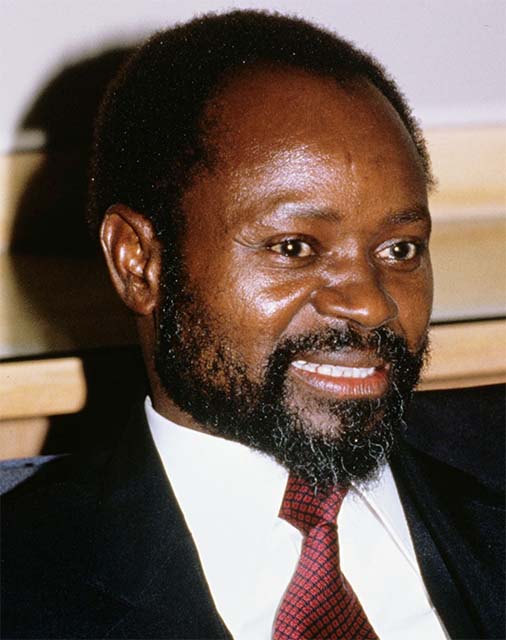
Tendai Chirau
Zanu PF Deputy Secretary for National Security
Yesterday marked 37 years since the death of Mozambican leader and freedom fighter Samora Moisés Machel.
On that day, a dark cloud hovered over and spoiled the African landscape.
This was the immediate aftermath of the painful demise of one of Africa’s finest and pragmatic leaders, Machel, a Marxist-Leninist to the core.
He was a son of peasant farmers, who later trained as a nurse and faced racial segregation when qualified nurses were paid according to skin colour, with whites invariably getting more pay than equally qualified blacks.
Cde Machel loved motherland Africa with his all and was an ardent believer in the notion that the independence of Mozambique would ever be meaningless as long as other African states remained under colonial domination.
This was straight out of the pan-Africanist views of Ghana’s Dr Kwame Nkrumah, who famously declared that the liberation of Ghana would not be complete if the rest of Africa remained in colonial shackles.
As leader of Revolutionary Front for the Liberation of Mozambique (FRELIMO), Cde Machel commanded his revolutionary troops from the front and dismantled the minority colonial Portuguese regime.
His solidarity with the nationalist movement in the then Rhodesia was not just in words, but deeds.
As one of the frontline leaders, he provided shelter, training and material support to Zimbabwe’s liberation war fighters.
For this supreme sacrifice by Cde Machel, Mozambique had to endure a lot of suffering, and had to face numerous military attacks by the Ian Smith regime.
In his historic magnanimity, Cde Machel did not allow these challenges to change his heart towards supporting sons and daughters of Zimbabwe domiciled in Mozambique, a tenet which remained sacrosanct to him up to his death.
Though he was assassinated and is no longer with us, he left some indelible marks of leadership that we should hold in high regard.
These include inter alia; selflessness, dedication, sacrifice, pragmatism, love and pragmatic Pan Africanism.
May the spirit of Samora continue to live!
Looking at our lifestyles today, especially as young people, there are a lot of lessons to be drawn from the character, life and times of Cde Machel.
Though we did not have the privilege of living with him, as most of us were born even after his death, his legacy still continues to strongly endure and influence our thinking.
Reading about him in history books and hearing close-contact narrations from elders, one immediately disabuses themselves from any contrary or reprobate ideas.
According to Cde Machel, appreciation of the dignity of labour is a sure hallmark of success, in the spirit of Ubuntu, such that young persons aspiring to make a mark in society should always value good and honest work.
During Cde Samora’s times, work meant total sacrifice; donating and shedding of sweat, limb, blood and life for the independence of the masses.
Sacrifices done by young people who had a vivid, clear vision of the future, a future devoid of oppression, a future of African self-rule, but often-times a future in which many of them chose to put themselves out of the picture.
This patriotic generation, the Samora generation (read Thomas Sankara, Sheikh Abeid Karume, Robert Mugabe, Emmerson Mnangagwa, Eduardo Mondlane, Agostinho Neto and company) has taught us that idleness leads to relaxation, sooner or later bringing about ideological and material corruption, accompanied by lack of discipline, anarchy, chaos and eventual defeat, in that order.
Cde Samora Moises Machel was one man we in Zimbabwe, revolutionaries and even non-revolutionaries, revered beyond mere understanding.
Mozambique became independent, like one sore enclave, surrounded by white-controlled South Africa and Rhodesia. We were fighting to liberate ourselves, despite the fact that Mozambique was then an infant independent country.
President Machel took the bold decision to allow us to occupy Mozambican space, train our fighter cadre, and wage our armed struggle from their land as one of our rear-bases.
He took the very huge risk of exposing his people to callous bombardment from the Rhodesian and South African air forces.
Mozambique attained her independence from Portugal in 1974, and under Cde Machel it soon assumed the role of providing a launch-pad for the liberation of its neighbours.
To sum up what could be an even longer tribute to Cde Samora Moises Machel, I will quote one anecdote from our President, Cde Mnangagwa, who I believe, gave a most fitting description of Cde Samora, the revolutionary;
“He felt that as long as Zimbabwe was not independent the independence of Mozambique was not complete, this was a man whom the imperialists in Salisbury and in Pretoria did not want, they wanted to remove him by any means, and on the 19th of October they diverted his plane, as he was flying from Mbala in northern Zambia, where they had gone for a meeting with President Kaunda. We therefore revere and continue to remember him as a gallant hero for our country, for the region and the continent.”



 Online Reporter