admin
admin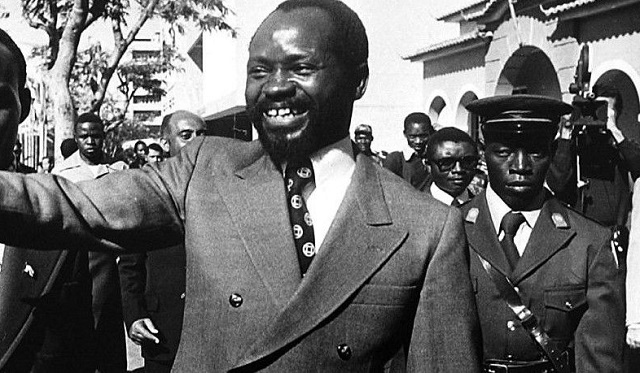
Apartheid South Africa claimed one of its most high profile victims on October 19, 1986, when it assassinated founding Mozambique President Cde Samora Machel.
The South African security sector of the day interfered with the navigation system of a plane that was carrying Cde Machel and 43 others, luring it off course into South Africa’s Lebombo Mountains where it crashed. Cde Machel died in the accident together with 34 others, marking one of the saddest moments not only for his country Mozambique but also for southern Africa.
Shunned by most on the continent for its injustice, apartheid South Africa was at that time waging a huge destabilisation crusade against its neighbours. It was sponsoring Renamo rebels to fight against Cde Machel’s government. It was also sponsoring Unita in Angola to undermine the government of Cde Jose Eduardo Dos Santos. It was doing the same for Zimbabwe. Cde Machel died when he was fairly young for a president, 53 years. He would have been 83 years old today.
His death was a huge loss indeed for his country, only 11 years old then. It was also a big loss for Zimbabwe whose relations with his government and peoples were, and remain, solid. Cde Machel had played a massive role, offering his country and critical infrastructure to accommodate tens of thousands of Zimbabwean freedom fighters and many more thousands of Zimbabwean refugees fleeing the brutal Ian Smith regime.
Only a selfless leader, who is also courageous, would offer such support only a few months into the independence of his or her own country. Smith targeted him personally and his country for elimination seeing that he was giving so much support to Zanla forces that were prosecuting the liberation struggle. Many Mozambicans were caught in the crossfire and we remember military campaigns that the Rhodesian army launched in Mozambique. The Chimoio and Nyadzonya massacres stand out as the most heartless of Smith’s breaches of Mozambique’s territorial integrity.
Zimbabweans will forever be grateful for the sacrifices that Cde Machel made towards our attainment of Independence in April 1980.
Zimbabweans will forever be grateful for the sacrifices that Mozambicans in general made towards the same goal.
It was therefore not a surprise that as the Renamo banditry raged, with the active support from apartheid South Africa, newly independent Zimbabwe under the leadership of President Mugabe deployed forces to fight alongside the Mozambican army, a campaign that broke the insurgency at that time.
Acting President, Emmerson Mnangagwa, in a message to commemorate the 30th anniversary of the independence icon’s death exalted Cde Machel.
“The death of Samora, that revolutionary and visionary icon, profoundly affected Zimbabwe as it did Mozambique,” said Acting President Mnangagwa.
“During the liberation war, Mozambique provided rear bases to our guerillas, most of whom were based in the neighbouring country. Critical infrastructure like roads, bridges, schools and clinics was also sabotaged and destroyed in an attempt to destabilise the economy and curtail Mozambique’s ability to support the Zimbabwean guerilla effort. An important attribute about him is that he was clear about creating a culture of discipline and hard, honest work. He included women and people of all races in the nation building project of the ruling Frelimo in stark contrast with Mozambique’s then apartheid neighbour South Africa.”
Cde Machel’s legacy of selflessness, Pan-Africanism and commitment to freedom must live on among the leadership of today. They have much to learn from him to ensure that the continent takes its rightful place among others.
Economically, Mozambique is advancing from the dust it was in at independence in 1975 when the defeated Portuguese employed a ruinous scorched earth policy. They destroyed important infrastructure and decimated the economy as they fled the country. Recovering it was an onerous task but through his able leadership, Cde Machel laid a firm foundation for the future growth of the economy. We see commendable progress, which should be further enhanced with the recent discovery of oil and gas reserves in Mozambique.
However, it is with great sadness that the Renamo banditry that he was fighting continues to cause security challenges for his country. His party, Frelimo, which has consistently won elections in his country has failed to quell the trouble. Rebel leader, Mr Afonso Dhlakama still has armed men loyal to him, not President Filipe Nyusi’s government and has carved territory for themselves in Gorongosa area. From time to time Mr Dhlakama’s militants attack government positions, civilian infrastructure and their compatriots.
As the skirmishes persist, at least 15 000 Mozambicans have fled and settled in Malawi while up to 3 000 have sought refuge in Manicaland. In his grave, Cde Machel must be turning seeing that his old enemy has not been contained.
We trust that Mozambique has the capacity to contain Renamo, but we cannot continue to have the lawlessness and insecurity that is reigning in that country. We cannot have so many people fleeing their homes, others dying because of a discredited, apartheid-era creation in a free Sadc.
While we have confidence in President Nyusi’s efforts to contain the situation, we, with much respect, ask for stronger action on Renamo.
It is 30 years and one day since the luminary perished in that plane crash but we are still bitter that apartheid South Africa killed him. Nonetheless, we remain hopeful that our good neighbours will continue on the path Cde Machel charted for them and the rest of us.


 Online Reporter