

 Chronicle Editor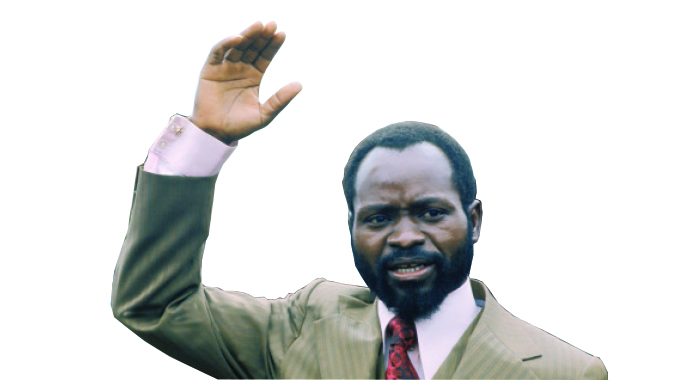
Ranga Mataire, Group Political Editor
FOUNDING Mozambican leader, Samora Moises Machel, would have been 89 years old had it not been for that fateful plane crash on October 19, 1986 that claimed his life leaving southern Africa and the African continent shattered in grief.
Many remember Samora Machel as a forthright charismatic leader who believed in the total annihilation of colonialism and imperialism.
In Zimbabwe many remember him as brotherly revolutionary figure who regard the country as his second home. His speech after State visit in early 1980 still stands out as the best ever speech made by a visiting Head of State.
Addressing multitudes that gathered to welcome him at the then Harare International Airport, President Machel said: “To ensure national unity, there must be no Shonas in Zimbabwe, there must be no Ndebeles in Zimbabwe, there must be Zimbabweans. Some people are proud of their tribalism. But we call tribalists reactionary agents of the enemy.”
Such was Machel’s incisive grasp of what was at stake and his impassioned plea for national, regional and continental unity. No wonder why the whole continent was engulfed in inconsolable grief that when he, together with 33 other passengers, died in a mysterious plane crash in Mbuzini near Mpumalanga, South Africa, just a short distance from Maputo, Mozambique.
Most African leaders and the whole progressive world trashed South Africa’s investigations of the crash that attributed it to pilot error as nothing but an attempt by the apartheid regime to absolve itself from a clear and apparent complicity in the murder of one of Africa’s revered revolutionary icons.
Unsatisfied with the Margo Commission, the independent government of South Africa reopened the crash probe in 2008 and squarely accused the then white minority regime of using a decoy beacon to cause the crash.
The then South African Minister of Safety and Security Charles Nqakula initiated the inquiry that was endorsed by President Thabo Mbeki. The inquiry was to be conducted by the South African police and intelligence agencies, working with authorities in Mozambique.
Thirty-six years on, the crash remains one of the greatest mysteries of the apartheid era with no conclusive data as to the actual cause of the crash. Only nine survived the crash while 33 others lost their lives together with the Mozambican founding president.
Researcher and historian, Phyllis Johnson, still believes more needs to be unearthed to establish the cause of the plane, which she said “suddenly, overnight extinguished the inspirational energy Machel generated”.
“Despite official inquiries in Mozambique, South African and the Soviet Union, the countries of ownership of the plane, venue of the crash, and nationality of the pilots, the full details have not yet emerged,” says Johnson.
This is despite the fact that then Mozambican President Armando Guebuza and then South African Thabo Mbeki had pledged to leave no stone unturned in finding out what happened on October 19, 1986.
A gigantic monument stands at the site of the crash at Mbuzini where visitors testify to hearing echoes whispering through the 35 vertical steel pillars designed by Mozambique’s leading architect Jose’ Forjaz.
The memory of President Machel has not been forgotten in the region and beyond. South Africa has led the way in commemorating the death of President Machel at the actual site of the crash together with Mozambican nationals.
In a paper presented a few years ago at the annual Samora Machel lecture, Reverend Dr. Lucas Amosse, President of Synod Council of the United Council of the United Church of Christ in Mozambique, said President Machel’s motto “Aluta Continua” made him known in Southern Africa in particular, the continent and the world in general for his outcry for freedom.
“A charismatic leader, he influenced many people to joint fights against colonialism, apartheid for liberation. Today in many cities of Mozambique you find people listening to pirated CDs containing Samora Machel’s speeches, and after a while they would say: ‘This one was indeed the real leader and President; I wish he was here all this we are witnessing wouldn’t be happening’. The question I would ask is why? This is a question that we all ask ourselves in Mozambique today! Why?”
Reverend Amosse said President Machel was a leader of a broad mass liberation movement which represented the hope of many Mozambicans that liberation was possible and that “you can’t ask a slave with a gun in a hand if he/she wants freedom”.
He said President Machel was politically advanced and hardly could be understood but was appreciated by many poor people and also disliked by few elites mostly because of his pro-poor social policies and the way he used to interact with the masses and articulate his ideas.
Sadly, it appears President Machel’s memory is becoming more of a distant past judging by the lack of official commemorations by southern African nations. Yet Samora Machel, Julius Nyerere, Thomas Sankara- just to name a few, represent critical African historical inspirational figures.
We are living in dangerous times in which children are growing up hooked on things that clearly alienate them from a solid base that empowers them to understand the dynamics of a global world tilted in favour of those with the means to ensure that their cultural products dominate the world.
We are living in a world that tells us that knowing one’s bases no longer matters because we are now global citizens.
We are told to frown upon our heroes and heroines who are associated with failure. Surely, we cannot afford to relegate Samora Machel to a historical relic. His contribution to the liberation of Zimbabwe was priceless.
Four commissions have to date failed to conclusively point to the actual cause of the plane crash.
One was Mozambican, the other an international tripartite and another South African chaired by Judge Cecil Margo and one by the Soviets.
Like Che Guevara, Thomas Sankara or Amilcar Cabral, Machel was an internationalist who selflessly supported and allowed revolutionaries fighting white minority regimes in Rhodesia and South Africa to operate within Mozambique and he surely earned their wrath.
Thirty-six years on, Africa still needs answers, the people of Mozambique are yearning for answers and the people of Africa surely deserve closure to one of their illustrious revolutionary icons.
As Machel said: “Personalities and fame pass: the revolution must remain.”


 Blessing Chizhande
 Online Reporter