Lloyd Makonya
Correspondent
FORTY years after his death, the legacy of Mozambique’s founding president lives on in the shared history of our two nations whose freedom struggles were bound by sacrifice, solidarity and a common determination to end colonial rule.
When Zimbabwe celebrates its independence, the story is rightly told through the sacrifices of its liberation fighters, the resilience of communities that sustained the struggle and the eventual triumph over colonial rule. Yet, beyond the battlefields and political negotiations, Zimbabwe’s road to independence was also shaped by the courage of neighbouring African leaders who understood that the liberation of one country could not be separated from the freedom of the region.
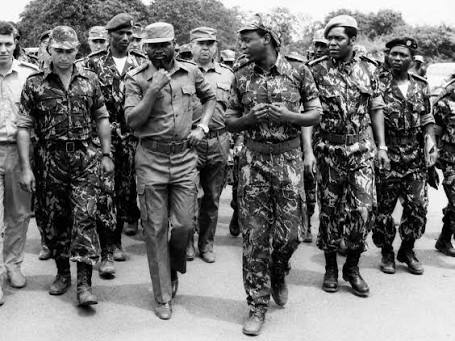
Among these leaders was the late President Samora Moisés Machel, Mozambique’s founding president, whose contribution to Zimbabwe’s independence struggle extended beyond diplomatic expressions of solidarity. Under his leadership, an independent Mozambique became a strategic rear base for Zimbabwean liberation forces, providing space from which fighters could organise, train and pursue the armed struggle against Ian Smith’s Rhodesian regime.
Forty years after President Machel died in a plane crash on October 19, 1986, his place in Zimbabwe’s liberation history remains a reminder that independence was not achieved in isolation. It was part of a wider southern African struggle in which the fortunes of neighbouring peoples were deeply connected.
President Machel was born on September 29, 1933 in Chilembene, in what was then Portuguese-ruled Mozambique.
His early life unfolded under a colonial system characterised by racial discrimination, land dispossession and the exploitation of African labour. These experiences helped shape the political consciousness of a man who would become one of the most recognisable revolutionary leaders of his generation.
He joined the Mozambique Liberation Front, known by its Portuguese acronym FRELIMO, after its formation in 1962.
Following the assassination of FRELIMO’s founding president, Cde Eduardo Mondlane, in 1969, President Machel rose to become the movement’s president in 1970. Under his leadership, the liberation struggle continued towards its decisive turning point.
Mozambique attained independence from Portugal on June 25, 1975, with President Machel becoming the country’s first president.
For the people of Mozambique, independence ended centuries of Portuguese colonial domination. For Zimbabwean nationalists, it opened a new and strategically important chapter.
The relationship between FRELIMO and Zimbabwe’s African nationalist movements had developed during the liberation era. With Mozambique independent, solidarity could be translated into practical support.
Historical research on the relationship between FRELIMO and the Zimbabwe African National Union (ZANU) documents the transfer of ZANU’s headquarters from Zambia to Mozambique and the establishment of Zimbabwean refugee and military camps on Mozambican territory.
The importance of this support becomes clearer when viewed against the military and political realities of the period. Rhodesia’s security forces could not regard the emergence of an independent Mozambique as a neutral development when the new government was supporting movements seeking to overthrow white-minority rule in the region. Mozambique consequently faced retaliation and destabilisation. Its own post-independence development was undermined by conflict, including attacks associated with the Rhodesian-backed rebel movement that became known as RENAMO and later, support for RENAMO from apartheid South Africa. The costs were severe, affecting infrastructure, economic activity and civilian life.
President Machel’s commitment to regional liberation therefore carried consequences for his own country. Mozambique was not simply extending hospitality to a neighbouring movement; it was making a strategic political choice that exposed it to pressure from a hostile regime.
His Excellency, President Dr Emmerson Mnangagwa’s in his commemorative statement earlier this week, brought that history into the present.
Describing President Machel as a committed ally in the fight against colonial rule and apartheid, he recalled the pain felt in Zimbabwe when the Mozambican leader died.
“Our whole region was thrown into deep mourning by the tragic incident, with the pain keenly felt here in Zimbabwe, a nation and a people towards whose liberation and founding this great African revolutionary gave all, sparing nothing,” said President Mnangagwa.
It is easy, with the benefit of hindsight, to speak of regional solidarity as though it were an uncomplicated diplomatic principle. For the governments and movements of the time, however, supporting liberation struggles involved difficult choices, security threats and economic costs. Machel’s role must be understood within those realities. His contribution also invites a wider reflection on the interconnected character of southern Africa’s liberation movements. The struggle against colonialism and minority rule was not confined by national borders. Developments in Mozambique, Zambia, Tanzania, Botswana and other countries influenced the strategic choices available to movements fighting in Rhodesia and apartheid South Africa.
President Machel understood this regional dimension of freedom. His political outlook placed Mozambique within a broader African struggle against colonial domination and racial oppression. In this sense, his support for Zimbabwean liberation was part of a larger vision in which the independence of neighbouring countries was essential to the region’s future.
For Zimbabwe, President Machel remains more than a departed president of a neighbouring country. He is part of the living history of our nation’s liberation and an enduring friend whose decisions helped turn the ideals of African solidarity into practical support when it mattered most.
Four decades later, President Mnangagwa has framed President Machel’s legacy around the unfinished responsibilities of African independence. He called for the silencing of guns across the continent and urged African countries to claim a greater share of the value generated from their natural resources through value addition and industrialisation.
“The guns must fall silent on our continent, as the late President Machel would have wished, to release Africa’s collective energy towards greater peace and development under a just social order,” he said.
The message draws a line between the political sovereignty pursued by President Machel’s generation and the economic sovereignty that remains a priority for Africa today.
Independence ended formal colonial rule in many countries, but the challenge of transforming resource wealth into industrial capacity, decent employment and broad-based prosperity remains.
Samora Moises Machel: Zimbabwe’s eternal friend