admin
admin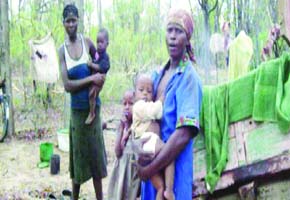
The amacimbi are not only a delicacy but a source of living to the communities especially the nomadic San people living in the remote south-west parts of Tsholotsho District near Sifulasengwe area.
The San people are reportedly embracing the old mode of production — barter trading, where they exchange the green caterpillar for groceries as they are facing a critical shortage of food and water.
The community is undoubtedly living a “foreign” life from that of most Zimbabweans. They do not have decent shelter as most of them stay in ramshackle makeshift dwellings built with wooden poles and tree branches in the bush.
A recent visit to the San community areas by Chronicle revealed that the community is in dire need of food and water. Most of them are now sharing water with wild animals and survive on bartering the caterpillar with groceries.
“We are now staying anywhere near water sources. We are close to Gariya and Sifulasengwe dams but the dams are fast drying up as we are sharing the same water with wild animals. It’s a first come first serve with the wild animals. The water wells we dug have since run dry,” said Mrs Anna Sibindi of Gariya area.
They transport water for cooking using donkey- drawn carts from the Sifulasengwe dam, some 5km from where they live. They said they have moved from their original homes in Mgodimasili area where they used to stay with their livestock, but the water wells and dams went dry due to siltation among others factors. They migrate to the inland Gariya and Sifulasengwe dams where there is still some water.
They said villagers that used to assist them with food for work programmes did not harvest for the past seasons due to erratic rains.
“We used to go and work for other villagers in return for groceries and money, but due to incessant droughts and floods they experienced they are no longer extending their helping hand. We are hunters and gatherers and are now surviving on eating these caterpillars and at times we exchange them with groceries.
“We usually follow a place where there are abundant caterpillars and enough water, since these are our daily relish,” said one member of the san community who identified himself as Mr Fios Mtshina.
A stone’s throw away in the thicket some elderly San women, with their children were seen busy collecting green caterpillars.
The green caterpillars are commonly known in the area as another type of the mopane worms popularly known as amacimbi but different in colour, size and taste.
“We have resorted to survive on eating and selling dried caterpillars and sometimes exchange for grocery. Green caterpillars are a good relish, but they are now hard to get as they have been destroyed by recent heavy storms that pounded the area,” said Nxapa Sinqinya another member of the San community.
Mr Sinqinya said they are struggling to make ends meet and they have gone for some years crying for food assistance and clean source of water.
He said some non-governmental organisations have promised to drill boreholes in the area but never come back.
“I remember last year a non-governmental organisation from Bulawayo promised to drill boreholes for us and are still to come,” he said.
The villagers also depend on wild fruits like chocolate, marula and umgwadi when they are on season.
“This time we are in difficult situation, most of the wild fruits we used to survive on are off-season,” said another community member who refused to be identified.
Mr Patrick Mvundla Tshuma, a father of three, who was so conversant in IsiNdebele said that they are now into inter-marriages between the Ndebeles and Kalangas.
“I am of the Ndebele tribe and my wife is of the San tribe. As we usually meet in food for work programmes and barter trade in different places, that’s how some of our intermarriage relationships started,” said Tshuma with a smile.
His wife MaTshuma added that they do not have nearby clinics and schools in their areas. She also professes ignorance of the risk of HIV and Aids and its awareness campaigns and at times they succumb to outbreaks of diseases.
“We have never heard about the HIV/Aids awareness campaigns you are talking about, it has never reached us. We do not have nearby clinics and schools. Most of our children do not attend school. There is Ntulila Primary school which is about 40km away,” said MaTshuma.
In Zimbabwe, the San community has started to live a sedentary life due to some government laws that restrict them to conserve wild animals, environment and also the effects of recurrent droughts has since forced some of them to practise farming to supplement their food. The san are also scattered in some parts of Southern African countries. They usually survived on eating game meat and wild fruits.
Recently Government provided some of the San community with decent shelter, but due to the serious problems of water and food in the area, they started to move away from their original homes in search of water and game animals.



 Online Reporter