admin
admin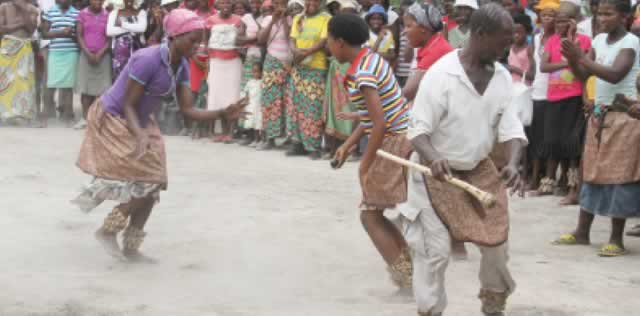

Factmore Dzobo
DRIVING through parts of Tsholotsho hit by floods was no easy task as sticking mud made the narrow road impassable.
We took a long time to reach our destination as the road agonisingly snaked through the thicket before reaching Mtshina village, home to the San community. Tucked deep in the luxuriant green mopani bush, here is a community that shut itself away from the outside world and distinct in its way of living.
It is in this community where bullfrogs are a delicacy and according to the San people, the bullfrogs taste like fish.
The transition of the San community from their ancient nomadic way of life as hunters and gatherers to sedentary, forced many of them to hunt bullfrogs to substitute game.
“We were used to hunting but because of the government’s legislation on the issue of conserving game, we have turned to bullfrogs,” said Maxwell Sibanda, a member of the San community.
He said one or two fat bullfrogs were enough for a family’s relish.
“The frogs are a delicacy and it is in fact good meat. The frogs taste like fish except the frogs are too fatty. One or two bullfrogs can do for a family’s meal,” says Mtshina village head, Mandlela Maphosa.
The frogs are usually harvested during the rainy season.
Bullfrogs are also a delicacy in some parts of Masvingo and Manicaland. In China and other Asian countries bullfrogs are part of the dishes served at five star hotels.
“We do cry foul when there is too much rainfall as it causes flash floods but on the other hand the rains are a blessing in disguise for us. When we have such rains, the frogs are in abundance,” said Siwatshi Mantu Moyo of Gariya village.
When preparing frogs relish, the villagers chop off the frogs’ heads and open the stomachs to remove the intestines and then boil or roast the frogs. The bullfrogs have too much fat which they can use to cook other vegetables.
“The head is also edible but some of us throw away the head and intestines. There are only two ways of preparing frog relish which is either boiling or roasting. There is no need to add cooking oil because the frogs have too much fat,” explains Sibani Moyo who appeared to be already salivating.
Of course I did not attempt to taste one for fear of the aftermath although the villagers insisted that I should have a bite.
At night villagers use fires to attract the frogs.
The frogs feed on insects and other small creatures and usually come out of hibernation at night.
The san said while the relish is now in abundance as a result of the rains, they were facing shortage of maize meal as most of them did not harvest last season.
“What has worsened the situation for the community is that many of them usually spend the greater part of their time working in other people’s fields in return for groceries. Some of the san people in Landelani Village are reportedly surviving on roasted caterpillar pupae.
Some of the grown up children at the age of 15 cannot read and write as their parents cannot afford to send them to school.
The other strange tradition about the community is that when one a family member dies, the family relocates to a new area and builds a new home. They believe by relocating they will be running away from the spirits of the dead person.
“It is taboo to stay at the same house after one of the family members dies. We only move some few meters to avoid being haunted by the spirits of the dead,” said Gogo Hluphekile Moyo.
The San people respect their culture and every year in February the San people from Tsholotsho and Plumtree converge at Manzamnyama River in Gariya to observe their Tshara-Tshwao culture.



 Online Reporter