

 admin
admin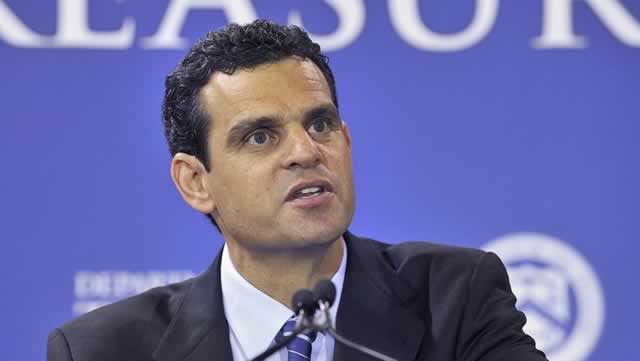
PARIS. — Sanctions against Russia are taking a toll on Europe as well, figures showed on Wednesday, as a top US official negotiated potential new economic punishment for the Kremlin’s incursion into Ukraine.
Treasury Undersecretary David Cohen, in Paris as part of the Obama administration’s push to bolster European support for broader sanctions, acknowledged that the measures are also inflicting pain on companies in the United States and especially Europe, whose banks and energy firms have deep Russian interests.
“This is not cost-free for anybody, including the United States. We don’t deny the reality that there’s more exposure overall in Europe,” Cohen told reporters.
But, he said, the stakes were high after Russia’s takeover of the Crimean Peninsula and the weeks of unrest in eastern Ukraine that have followed.
Cohen would not specify what could trigger new sanctions, but said a recent executive order would allow the US to target Russian companies in specific economic sectors.
He also said the US and Europe were committed to ensuring that Ukraine’s May 25 presidential elections take place without interference.
“We are looking to design the sanctions in a way that maximises the impact of those we’re trying to affect while minimising the collateral impact,” Cohen said.
Russia’s economic slowdown pre-dates the sanctions but appears to have accelerated. Investors pulled about $60 billion out of the country in the first quarter of the year — more than in all of 2013 — and the economy is contracting. The ruble has fallen to record lows, cutting the value of revenues and investments made by foreign companies.
The effect is rippling through some of Europe’s largest companies.
French bank Societe Generale said on Wednesday that the declining ruble and economic uncertainty forced the write-down of 525 million euros ($731 million) on its Russian activities, which include a 92,4 percent stake in Rosbank.
BP, which has a 20 percent stake in Russia’s largest oil producer, Rosneft, is facing even more complications. Rosneft’s CEO is targeted by US sanctions, and BP last week said its earnings from the Rosneft stake fell sharply in the first quarter because of the sliding ruble.
And in Germany, factory orders plunged unexpectedly in March as the government warned that the crisis over Ukraine could add to underlying weakness among companies showing “temporary restraint in ordering activity due to current geopolitical events.”
In a sign that even smaller-scale companies are suffering, Danish brewer Carlsberg said uncertainty in its Russian market led to $12,5 million in first-quarter losses, with the assumption that sales there would continue to contract.
Cohen said Russia’s economic integration had costs and benefits, although he denied that European governments had been reluctant to impose more sanctions.
“The Russian people have seen the potential for engagement with the rest of the world,” he said. But “it also adds complications in how we design our sanctions programs.”
The US has pressured senior American executives to skip an international economic forum in St. Petersburg, and Cohen said European governments share the view that attending “sends the wrong signal”. — AP.



 Online Reporter