Chronicle Editor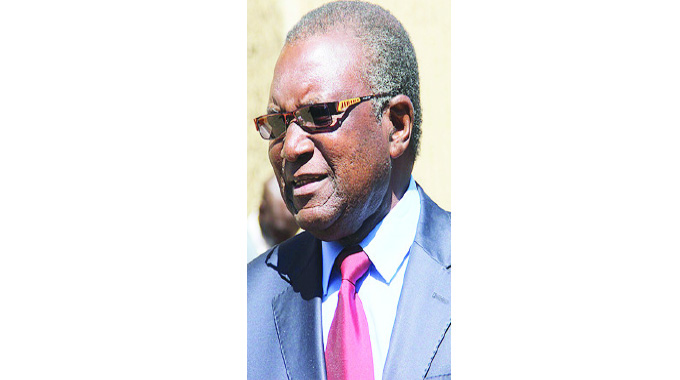
Mashudu Netsianda, Senior Reporter
ILLEGAL sanctions imposed on Zimbabwe soon after the country’s land reform programme in 2000 have crippled the District Development Fund (DDF) operations as Government cannot secure spare parts for critical equipment used in the maintenance of key infrastructure.
DDF is a Government agency, which falls under the Office of the President and Cabinet and is tasked with the development and maintenance of rural infrastructure.
As a catalyst for economic development, the DDF roads infrastructure activities started in 1981 when the agency began handling the rural road development agenda in the face of the then incapacitated local authorities.
It, therefore, harmonised the construction and maintenance standards of rural feeder roads to a technically complete status, with the attendant structures and drainage systems.
Under the rural roads programme carried out between 1985 and 2000, DDF constructed a total network of 25 000km in the communal, resettlement and small-scale commercial farming areas.
Following the land reform programme, a further 7 000km was added to the network, bringing the total to 32 000km. At its peak, DDF had four road constructions units per province with a unit consisting of the following machinery; one dozer, two motorised graders, one front-end loader, four tipper trucks, one flat-bed truck, one water bowser, one compactor, one low bed truck and one motorised fuel bowser.
However, the current inventory of equipment in possession of all the provincial road units is hardly enough to constitute one unit per province.
In a ministerial statement presented before Parliament, the Minister of State for Presidential Affairs in charge of Implementation and Monitoring, Joram Gumbo said the sanctions imposed on the country by Western countries have adversely affected DDF operations.
“The sanctions imposed on the country since the land reform programme have affected the maintenance of the DDF plant and equipment which was either donated or bought mainly from the Western World. As a result, the DDF now relies on plant hire services from the private sector whose charges are prohibitive,” he said.
Minister Gumbo said between 25-30 percent of the DDF machinery is working while the rest is at various stages of disrepair with no guarantee for spares availability.
He said during its peak, DDF established road maintenance units which operated from 194 base camps dotted countrywide to maintain the technically constructed roads under their respective jurisdictions. “The base camps had critical equipment which enabled road maintenance units to properly look after their allocated road network. As I make this presentation, about 25-30 percent of this machinery is working while the rest is at various stages of disrepair with no guarantee for spares availability,” he said. “The District Development
Fund’s mandate is to provide and maintain sustainable rural development infrastructure, resettlement tillage, transportation and other services so as to uplift the living standards of the rural people.”
Minister Gumbo said the water division within DDF has been relying on 10 drilling rigs for use countrywide.
At Independence, the water division had 32 rigs and each province had four.
“It is important to note that during this period, the division was getting assistance from the Scandinavian countries and Western donors.
Over the years, the maintenance of these rigs has not been spared by the effects of the sanctions to a point where the institution now relies on 10 drilling rigs only,” said Minister Gumbo.
“However, it is instructive to note that four of these were procured in 1998. It is our vision that each of the eight rural provinces should have at least four drilling rigs in order to meet the demand for boreholes. In addition, there is also the problem of geological physical equipment which is used for boreholes sighting.”
Minister Gumbo said despite these limitations, DDF roads division in its current form, has managed to register successes in terms of implementing Government projects under the auspices of the 100-Day Cycle Programme.
Some of the projects include the construction of Binga Airstrip in Matabeleland North province and of Chapoto Airstrip in Kanyemba, Mashonaland Central in support of domestic tourism, construction of Somgolo Bridge in Lupane district in Matabeleland North province, Soro-Mupembedzi Bridge in Gutu district, Masvingo province, Nyamatikiti bridge in Mvuma district of the Midlands province and Karanda bridge in Mashonaland Central.
Other projects include the re-gravelling of the 43 km Mawabeni-Kumbudzi-Dula road in Matabeleland South province and the resurfacing of Karoi-Binga road in Mashonaland West province.
Under the Rural Wash Programme, DDF was able to reach out to more than 4, 5 million people which improved access to safe water, sanitation and hygienic practices.
“In this regard, the programme enabled DDF to drill 1 634 boreholes, rehabilitate 25 526 boreholes, rehabilitate 73 piped water schemes and constructed 198 900 household latrines,” said Minister Gumbo.
The water engineering division has also been able to provide water supplies to urban and peri-urban areas, Parirenyatwa Group of
Hospitals, Parliament of Zimbabwe, Harare Hospitals, Government Buildings such as Kaguvi, Mkwati, New Government Complex, Chikurubi and Khami Prisons and various Covid-19 Isolation and Quarantine centres benefited from the DDF water initiative. Residential areas such as Glenview, Budiriro, Nkulumane and Caledonia have also benefited from the initiative.
Minister Gumbo said DDF is also implementing irrigation development projects under Command Irrigation where some projects have been completed while some are at various stages of completion. The fund had a target to rehabilitate 18 smallholder irrigation schemes in eight rural provinces following disbursements of funds by Treasury. — @mashnets



 Online Reporter