admin
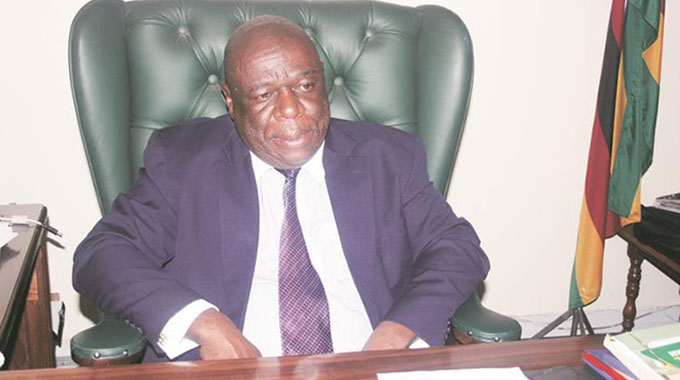
adminJohn Makamure
It is now widely known that corruption in its various forms severely undermines social, economic and political development.
This is why one of the values and objectives that anchor Vision 2030 is an aggressive fight against all forms of corruption.
Aggressiveness means offenders must be severely punished to send a loud and clear message that Government is fully committed to fighting the scourge.
The Transitional Stabilisation Programme (TSP), one of the blueprints to realise Vision 2030, targets eradication of corruption, which is a major source of leakages of public revenues, and also a major cost to various productive activities. Targeted areas to plug these loopholes include unethical corrupt practices at ports of entry and exit; tax evasion and avoidance practices; smuggling and money laundering; and unethical procurement practices.
The TSP contains specific measures to uproot entrenched indiscipline and corruption, including nipping in the bud all opportunities for rent-seeking.
While eliminating corruption will not be an overnight affair, our context of high levels of grand corruption requires that the Zimbabwe Anti-Corruption Commission (Zacc) and other law enforcement agencies act swiftly and decisively whenever corruption is exposed.
The TSP acknowledges that the penalty regime needs urgent review so that persons guilty of corruption are subject to effective, proportionate and dissuasive penalties. The programme proposes that corruption be punishable by fines not exceeding US$500 000, or not exceeding twice the value of the transaction that forms the subject of the charge, whichever is higher.
What obtains currently in terms of the penalty regime is not punitive enough.
For example, a person guilty of corrupt practices as stipulated in the Prevention of Corruption Act [Chapter 9:16] shall be liable to a fine not exceeding three times the value of the gift or consideration or level 14, whichever is greater; or imprisonment to a period not exceeding 20 years or to both such fine and such imprisonment.
Level 14 fine is only $30 000 (local currency) and constitutes the highest fine that can be imposed under the latest Schedule of Fines.
Under the same Act, if a public officer does anything that is inconsistent or contrary to his/her duty as a public officer, or omits to do something for the purposes of showing favour or disfavour to any person, the officer shall be guilty of an offence and liable to a fine not exceeding level 10 or to imprisonment for a period not exceeding five years, or to both such fine and imprisonment.
Level 10 fine is a mere $60 000.
If one interferes with the work of the investigator appointed by the Minister of Justice, Legal and Parliamentary Affairs to specify someone, that person is guilty of an offence and liable to a fine not exceeding level five or to imprisonment for a period not exceeding six months, or to both such fine and imprisonment.
Level five is $600.
In terms of the current widespread victimisation of whistle-blowers, one is guilty of an offence and liable to a fine not exceeding level seven or to imprisonment for a period not exceeding two years, or to both such fine and imprisonment.
Level seven fine is $2 400.
Whistle-blowing is central to successful investigation and prosecution of suspected corrupt cases. We, therefore, need stiffer penalties imposed on those who victimise whistle-blowers in order to allow more people to come forward and report suspected cases of corruption.
Zacc is currently spearheading efforts to enact a whistle-blowing law with provisions for stiffer penalties.
The Commission is also of the strong view that this law must include financial rewards for whistle-blowers.
The Public Finance Management Act is one other piece of legislation with provisions to punish public officials who abuse public funds and assets.
Section 85 states that an accounting officer for a ministry, reporting unit, public entity, constitutional entity or statutory fund commits an act of financial misconduct if that accounting officer wilfully or negligently fails to comply with Section 10 of the Act, which is to do with properly controlling and accounting for public funds.
The same section also specifies that allowing unauthorised expenditure, irregular expenditure or fruitless and wasteful expenditure is a serious offence.
If found guilty of these offences, the accounting officer is liable upon conviction to a fine not exceeding level 10 or to imprisonment for a period not exceeding five years, or to both such fine and improvement.
The Auditor-General has repeatedly issued damning reports on the financial performance of various ministries, agencies and departments.
Zacc is seized with some of the findings and culprits will be charged under these provisions of the Public Finance Management Act.
Abuse of office is not the only charge that can be preferred.
Zacc will also make representations to the Ministry of Finance and Economic Development to include stiffer penalties in the amendments to the Public Finance Management Act that will be coming before Parliament.
As alluded to earlier, stiffer penalties are in line with TSP.
I like the Money Laundering and Proceeds of Crime Act [Chapter 9:24], which has stiffer provisions when it comes to money laundering.
Section 8 (8) provides for money laundering offences to be punishable by a fine not exceeding five hundred thousand dollars (US$500 000) or not exceeding twice the value of the property involved or the gain derived by the offender, whichever is greater.
One can also be imprisoned for a period not exceeding 25 years or to both such fine and such imprisonment.
Commissioner John Makamure is the Zacc spokesperson and chairs the committee on prevention, public education and corporate governance. Feedback: [email protected]. Zacc toll free line: 080101010



 Online Reporter