admin
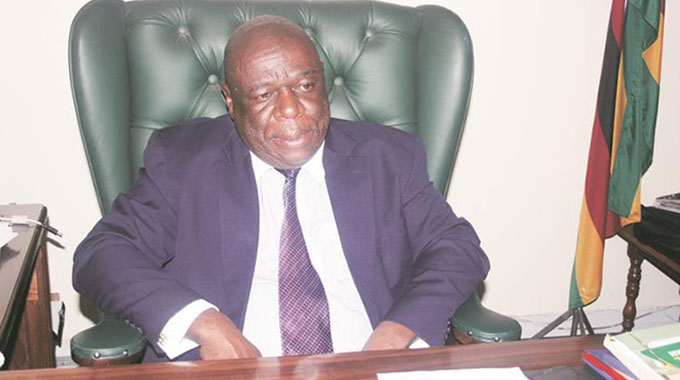
adminEdmore Ndudzo
The illegal sanctions on Zimbabwe were first imposed by the United States of America in December 2001 and later by the European Union bloc from 2003 onwards.
So, without doubt, sanctions were imposed by Western countries at the behest of Britain following the bilateral dispute occasioned by the land reform programme, which peaked in 2000.
Sanctions have, therefore, been in existence for almost two decades.
In essence, the Zimbabwe Democracy and Economic Recovery Act (ZDERA) “demanded” that the local land tenure system be reversed to the pre-1998 order, which effectively meant reversing the Third Chimurenga.
This demand was unconscionable for the ruling Zanu-PF party as it would have meant betraying the cause, ethos and essence of the Second Chimurenga.
The counter-narrative to the land reform programme — which was supported by heavy doses of Western propaganda — was a cocktail of half-truths; clear and obvious falsehoods and/or false claims; exaggerations; blatant and flagrant lies; or some such combinations of some, or all of these rolled in one.
These lies, which were calculated to besmirch the Zanu-PF Government, obviously gave tailwinds to the naïve Movement for Democratic Change (MDC).
But, all this was just a smokescreen.
The reality is that sanctions were, and are, meant to make the people of Zimbabwe suffer until they turn and revolt against the governing Zanu-PF Government.
Impliedly, this means systematically weakening the country’s economy and squeezing the citizens to a breaking point.
This is precisely the reason why on December 21 2001, the then newly elected US President, George W Bush (Jnr), signed into law the ZDERA Bill, which has been weaponised to bring Zimbabwe’s economy to its knees.
Impact
And, indeed, the impact of sanctions on Zimbabwe has been immense.
Recently, the Minister of Foreign Affairs and International Trade, Dr Sibusiso Moyo, revealed the findings of a research undertaken by a consultancy unit from the University of Zimbabwe.
The country is estimated to have lost US$42 billion in revenues over the past two decades.
It is believed that donors have been withholding US$4,5 billion annually in multilateral support since 2001.
Similarly, more than US$12 billion worth of loans from international finance institutions such as the IMF, World Bank and African Development Bank were lost.
The country was also prejudiced of US$18 billion, which would have gone to the private sector.
Overall, the country’s economic output (GDP) cumulatively shrunk by US$21 billion over the 18-year period.
Although Minister Moyo’s statement was succinct and informative, I think, in my view, it left out some of the grave deleterious effects of the embargo; for example, lost lives and social consequences attendant to a festering economy.
Re-engagement
He, however, also explained that this is the reason why Zimbabwe has decided to specifically re-engage Western countries.
Serious and focused dialogue has already been initiated with countries such as the United Kingdom, the USA, Germany, France, Sweden and Australia.
Essentially, the main objective of re-engagement is to normalise relations and end Zimbabwe’s isolation.
Before the advent of the Second Republic, the EU used to refuse to recognise the legitimacy of outcomes of any election and routinely accused Harare of vote rigging and systematic human rights abuses.
However, relations have since thawed as the EU was allowed to observe the July 31 2018 elections.
Sanctions anywhere else in the world have never produced democracy, respect for human rights, transparency and reconciliation, as often purported to be the justification for their imposition.
They actually kill those people they claim to be protecting.
In Iraq, for instance, sanctions imposed in 1991 had killed an estimated 600 000 children — only a fraction of the overall carnage — by the time of the USA-led invasion took place in 2003.
Notably, most children died as a result of the weakened health delivery system.
This is quite instructive for Zimbabwe.
It is not only weakened health delivery systems that pose a serious danger to citizens, but dilapidated and dysfunctional water and sanitation systems as well.
The exodus of economic pilgrims from an encumbered country to countries that ostensibly offer greener pastures has led to worrying brain drain.
An estimated 3 million Zimbabweans, or 25 percent of the total population, have relocated to foreign countries, especially to neighbouring South Africa.
And, this has come at a huge social cost.
The only silver lining has been continued inflows of the much-needed foreign currency from remittances.
Diplomatic Cowardice
Officially opening the Zimbabwe International Trade Fair in May 2019, Ugandan President Yoweri Museveni described sanctions imposed on Zimbabwe as an “act of moral and diplomatic cowardice”.
In the Patriot newspaper’s July 25 issue, Dr Tafataona Mahoso defined an act of cowardice as an act of “avoidance and/or denial”.
Surprisingly, Western countries, with the aid of quisling local media, have been in denial over elections.
To them, the fact that black people decided to take back land that had been forcibly taken from them by colonisers and were exploited for more than 100 years did not seem to matter.
So, the narrative has been designed to portray the West as democrats.
Opposition complicity
It should not be forgotten that the Movement for Democratic Change (MDC) — itself funded by Western countries and white former commercial farmers — actively canvassed for the imposition of sanctions in September 1999.
The opposition party has never denied that some of its members, particularly lawyers, played an active role in crafting and drafting ZDERA.
As recent as December 2017, MDC president Nelson Chamisa and his vice president Tendai Biti were in Washington canvassing for continued sanctions on Harare.
Zimbabwe’s crime is to demonstrate that land can be redistributed to indigenes.
Overall, the plan is to isolate Zimbabwe and bring a new pliant regime.
Since the land reform programme is now behind us, there is scope to deepen relations with London.
The expectation is that sanctions and/or so-called restrictive measures will be removed in their entirety and unconditionally.
In my view, Zimbabwe has reasonable and competent grounds to seek compensation in international courts for damages suffered or incurred as a result of illegal Western sanctions over the past two decades.
Edmore Ndudzo is the first black treasurer of the City of Harare. He writes in his personal capacity, but in the national interest



 Online Reporter