Chronicle Editor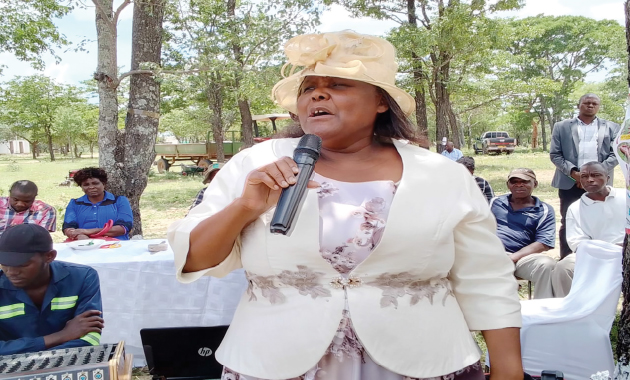
Sikhumbuzo Moyo, [email protected]
VILLAGERS in Ward 23 in Matobo District, Matabeleland South province have heaved a sigh of relief after a local non-governmental organisation (NGO), Dabane Trust, constructed two sand dams to harvest water in the drought prone area at a cost of about 100 000 British pounds.
A sand dam is a reinforced cement wall built across a seasonal sandy river. The dams are built by securing one or two long concrete barriers across river beds and by placing a pipe under these barriers.
When it rains, the water carries sand downstream, depositing it against the concrete wall. Eventually, the area behind the wall becomes filled with this sand.
At the end of the rainy season, water remains trapped in this piled-up sand. This water gradually drains into the pipe and can be collected using a basic hand pump or simply by digging into the base of the dam.
The two dams will supply water to 150 homesteads which have been relying on some streams as the area has no borehole after six attempts to drill them hit a brick wall due to a low water table.
Matabeleland South provincial director responsible for economic affairs and investment, Mr Richmond Ncube, officially commissioned the two sand dams during a brief ceremony last Wednesday.
Ward 24 Councillor, Alderman Paul Ncube, who was representing local Councillor, Joseph Sibanda, who is admitted at Maphisa District Hospital following a horrific road transport accident on Monday, said farmers have been living under difficult conditions due to shortage of a reliable and clean water source.
“Words cannot describe how happy we are to finally have a reliable water source. It has not been an easy life for the villagers but that is all history now and it’s a big thank you to Dabane Trust for funding the construction of these sand dams,” said Ald Ncube.
He said in future, they will start income generating projects like brick moulding and market gardening.
Dabane Trust deputy director Mrs Joyce Dube said their main thrust and interest was to enhance provision of clean water to disadvantaged communities.
She said as an organisation, they provided materials like cement, tractors and human expertise in building and environment issues while general labour came from the villagers.
“We did surveys in this area and realised that the area was literally rocky with very low water table. We then came with the idea of constructing sand dams, which we believe will complement Government efforts.
“As Dabane Trust, we are an NGO that works closely with the Government in its developmental efforts,” said Mrs Dube.
She said the two dams will be fully matured in three to four years and become a source of income for the villagers through income generating projects.
The trust has constructed 10 sand dams in the district while over 40 have been constructed in Gwanda, said Mrs Dube.
Experts say sand dams provide a sustainable solution for water-scarce regions as climate change kicks in. They are easy to build and maintain, and last for decades.



 Online Reporter