Chronicle Editor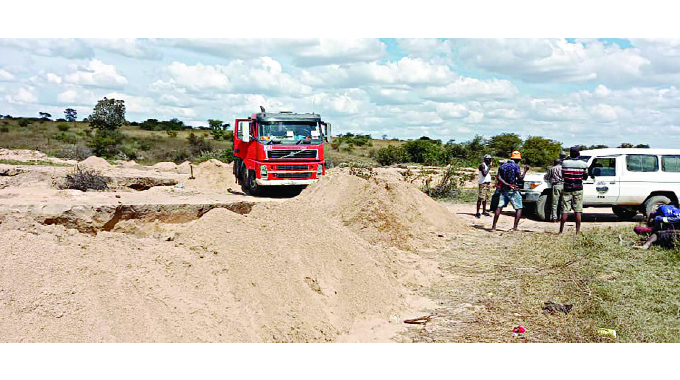
Patrick Chitumba, [email protected]
Increased sand poaching in Gweru and other parts of the Midlands Province is contributing to land degradation and destruction of the environment.
Sand poaching, also known as illegal sand mining for commercial purposes, is rampant in Gweru and across the Midlands Province.
There is high demand for sand as a result of a boom in housing development in cities and towns in the Midlands Province and as such selling sand has become a lucrative business.
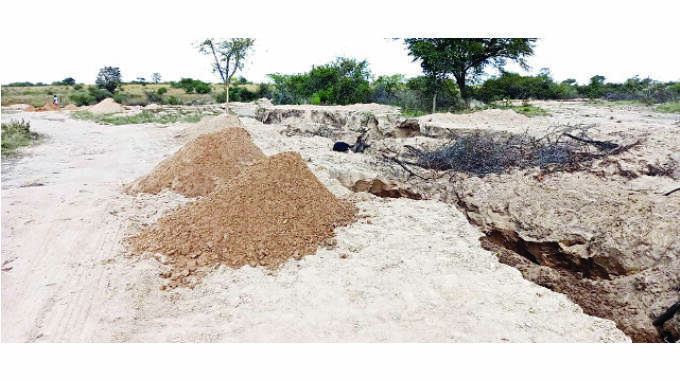
The sand poachers are leaving behind a trail of destruction as they cut down trees and clear the land before digging for the sand. They also leave behind open pits which are dangerous to livestock and other animals.
The poached sand is used by those constructing houses and those into brick-making.
In Gweru sand poaching is rampant in the Ngamo Dam and Vungu areas which are on the outskirts of the city and most of the poachers operate in the dead of the night to avoid arrest.
They deliver their loot at designated places including at houses of individuals involved in brick-making under the cover of darkness.
During the day some of the sand is then ferried to places such as Mkoba 12 light industrial area where it is sold to companies or individuals involved in housing construction.
The Environmental Management Agency (EMA) recently took members of the media on a tour of Ngamo Dam and Gweru’s aerodrome where sand poaching activities have destroyed the environment.
Since the beginning of this year, EMA has arrested and fined 35 sand poachers mainly from Ngamo Dam and aerodrome areas.
According to Mr Peter Makwanya, a climate change researcher and lecturer at the Zimbabwe Open University, Zimbabwe and other Southern African countries are facing a massive onslaught of sand poaching for construction purposes.
Sand poaching, he explained, regulated or unregulated, contributes to the degradation and depletion of sand as a natural resource and ecosystem service.
“The act of sand poaching unlocks large quantities of carbon stocks stored under the ground thereby accelerating the rate of global warming, leading to climate change. Sand poaching, an unsustainable human activity, defeats the purpose of ecosystem stewardship while negatively contributing to vulnerabilities to climate change,” he said.
Mr Makwanya said the solution lies in the enforcement of ecological governance at all levels where awareness-raising is key.
He said countries should build resilience through strong institutions and infrastructure while foregrounding Sustainable Development Goals (SDGs) as integrated daily actions.
“It is true and in the public climate change domain too, that Zimbabwe is at the forefront of negative impacts of climate shocks. This comes as a result of the country’s low coping and adaptive capacities attributed to the weaker resource base, climate chaos and volatile and sometimes sporadic interventions or lack of them. There is also lack of adequate mainstreaming of climate change into the education curriculum in order to catch them young,” said Mr Makwanya.
He said sand poaching is a disruption to ecological balance and most people do not realise that sand is a finite resource that needs to be conserved, cherished and preserved. “What is missing is social-ecological governance, monitoring, collaborations and stewardship at all levels. We lack ecosystem-based management processes, ethical codes of conduct and circularity culture,” said Mr Makwanya.
He said combined with veld fires and deforestation, sand poaching enhances the effects of climate change and puts pressure on the communities’ adaptive capacity.
EMA public relations and communications officer, Mr Oswald Ndlovu said they were putting in place tight measures to curb the continued sand poaching activities that were now threatening farming activities and the environment.
“As you can see here at Ngamo Dam and the aerodrome areas, there are massive illegal activities of river, pit and silver sand poaching which is leading to massive land degradation and it’s quite disturbing. These activities are already threatening aquatic life at Ngamo Dam,” he said.
Farming activities, Mr Ndlovu said, had also been disturbed with reports of cattle falling into pits left by poachers.
“These illegal sand poaching activities are causing land degradation as the poachers dig pits that are not being rehabilitated. At the aerodrome area, they are mainly poaching pit sand and silver sand. However, in addition to land degradation, the sand poachers are fuelling deforestation and also destroying grazing land,” he said.
Mr Ndlovu said there is urgent need to curb sand poaching which is destroying the environment and accelerating climate change.
“Sand poaching can lead to catastrophes such as siltation and disruptions in the hydrological cycle because it destroys vegetation that plays a critical role in transpiration. It reduces the amount of water vapour released by trees into the atmosphere and this also alters the hydrological cycle,” he said.
Gweru City Council spokesperson Ms Vimbai Chingwaramusee said Ngamo Dam is under threat from sand poachers.
“The carrying capacity of the dam is 1 540 mega litres. We use the dam to supply raw water to industry and council parks,” she said.
A sand poacher, Mr Nyasha Sumaili, was caught at Ngamo Dam site and was fined US$300.
“I recently got a US$300 ticket and that is too much but if I quit I won’t be able to look after my family. I may find myself on the streets and so I will continue poaching the sand when EMA inspectors leave this area,” he said.
Zimbabwe lies in a semi-arid belt of Southern Africa with 80 percent of farming relying on rain-fed agriculture.
This increases the vulnerability status of the country as agricultural productivity trends and other indicators follow annual rainfall variability patterns.
— @pchitumba1.



 Online Reporter