

 admin
admin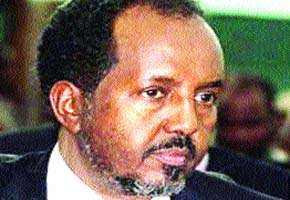
Captain Amadou Sanogo was sworn in to the new post, created for him as an incentive to accept a transitional government tasked with steering the country to elections, by interim President Dioncounda Traore in a ceremony at the presidency.
“This military committee is not political and is not about replacing the military chain of command. It is adhering to its mission of following the planned reforms in close collaboration with other structures,” said Sanogo, a former army English instructor who received military training in the United States.
“Captain Sanogo was the one chosen to make this committee work because of his personal qualities,” Traore said.
“He’s a trainer. That’s his job. He knows how to manage a team and will work to put in place an army that performs.”
Sanogo’s new post comes with living quarters at the army chief of staff’s offices in Bamako — an arrangement political and military sources said was a bid to lure him away from his loyalists in the garrison town of Kati, where he and the rest of his junta had set up headquarters.
Sanogo led a group of fellow mid-level officers to overthrow then-president Amadou Toumani Toure on 22 March, accusing him of letting separatist rebels humiliate the Malian army. The coup upended what had been considered one of west Africa’s most stable democracies.
Sanogo styled himself a Malian Charles de Gaulle, promising to rescue the country.
Under pressure from regional mediators, he grudgingly handed power to the interim government on 13 April.
But he continued to pull strings behind the scenes, notably by forcing interim prime minister Cheick Modibo Diarra to resign by ordering his arrest.
Amid the disarray in the capital Bamako, Islamist extremists hijacked the independence rebellion and seized the country’s vast desert north, implementing a brutal form of sharia.
With Mali’s collapsing army powerless to stop them, interim leader Traore made a plea for help, and Mali’s former colonial ruler France launched a military intervention on 11 January.
The French-led operation has forced the Islamists from the towns they controlled.
But the insurgents have continued attacking reclaimed territory with suicide bombings and guerrilla assaults. The Malian army also continues to be deeply divided.
On Friday, a gunfight broke out between paratroopers loyal to ousted president Toure and other units loyal to Sanogo, killing two civilians.
The violence erupted on the same day a first group of European Union military instructors arrived to train the Malian army to deal with the insurgents.
Meanwhile, Russia revealed on Wednesday it was supplying guns to Mali’s government, as French troops defused a massive bomb in the north of the country, the latest bid by Islamist rebels to strike back.
The head of Russia’s arms export agency said it had delivered small amounts of light weapons for the West African nation’s poorly equipped and deeply divided army.
“We are in talks about sending more, in small quantities,” said Rosoboronexport chief Anatoly Isaikin, quoted by the Interfax news agency.
In the centre of the northern city of Gao, the scene of twin suicide bombings and a street battle in recent days, French troops defused a homemade bomb they said contained 600kg.
The bomb, four metal barrels filled with explosives and connecting wires, was in the courtyard of an abandoned house and had been there since at least Monday, according to an AFP correspondent at the scene.
The United Nations said on Wednesday it was working on a “regional strategy” for the Sahel, the semi-arid region south of the Sahara desert. Analysts say a dangerous mix of Islamist extremism, kidnapping, drug trafficking and organised crime are fuelling the unrest there.
Mali’s army is struggling to restore security after a French-led military intervention helped it push out al-Qaeda-linked rebels who had seized the country’s north.
Romano Prodi, the UN’s special envoy for the Sahel, and the UN West Africa representative Said Djinnit began a three-day visit to the region on Wednesday to discuss the situation in Mali with the presidents of its neighbours Senegal, Mauritania, Burkina Faso and Niger. — AFP/Al Jazeera


 Online Reporter