


 Online Reporter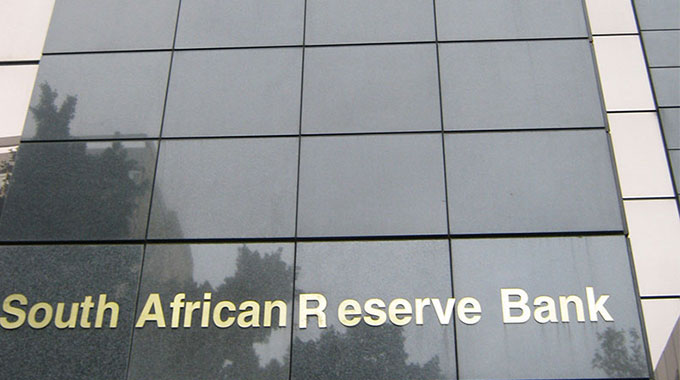
THE South African Reserve Bank (SARB) warned that a lack of comprehensive regulations for crypto assets and stablecoins has emerged as a new risk, posing a significant threat to the country’s financial sector.
Cryptocurrencies, because of their fully digital and borderless nature, can be used to dodge South Africa’s exchange control laws, which currently do not cover digital assets, the central bank said in its biannual Financial Stability Review on Tuesday last week. The risk posed by crypto assets and stablecoins stems from “the lack of a complementary and full regulatory framework, which is not possible at the moment”, said Herco Steyn, the central bank’s lead macroprudential specialist.
He said progress is expected next year, but warned that without it, this “will mean that we do not have sufficient oversight”.
The central bank and National Treasury are jointly developing new rules to oversee cross-border crypto-asset transactions and amend exchange control laws to bring them under regulatory surveillance.
South Africa has seen a surge in stablecoin use since 2022.
“Whereas Bitcoin and other popular crypto assets were the main conduit for trading crypto assets” before then, dollar-pegged stablecoins have become the preferred trading pair on South African crypto-asset platforms, the central bank said.
The use of stablecoins — digital tokens backed by assets such as US Treasuries to maintain parity with traditional currencies — has risen sharply as a less volatile form of cryptocurrency.
Their popularity follows renewed volatility in the broader crypto market: Bitcoin has dropped from a record of more than US$126 000 in early October to about US$87 000, while Ether is down by roughly 40 percent from its August peak.
Trading volumes for stablecoins soared to nearly R80 billion (US$4,6 billion) by October, from less than R4 billion in 2022, the central bank said.
“As crypto asset adoption in South Africa grows, so does the need for the domestic regulatory framework to continue to evolve in response to crypto asset market developments and risks,” the bank said.
South Africa’s crypto industry is dominated by three major platforms — Luno, VALR and Ovex — with the number of registered users reaching nearly 7,8 million by July and total assets amounting to R25,3 billion in December 2024, SARB data showed.
Over time, additional risks are expected to arise from other technologies, including artificial intelligence and quantum computing, Steyn said. — Bloomberg



