admin
admin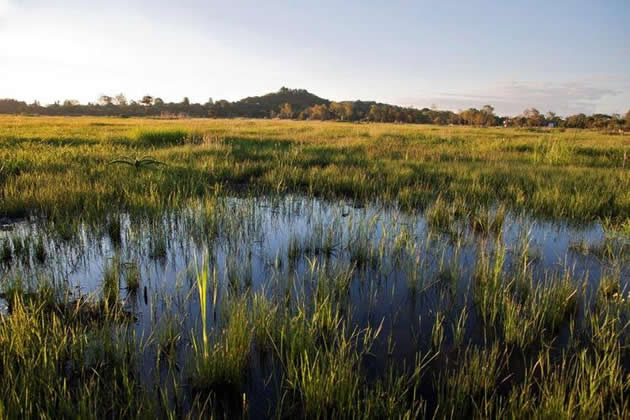
Walter Mswazie Masvingo Correspondent
Zimbabwe joined the rest of the world yesterday in commemorating World Wetlands Day at a time when wetlands mostly in urban areas are under threat from housing developers.
World Wetlands Day is marked February 2, each year. This year’s commemorations were held under the theme “Wetlands for Our Future – Join Us”.
The theme underlines the importance of wetlands and that the future of humanity hinges on their continued existence.
Wetlands are areas where water covers the soil, or is present either at or near the surface of the soil all year or for varying periods of time during the year.
People in Maturure Village, Ward 15 of Bikita East have turned a local wetland into a source of income by establishing market gardens taking advantage of water which oozes from the ground all year round.
The community has hardly felt the effects of droughts which often affect other areas in the generally dry district as the wetland has proved to be villagers’ fountain of hope.
Chairman of the project, Makaitei Maturure said since he mobilised other villagers to preserve the wetland, their village has not run out of food.
“Due to this wetland, we’ve managed to feed our families and send children to school. We never run short of water here as the wetland helps us a lot. We have a thriving market garden from which we get vegetables with excess being sold at the nearest market. From the proceeds we’re able to buy books, pay fees and other needs for our children. Food insecurity has remained alien in this village,” said Maturure.
Environmental Management Agency (EMA) head of communications Steady Kangata said there were a number of communities effectively taking care of wetlands in their areas.
“We’re happy that many rural communities have taken it upon themselves to preserve wetlands within their environments. We’ve quite a number of them in the country. We have wetlands from which communities accrue direct benefits and these are Tsongore in Murehwa, Bandira in Makonde and Malilan’ombe in Matopos. Malilan’ombe is a well preserved wetland and villagers are accruing benefits through market gardening. Tourists are visiting as well,” he said. Wetlands are protected by the law. The Environmental Management Act (Chap 20; 27) defines wetlands as “areas of marsh, fern, peat-land or water, whether natural or artificial, permanent or temporary, with water that is static or flowing, fresh, brackish or salt, including riparian and adjacent to the wetland.”
Kangata said wetlands were under threat from property developers with local authorities selling land situated on the areas.
“Basically,” he said, “many people are aware of the importance of wetlands but we’ve a problem when it comes to infrastructural development. We’ve seen local authorities giving residents residential stands in wetlands and it won’t be easy to deal with the issue as EMA because the developer would have parted with cash to own the land. We’ve tried to engage councils over the issue but it seems we aren’t yet singing the same tune.”
He underscored the need for citizens to preserve wetlands as they provide a number of opportunities which include being sources of water given the dwindling of reservoirs throughout the world.
“Globally, water sources are dwindling and wetlands have saved the situation as they remain reliable sources of the precious liquid. They’re important because of the ecological goods and services they provide to the communities,” said Kangata.
He said wetlands had proved to be safety nets in times of climatic shocks in the form of droughts.
“In times of drought, wetlands provide communities with water for agricultural purposes, that’s market gardening, fisheries and domestic use. We’ve many big dams in Zimbabwe that have at one time dried up during droughts but wetlands will remain with water given the high level of water table,” he said.
He hailed rural communities utilising wetlands within their environments and encouraged those not doing anything with their natural water sources to emulate those who are doing well.
Masvingo EMA regional manager Milton Muusha said wetlands had invaluable economic benefits.
He said in Masvingo, one of the major wetlands was the Driefontein/Shashe wetland which was the source of Shashe River.
Muusha said the wetland was a habitat of endangered species comprising the wattled and the grey crowned cranes.
Zimbabwe Tourism Authority (ZTA) Masvingo provincial chair Fredrick Kasese underscored the need to preserve wetlands within the communities as they presented tourism opportunities.
He said:
“Wetlands are a natural phenomenon that can attract the much needed investment into the province and country at large. When we talk of economic drivers, we mustn’t ignore wetlands because through them communities stand to accrue a number of economic benefits. They’re like any other heritage sites and the natural water has therapeutic functions.”
Kasese, who is also Regency Hotel and Leisure Group chief executive officer, said people should be made aware of the importance of wetlands so that they can be able to exploit them for good use.
“We’ve a number of wetlands in the province like the one in Bikita, Shakashe wetlands, far too many to mention. Some communities have put these natural sources into good use but others are yet to appreciate their importance. It’s against this background that there’s need to raise awareness so that they are very much aware of their significance and existence.”
Preservation of wetlands can transform areas into economic hubs through enhancing food security. They also help in weaning communities from depending on handouts as they will be able to produce food even during droughts, hence the need to invest heavily in them as a nation.


 Online Reporter