Online Reporter
Sukulwenkosi Dube-Matutu, Matabeleland South Bureau Chief
UNSUSTAINABLE environment practices, which took place in the community of Seboza area in Gwanda District about a decade ago have brought detrimental effects to Seboza Primary School.
Each rainy season, learners and teachers at the school are affected by flooding and this year, the situation worsened and lessons were disrupted. About a decade ago, the community engaged in stream bank cultivation close to Seboza Dam, which is along Mkhalipe Dam.
There was also cutting down of trees and sand poaching for brick moulding purposes. This reportedly increased land degradation and sped up siltation of the dam. It also caused the river to divert its course towards the school, creating a flood plain.
As a result, the school has been affected by flash flooding for several years, with the situation having worsened this year because of excess rains. Each year, staff and learners at the school endure flash flooding caused by water flowing into the school from Mkhalipe River.
Recently, lessons came to a standstill at the school after floodwaters swamped teacher’s accommodation and several classrooms, forcing staff to evacuate. The teachers lost all their belongings – furniture, clothing, food and even important documents.
They also lost food intended for the school’s feeding programme. These unfavourable working conditions have caused teachers to shun the school.
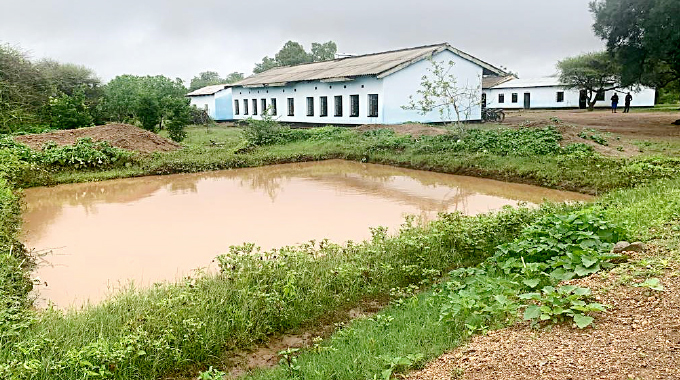
The constant flooding has also been identified as a threat to the school infrastructure, jeopardising the safety of those at the school.
Environmental Management Agency (EMA) Matabeleland South provincial manager, Mr Decent Ndlovu, said the effects of climate change such as heavy rains and flash flooding have made the situation worse. “The problem of flooding at Seboza Primary School can be largely attributed to stream bank cultivation that was being done by the community near a dam in the area. The dam eventually became silted. There was also deforestation leading to soil erosion, which was caused by these farming activities and eventually the course of the river was diverted. That area is low lying and poor catchment management brought a negative impact.
“Some of the gardens were even in the river. The villagers were after alluvial soils, which are rich in nutrients but they didn’t realise the severity of their actions. The effects of climate change such as heavy rains and floods have further worsened the situation,” he said.
Mr Ndlovu said the agency intervened and in 2014 the community was penalised and the gardens removed, however, the damage had already been done.
He said it remains a concern that some people choose to disregard regulations and cultivate on flood plains.
He said while villagers will be in search of fertile soils and water, their activities have far reaching effects that come back to haunt the community.
Mr Ndlovu said it is important for communities to adhere to environmental regulations in order to preserve their environment and continue benefitting from their natural resources.
He said villagers should desist from cultivating within 30 metres from the highest flood level.
Matabeleland South meteorological officer, Mr Rodgers Munyira said cases of stream bank cultivation were on the increase in the face of climate change.
“From a social concept, the woman tries to put food on the table for most families. And from a gender based violence analytic angle, you also find that the woman is the one who runs the nutrition garden commonly found near the streams, rivers and wetlands for easy access to water.
“The above is all mitigation to the impact of climate change at family, village and community level. The scarcity of water and failure of rain fed activities causes villagers to mitigate by coming as close to the water source as possible so as to get maximum yield or returns.
“Some development partners have also established solarised gardens in the vicinity of rivers extracting and pumping water from the sand dams. We may need to take inventory of the proximity of gardens funded by development agencies to establish their compliance to recommended distances from the rivers,” he said.
Seboza Primary School is set to be relocated, but lack of funds is stalling the new development. Having learners use the infrastructure, which is subjected to flooding each year has been identified as a threat to pupils and teachers.
There is a need for the school to be relocated timeously.
Mr Brighton Kusena from the Seboza area said they fear the school might end up being closed permanently, considering the flooding situation.
He said the community depends on the school and cannot afford to have it closed. He said a number of villages rely on the school.
Mr Kusena said a new school is needed urgently as having children miss out on lessons because of flooding affects their performance.
Ward 24 councillor, Ntokozo Ndabalime said the school infrastructure is at risk of being destroyed, which means children will be left desperate. He said they have tried in the past to create drains in order to keep the water out of the school but their efforts were fruitless.
“We are worried that our school may be destroyed and our children will be left without a school. This flooding problem keeps recurring but this year, it has been worsened. The infrastructure at this school might end up collapsing because it can’t withstand being submerged in water forever. “The flooding problem is also causing teachers to leave the school as it’s not an ideal working environment. If teachers continue to lose their property like this, they will desert the school.
“Children won’t even love school due to these unfavourable conditions. Our children are already at a disadvantage because they learn in the rural areas and such unfavourable circumstances make the situation worse,” he said.
Gwanda Rural District Council chief executive officer, Mr Ranganai Sibanda said council had passed a resolution that the school should be relocated as it was situated in an unsafe place.
He said the lack of funds is stalling the new project. Mr Sibanda said a new layout plan has been produced and pegging of the new school site done.
Seboza Primary School, which has an enrolment of 266 learners, was established in 1938. — @DubeMatutu.