Chronicle Editor
Leonard Ncube, [email protected]
PRIMARY and secondary schools in the country have thrown their full weight behind the new Heritage-Based Curriculum saying the system makes learners competitive in the modern world.
Zimbabwe introduced the Heritage-Based Education Curriculum early this year replacing the Continuous Assessment Learning Activities (CALA), which although it realised significant successes, received widespread criticism.
The Heritage-Based Education Curriculum will run from 2024 to 2030 with the primary objective of ensuring pupils acquire skills, values and attitudes for life and work, with a strong scientific and technological bias.
It integrates culture and heritage into the teaching and learning process and is expected to revolutionise the education system to produce individuals equipped with practical skills that align with national development goals.
According to the Ministry of Primary and Secondary Education, the country had 10 147 schools of which 7 081 were primary schools 3 066 secondary, catering for close to 5 million pupils nationwide in 2021.
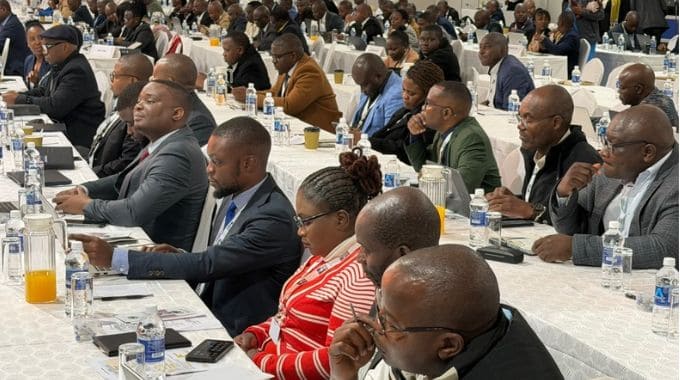
Speaking at the National Association of Primary School Heads (Naph) 2024 annual conference in Victoria Falls on Tuesday, representatives of schools said they have fully embraced the Heritage-Based Education Curriculum.
Naph incoming president Mr Kufakunesu Rupere, the head of Manyame Primary School from Mashonaland West said the issue of the curriculum was topical at the conference that started on Sunday and ended Tuesday.
“The main issue here is that of the new Heritage-Based Curriculum. The intention is to take it head on to make sure that every school takes up the task to make sure the curriculum is taken on board seriously,” said Mr Rupere.

“We are changing for the better. It shows we are now moving with the rest of the world as we have to be doing what others are doing.
“This one (Heritage-Based Curriculum) is hands-on, it targets the child. It wants to get what is in the learner and improve and nurture the talent that one has.”
Giving solidarity messages, his predecessor Mrs Cynthia Khumalo who is head of Chinotimba Primary School in Victoria Falls and stepped down from Naph presidency at the end of her term this year, said there is a need to look at some old policies that were no longer serving a purpose.
National Association of Secondary School Heads (Nash) president Mr Arthur Maphosa who is head of Gwanda High School corroborated.
“The biggest issues being discussed here are adjustment from the old curriculum into our new Heritage-Based Curriculum,” he said. “That has been the cornerstone of this conference and speakers have done a good job on this indeed as schools implement the new curriculum.”
Zimta national president Mr Akuneni Maphosa in solidarity said the school heads have a role to play in the implementation of the curriculum.
“The role of the head should be understood in the context of sharing the national cake, which is the heritage,” he said.
The conference was held under the theme: “The role of the school head in enhancing Heritage-Based Curriculum under the current socio-economic situation.”

A total of 2 730 heads attended the conference up from 2 200 last year when Manicaland province hosted. This year the hosts were Harare province but chose to have the event in Victoria Falls to encourage schools to appreciate tourism.
Matabeleland North Provincial Affairs and Devolution Minister Richard Moyo, who was guest of honour in a speech read on his behalf by director for co-ordination in the province, Mr Tapera Mugoriya said educators have played a significant role in building the nation and directing policy formulation.
He said the theme of the conference calls for action to effectively address challenges and opportunities in education, provide an equitable, inclusive and quality education to all children.
The conference encouraged educators to share experiences for effective implementation of the curriculum.
“Today marks an important milestone in our collective efforts to share the latest trends in education by bringing together educationists, experts, partners, stakeholders to create a shared space for exchanging ideas, experiences and demonstrating the cutting edge innovations in the education sector, in particular from the primary school sector,” said Minister Moyo.
“We expect the heads to share their classroom experiences in the implementation of the recently reviewed Heritage-Based Curriculum.”
He said the Heritage-Based Curriculum aims to promote a holistic approach to learning, focusing on Zimbabwe’s cultural heritage, history and values, anchored on skills development.
The minister urged educators to strive to have a legacy in education provision making sure learners leave different skill sets to be able to sustain their lives in line with Vision 2030.


 Online Reporter