admin
admin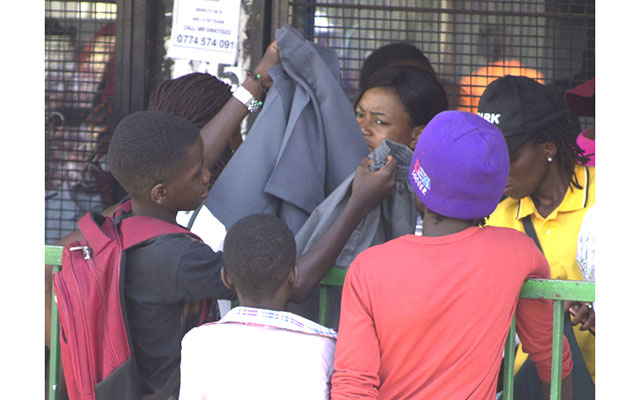
Rumbidzayi Ngwenya Features Writer
As the festive season fades, the realities attached to the month of January emerge. This month is considered by many to be stressful with the phrase ‘January disease’ part of most conversations.
With parents trying to balance paying bills, putting food on the table and preparations for the new school term, they seek to minimise their costs. Uniform retailers have not made life easy due to high prices they charge on their wares. Informal garment makers or tailors have been smiling all the way to the bank as the fallout between parents and conventional uniform shops translates to brisk business for them.
It seems ‘January disease’ has been felt by others but not street retailers who sell uniforms and stationery. They can afford to lavish on fresh chips and chicken for lunch. Due to the increased demand, uniforms and stationery prices have risen, causing headaches among parents who have since sought reprieve from the informal sector.
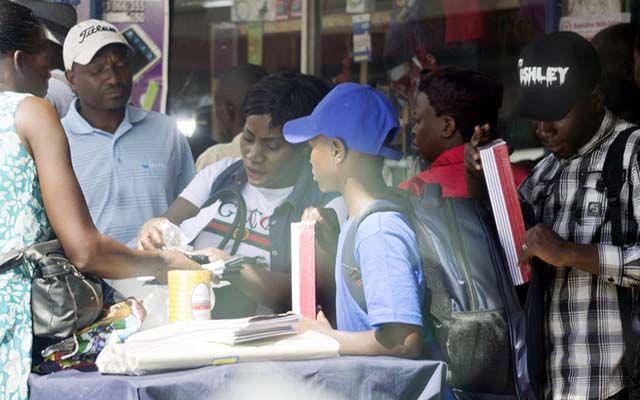
This is the only place where both uniforms and stationery have tried to maintain old prices. With counter books selling from as little as $1 – unlike in some reputable shops where they cost up $1,80- parents were left with no choice but to turn to the streets for affordable prices. For the informal sector, especially this year, January is nothing but just any other month of the year.
“I barely sleep these days, I always have piles of fabric to be worked on. Business had been good in the past week and knowing that this spell is seasonal, I have to make the most out of it,” said one tailor who operates close to Magaba flats. With the workload demanding her unparalleled attention, she has roped in family members to help out.
“I have come to ask my husband to do the fabric shopping for me, because I barely step away from my machine, that is how busy I am,” she said. The demand has been coming from parents as well as doorstep vendors who have been buying uniforms from tailors.
“Business is at its best. I have never sold so many uniforms in a week than I had in the past week,” said Mrs Charity Mapfichana from Mbare Musika. Volumes have been higher than usual because of higher prices being asked in shops. A reputable uniform seller in Harare is selling a pair of male uniforms at $30 and $32 for female pupils.
“I sell my uniforms for $5 only getting $1 profit per pair, but the way people are buying at the end of the day I go home with a decent amount,” she said. With the convenience of payment they have introduced, they intend to make the most of the price advantage they are enjoying.
“My added advantage is I accept Ecocash, so the issue of cash shortages does not affect me that much for I charge a dollar extra for every item sold on Ecocash. It allows me to do all the transactions and still get my profit,” Mapfichana said.
“Sometimes I run out of stock and I have to put pressure on the tailors who also have their hands full from other parents who are going straight to tailors in a bid to cut costs,” she added. Not all informal sellers are benefitting from the increase in volumes. Some vendors are complaining that they could have been making a killing if there were no cash challenges. Reggis Kajongwe, a stationery vendor in Mbare said he feels disadvantaged by the banknote shortages in the country.
“I am concerned with the future of business here in Mbare Musika, it looks bleak. With the use of cash shortages and introduction of plastic money, how long are we going to survive as small scale retailers,” he said.
“We do not have swipe machines and ecocash rates are just ridiculous. Where we get stuff from the tailors they accept cash only, which means I have to sell my products only by cash. It is painful to watch customers walking away after telling them that you only accept cash,” he added. With a three quire exercise book costing around $7, buying in the street where it is cheaper sounds like an option but the issue of convenience comes into question.
“Usually towards school opening business is on the peak in Mbare as our products are much cheaper because we get them straight from the wholesalers. But because of cash crisis business has been slow,” he said. Parents seem to have identified the price difference between outdoor and conventional retailers.
“The money we have budgeted for uniforms and stationery is no longer enough with the prices shops are charging us. We are facing unnecessary price hiking from retailers, so buying books and uniforms from the streets is the only option we have left with. I cannot buy a counter book at $1,80 when just outside the same shop it is $1,” said one parent.
With reputable shops pricing grade one uniforms at about $32, and for form one girls at $38 to $41 and $87 for boys, parents have also resorted to buying uniforms from Mupedzanhamo and Mbare Musika where they cost as little as $4 despite the questionable quality.
“All we are focused on is getting our children back to school and quality does not matter. We are relying on the informal sector, at least it is something we can afford with the prevailing economic situation in our country” said James Kahwema, a parent with twins starting grade one.
With every pupil starting a new level, preparations have become hectic as more stationery is required and at times new pairs of uniform needed. For parents with grade and form ones, it is more challenging. Apart from the dilemma of securing a place for their children, parents have to buy stationery and uniforms from scratch. Besides the stressful financial pressure that parents are exerted to in January, it is surprising how they seem to enjoy last minute shopping for school gear.
The habit of last minute shopping weighs heavily on parents as more needs to be done in so little time, and the clock does not seem to stop ticking In the central business district, malls were packed and long queues became order of the day with parents and pupils rubbing shoulders in preparation of schools opening.
- Feedback: [email protected]



 Online Reporter