Chronicle Editor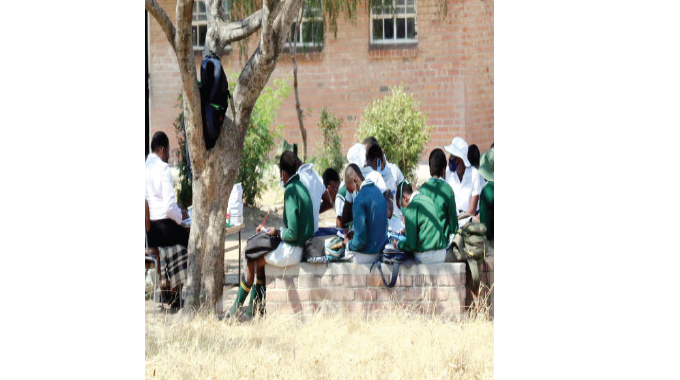
Chronicle Reporters
NON-examination writing pupils returned to school countrywide yesterday, marking the start of full throttle face-to-face learning amid strict adherence to mandatory standard operating procedures (SOPs) meant to ensure a safe learning environment.
The Government, working closely with key stakeholders in the education sector, has ensured a smooth reopening of schools under a two-phase model, which saw examination-writing learners resuming classes last week.
Schools closed on 4 June for the first term and were set to be opened on 28 June for the second term but had to be postponed because of a spike in Covid-19 infections and related deaths.
An additional 4 000 new teachers have since been recruited as part of measures to reduce class sizes in compliance to Covid-19 mitigation regulations.
Treasury has also availed $500 million to schools for the provision of personal protective equipment and infrastructure such as building of additional classrooms and drilling of boreholes prior to re-opening.
The SOPs demand reducing class sizes to a maximum of 35 pupils to decongest classrooms in adherence to social distancing requirements.

These were designed specifically to guide schools on reopening. There are about 4,6 million school pupils in Zimbabwe at 9 500 schools.
There was a hive of activity yesterday as the rest of classes returned to school with Zupco buses failing to cope with demand resulting in scores of learners arriving late at school. Bulawayo’s city centre was heavily congested as parents were taking their children to school while shops recorded brisk business as last-minute shoppers flooded the city centre.
A Chronicle news crew visited selected schools around the city’s suburbs and observed that health guidelines were being adhered to. In most schools, the news crew observed pupils having their temperature checked and sanitising their hands at the gates.
All the pupils were wearing their masks. Most schools in the city’s western suburbs such as Njube, Pumula and Sobukhazi high schools were implementing hot seating, a practice where some pupils learn in the morning and then make way for another group, which comes to school in the afternoon.
At Nyamande Primary School in Old Lobengula, the news crew observed that some learners were being taught under trees and adhering to strict Covid-19 health regulations.
At Ngwalongwalo Primary School in Pumula South, there was excitement among learners as they queued outside the gate for temperature checking.
The situation was the same at Magwegwe Primary School.
Parents who spoke to Chronicle said they were excited about the reopening of schools.
In some schools such as Helemu Primary School in Njube, scores of parents thronged the school to pay school fees after their children were turned away.
“I am here to pay school fees of $2 500 after my child was told to go back home because I had not paid school fees,” said Ms Thenjiwe Dlodlo.
“Our children have been away from school for several months and now that the schools have reopened, they are now attending school twice a week and I feel we are being short-changed given that there was a hike in school fees.”
Another parent, Ms Mary Mlotshwa, said she was excited that her two children were finally back to school. “In fact, this prolonged break was not good, especially for the girl child, some of whom ended up falling pregnant or just losing interest in school,” she said.
Nomsa Moyo, a lower sixth learner at Njube High School said: “I am quite happy now that face-to-face lessons have resumed, particularly now that I am already preparing for our final A-levels exams next year”.
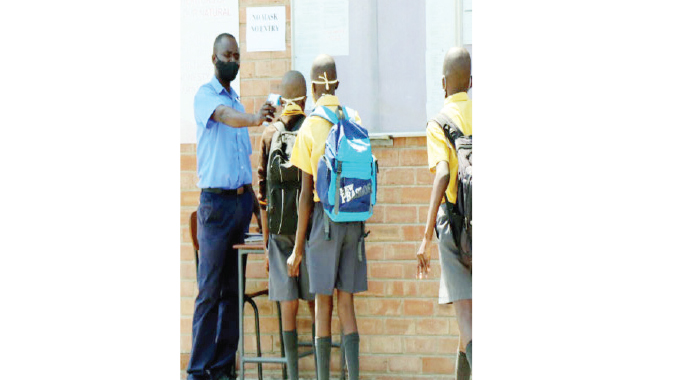
A security guard at one of the schools visited by Chronicle said learners were subjected to strict Covid-19 health regulations prior to entering classrooms.
Schools are also now mandated to have temporary isolation rooms for those found with high temperatures, before they are referred to health facilities. Some schools were also not allowing visitors in their premises except essential service providers.
The news crew could not access the classrooms as authorities cited standing health regulations.
Girls College headmistress Ms Les Ross said they did not encounter any challenges upon resuming classes.
“Our learners are very excited to return to school and everything went well as the rest of classes returned to school,” she said.
In Matabeleland North, most schools in Victoria Falls and other parts of the province also started conducting lessons with a majority of teachers at their stations. Authorities especially at public schools have also started implementing double sessions to decongest classrooms.
Chronicle understands that most rural schools are not alternating class timetables because their populations allow them to observe social distancing.
However, there are concerns at some private learning institutions in Victoria Falls where learners were observed to be crowded in classrooms and in some instances not being sanitised at the gates.
In the Midlands province, boarding schools such as Shungu High in Kwekwe and Regina Mundi High in Gweru started conducting lessons for non-examination classes.
Pupils at boarding schools were only allowed to enter the school yards upon either producing proof of payment of school fees in full or an undertaking by parents and guardians to pay the whole amount within an agreed timeframe.
Those who were not paid up were turned away at Chaplin High School and Mkoba 1 Secondary School.

They were asked to bring parents to agree on payment plans. Some parents were sceptical about having their children taught by unvaccinated teachers.
There was a high turnout of learners with few teachers reporting for duty in some schools in Kwekwe. Some schools turned away pupils for not paying tuition fees.
Most schools also introduced hot seating to decongest classrooms.
Ministry of Primary and Secondary Education spokesperson, Mr Taungana Ndoro, has said that everything went well with no challenges encountered when the rest of classes resumed face-to-face lessons yesterday.
The ministry is however, yet to compile statistics on the number of children who failed to attend school due to pregnancy, among other issues.



 Online Reporter