Chronicle Editor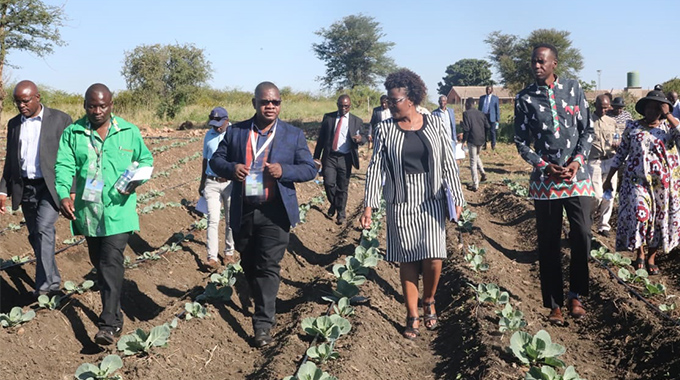
Raymond Jaravaza, Chronicle Writer
THE Ministry of Lands, Agriculture, Fisheries and Rural Development launched the schools business unit model in Bulawayo on Wednesday, a programme that aims to capacitate schools with skills and equipment to financially sustain themselves through green energy-driven, innovative and productive agricultural projects.
Permanent Secretary in the Ministry of Lands, Agriculture, Fisheries and Rural Development, Professor Obert Jiri, launched the programme at Nketa High School where he toured the educational institution’s thriving chicken rearing, carrots and cabbages farming projects.
The ministry plans to roll out the school’s business unit model throughout the country with Prof Jiri expected to launch it in Matabeleland North Province at Mhlabangubo Primary School in Tsholotsho tomorrow.
“The importance of having a school business unit cannot be overstated. It not only provides a practical learning experience for students, but also instils in them a sense of responsibility, creativity and entrepreneurship,” said Prof Jiri.
“By engaging in various projects within the school business unit such as nutritional gardens, fish ponds and indigenous poultry, our students and youth here in Nketa, Bulawayo, and Zimbabwe at large gain valuable hands-on experience in agriculture, animal husbandry and sustainable resource management.
“These skills are not only vital for their personal development, but also for the future growth and prosperity of our nation.”
He said the Government is targeting to establish 10 000 business units by December 2024, which are namely: youth business units, school business units, irrigation business units and village business units.
“These units aim to foster entrepreneurship, enhance skills development and uplift communities nationwide,” said Prof Jiri.

Nketa High School headmistress, Mrs Levhuwani Muchemedzi, said the school has three hectares of arable land that can be fully utilised for a thriving school business unit.
“So far, we have 700 tomato plants, 2 000 cabbages, 2 000 onions and soon we will be planting another 2 000 carrot plants,” she said.
“The farming projects not only teach our students valuable agricultural skills, but also supply our local community with fresh farm produce. However, with the scaling up of the project, we need a reliable market, so that our produce doesn’t go to waste,” said Mrs Muchemedzi.
Nketa legislator, Cde Albert Mavunga, who facilitated the launch of the school business unit in his constituency, said he has been meeting the business community such as supermarkets to consider buying farm produce from local schools as a way of boosting their finances.
The ministry pledged to drill another borehole at the school as well as donate two Jojo tanks and solar panels.



 Online Reporter