Online Reporter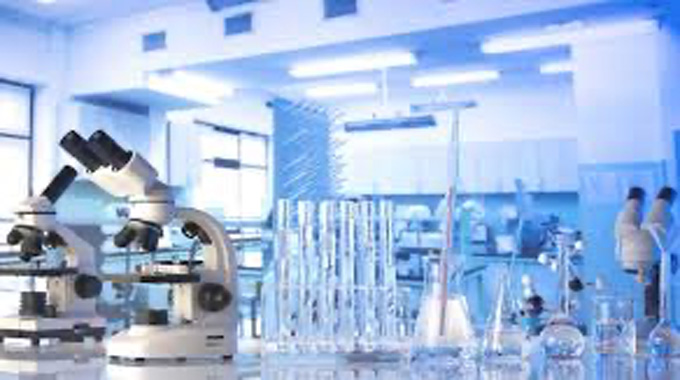
Fairness Moyana recently in Lupane
FOR the first time in decades, a wave of scientific possibility is sweeping through rural Matabeleland North.
In a province where many schools have never seen a proper science laboratory, Hwange Colliery Company Limited (HCCL) Holdings has ignited a new chapter in education by donating 75 fully equipped mobile science laboratories to secondary schools across all seven districts.
Last week’s handover ceremony, held at Kusile Government Primary School in Lupane, drew Government officials, education leaders, chiefs, corporate partners, and hundreds of excited learners who had gathered to witness what many described as a “historic turning point” for the province.
HCCL chief executive officer, Mr William Gambiza, said the donation reflects the company’s deep commitment to community empowerment and its belief that education is a powerful investment in Zimbabwe’s future.
“These laboratories are not simply equipment — they are a bridge between potential and opportunity. For too long, our rural learners have been disadvantaged. Today, we change that story,” he said.
The mobile laboratories were distributed across the province as follows with Binga receiving the lion’s share of 20, Lupane, Tsholotsho and Hwange received 10 each. Nkayi received 12, while Bubi and Umguza received seven and six, respectively.
For many of these districts, especially in deep rural areas, this marks the first time learners will conduct real chemistry, physics and biology experiments. What makes these laboratories revolutionary is not just their mobility — it’s their self-sufficiency.
Designed by Bulawayo innovator and Nust graduate, Mrs Sicelo Dube, the labs come complete with a solar panel, inverter and battery, gas tank, hand-operated water pump, water containers, laboratory workspaces and apparatus.
Mrs Dube explained that converting a classroom into a fully equipped lab costs around US$12,000, an impossible figure for most rural schools.
Her mobile labs cost just 10 percent of that amount, making them one of the most affordable and impactful Stem innovations to come out of Zimbabwe in recent years.
For decades, science education in Zimbabwe has been unevenly distributed. Urban learners, supported by better infrastructure, qualified teachers and properly equipped labs have dominated Stem fields.
Meanwhile, rural learners have been forced to study science theoretically, relying on chalkboard diagrams instead of hands-on experiments.
Matabeleland North Provincial Education Director, Mr Jabulani Mpofu, said this imbalance has contributed to low pass rates in sciences across the province’s 857 schools, which serve 269,800 learners, including 61,600 in secondary school.
“For years, our learners have been expected to compete nationally without ever touching real laboratory equipment. Today’s donation changes that. These mobile labs will allow our learners to experiment, observe, test and discover-just like learners in urban schools,” he said.
Mr Mpofu said the initiative strongly supports the national Heritage-Based Curriculum, which places Stem pathways at the centre of Zimbabwe’s development agenda.
He emphasised that the donation will especially uplift girls, who have historically been under-represented in science fields.
The mobile labs were funded through HCCL’s Corporate Social Responsibility (CSR) programme, supported by its sustainable mining partners Dinson Mega, HCUI, ZJI, ZZEE and Rockdrill.
Mr Gambiza also acknowledged Zambezi Gas and Coal Mine for covering the cost of transporting the laboratories from Harare to Lupane, describing it as an example of the kind of corporate collaboration that drives real community transformation.
He announced that HCCL has deployed Social Performance Officers, who will travel throughout the province engaging chiefs, local authorities, NGOs and schools to identify further community needs and guide future CSR investments.
As the ceremony came to a close, a sense of optimism filled the air. Teachers spoke of lesson plans they had long abandoned due to a lack of equipment. Students marvelled at the possibility of conducting real experiments.
Parents expressed hope that their children would finally compete on equal footing with learners from better-resourced schools.
The arrival of these mobile labs signals a future in which rural education is no longer defined by lack, but by possibility — where distance from the city is not a barrier to scientific discovery, and where every child, regardless of where they live, can dream in Stem.