Angeline Mujeyi and Albert Tsindi
ZIMBABWE’S drive towards climate resilience and improved nutrition received a powerful boost following the high-level Second International Traditional Grains Conference, which concluded with the landmark announcement of the first two nutrient-dense pearl millet varieties.
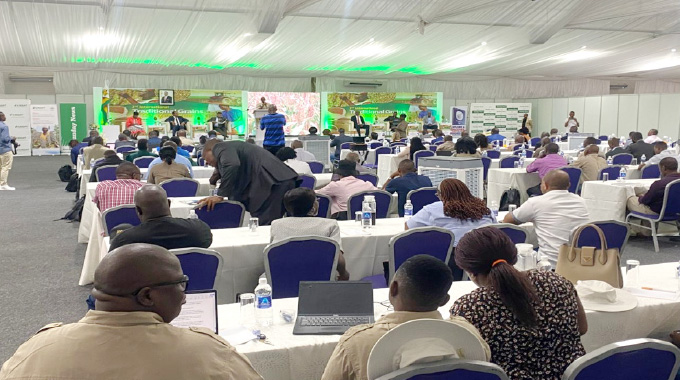
The conference, attended by over 150 participants, successfully united farmers, academics, Government Agricultural Business Advisory Officers, researchers and major private sector players to forge a comprehensive roadmap for the traditional grains value chain. The conference, which was held at Zimbabwe International Exhibition Centre, was organised by Zimpapers (Sunday News) in collaboration with Icrisat and the Ministry of Lands, Agriculture, Fisheries, Water and Rural Development.
The gathering featured a wide cross-section of stakeholders, including key research institutions like Icrisat, CIMMYT, CBI, ARI and academia like (University of Zimbabwe, Nust, GSU, MSUAS, alongside major off-takers like the Grain Marketing Board (GMB) and processors such as Ingwebu Breweries, Buntu Foods and Sunset Milling.
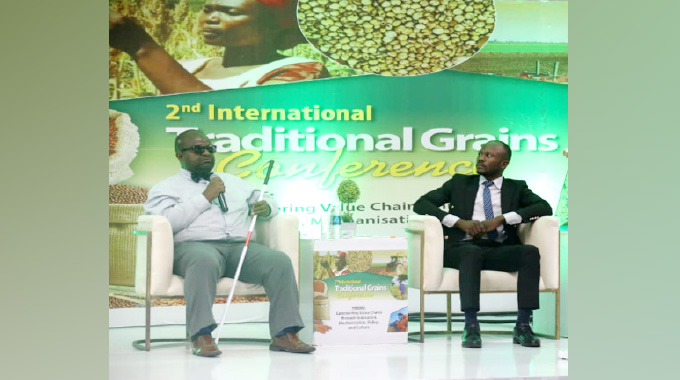
Private seed companies (Valley Seeds, Seed Co and Zadzamatura) were also in attendance, together with Arda and AFC Insurance. This diverse attendance underscored the unified national effort required to elevate traditional grains from subsistence crops to commercial staples.
Firm policy mandate for national food security
In his keynote address, the Minister of Lands, Agriculture, Fisheries, Water and Rural Development, Dr Anxious Jongwe Masuka, placed traditional grains, sorghum, millet and finger millet at the centre of the country’s economic transformation.
The Minister declared that the Government is moving away from describing these crops as “small grains,” asserting that they are “traditional grains” that are “ecologically suited” and the first choice for hunger and nutrition.
Key policy directions included
Climate-proofing: An urgent focus on climate-proofing agriculture through robust investments in irrigation and the Pfumvudza/Intwasa conservation agriculture model.
Business approach: Emphasising a value chain approach to treating agriculture as a business at every scale, arguing that traditional grains should be viewed as cash crops.
Ambitious target: Government efforts are targeting traditional grains to constitute a significant proportion of the country’s total cereal production, aiming to boost their role in national food security and nutrition.
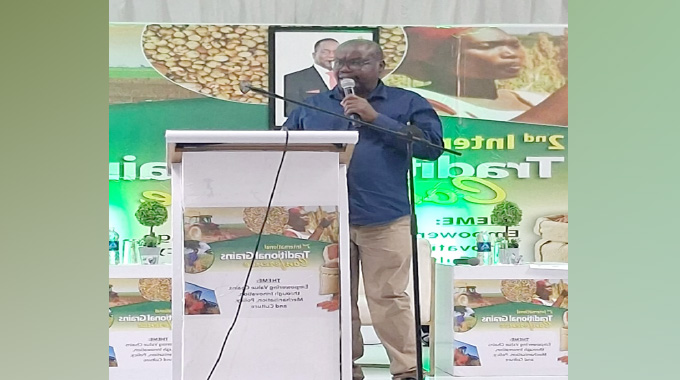
The conference also welcomed His Excellency the Indian Ambassador to Zimbabwe, Mr Bramha Kumar, who shared insights into India’s Green Revolution and its commitment to sharing best practices on agroecology, natural farming, and digital public infrastructure (DPI) with friendly countries like Zimbabwe.
Scientific research to improve productivity and production of traditional grains
The segment highlighted the key scientific advances in traditional grains tailored to advance genetic gains. Dr Jill Cains, a Principal Scientist with CIMMYT highlighted the need for modern breeding techniques such as speed breeding and genomic selection for accelerated genetic improvement in traditional grains.
Ms Olivia Mukondwa, a sorghum breeder with Crop Breeding Institute (DR&SS), outlined the Government’s efforts in breeding and commercial registration of improved traditional grains. She stated that the Crop Breeding Institute has so far commercially released nine sorghum, nine pearl millet and two finger millet varieties from which farmers can choose for production across the country.
Dr Henry Ojulong, a senior scientist from Icrisat, for East and Southern Africa, focused on several research advances ongoing in East and Southern Africa, Zimbabwe included.
Major highlights included breeding for improved yield, with a major focus on the need to breed for hybrids. He also emphasised ongoing work in breeding for biofortified varieties of traditional grains with elevated levels of Iron and zinc to fight malnutrition, which is prevalent in areas where these crops are grown.
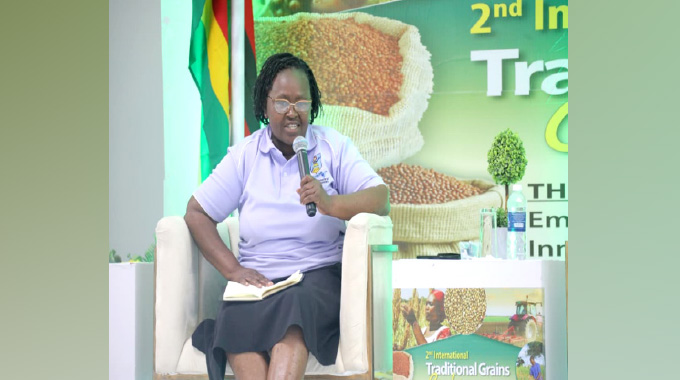
To bridge the gap between the genetic potential of the different varieties and the actual yield in farmers’ fields, the conference also touched on the need for Good Agronomic Practices (GAP), an area, which was presented by Dior Pote, the Head of Agronomy for Seed Co, Zimbabwe.
Mechanisation as the catalyst for growth
A major focus of the discussions was on removing the drudgery associated with traditional grain farming to make the sector profitable and attractive, especially to young people.
A representative in the Ministry of Agriculture’s Department of Engineering Mechanisation, highlighted the national goal of achieving 80 percent mechanisation across all farming operations by 2028.
The Ministry stressed the importance of scale-appropriate mechanisation for smallholder farmers and noted that efficient post-harvest handling is critical, as approximately 20 percent of African harvests are currently lost, enough to feed 48 million people.
Dr Christian Thierfelder, a Principal Cropping Systems Agronomist from CIMMYT, strongly promoted the Service Provider Model. This innovative approach encourages a few business-minded farmers to own machinery, such as two-wheel tractors, multi-grain threshers and basin diggers and hire out services to others, thereby transforming farming into a reliable, year-round source of income.
For financing these crucial investments, the Agriculture Finance Corporation (AFC) confirmed that loans and financing target smaller farmers and can be accessed through aggregation, where groups of farmers apply collectively.
Rebranding and redefining the market
Panel discussions on market development and value addition addressed the cultural perceptions and challenges in the traditional grains value chain:
Rebranding for Pride: Dr Tafara Marazi from the University of Zimbabwe’s Sociology Department proposed a cultural shift by rebranding “traditional grains” as “indigenous grains.” He argued that this change in terminology would foster national pride and remove the “very old and outdated” stigma often associated with the crops.
Consumer appeal: Icrisat’s Mr Thabani Dube advised processors to focus on marketing that appeals to modern consumers by highlighting the ease of cooking and suitability for a healthy lifestyle, rather than solely emphasising drought tolerance. He also suggested Government incentives, such as tax breaks for processors and making traditional grains mandatory for public institutions like schools, hospitals and prisons, to guarantee demand.
Fighting malnutrition: Save the Children’s Mr Thomas Chuchu outlined strategies for leveraging existing platforms like community care groups and cooking demonstrations to promote the adoption of these nutrient-dense crops to combat malnutrition at the household level.
Academic support: Dr Takaza-Dube from the National University of Science and Technology (Nust) highlighted the role of universities in adopting the new Education 5.0 model, which emphasises practical application to collaborate with the industry on applied research, nutrition profiling, and developing new value-added products.
The consensus among stakeholders was that the path to increased production and consumption requires a synchronised effort combining policy support, technological innovation, guaranteed market, accessible financing and a cultural shift to embrace indigenous grains as a cornerstone of Zimbabwe’s food, health and economic security.
Underscoring this commitment from a regional perspective, Mr Mkhunjulelwa (MK) Ndlovu, the Provincial Director for the Agriculture and Rural Development Services in Matabeleland North, stated: “For arid regions like ours, traditional grains are not just a contingency plan, they are our ecological and economic future, ensuring resilient livelihoods and profitable, sustainable enterprises for our communities.”
On the sidelines, the conference hosted critical displays. International Crops Research Institute for the Semi-Arid Tropics (Icrisat) emphasised the Smart Food Initiative for value-added products and the strategic importance of the Regional Genebank in safeguarding germplasm for conservation.
Similarly, seed companies showcased climate-resilient traditional grain seed varieties, while off-takers and processors like GMB, Buntu Foods and Ingwebu confirmed the vital market demand for the produce.
The pinnacle of the conference, however, was the celebration of a major scientific breakthrough: the release of the country’s first two nutrient-dense pearl millet varieties on November 26, 2025.
Commercially released and registered by the Crop Breeding Institute (CBI) using advanced materials from Icrisat, the two varieties named PM-ND 1 and PM-ND 2 are biofortified to contain significantly higher levels of essential micronutrients, particularly iron and zinc.
These are also the first two Biofortified Pearl Millet varieties to be registered in East and Southern Africa.
This innovation is expected to play a crucial role in mitigating micro-nutrient malnutrition across dryland communities while providing farmers with high-yielding, drought-tolerant alternatives, ensuring the nation’s food security remains robust even in the face of climate change characterised by increasingly erratic rainfall patterns.