Online Reporter
Johnsias Mutonhori, Midlands Correspondent
CHENXI Chengetai Investments, a mining company operating in Shurugwi, has launched an ambitious scientific roadmap to reclaim the Boterekwa escarpment and surrounding areas through large-scale tree-planting and environmental rehabilitation.
The company planted 2 000 indigenous trees during the National Tree Planting Day commemorations held at Boterekwa, an event attended by the Minister of State for Midlands Provincial Affairs and Devolution, Owen Ncube.
Boterekwa — once known for its breathtaking scenery — has been degraded over the years due to mining activities that were not matched with adequate land reclamation measures.
Chenxi Investments director, Mr Simon Karimanzira, said the company’s environmental thrust aligns with the Vision 2030 agenda, which prioritises sustainable development and responsible natural resource management.
“Let me acknowledge His Excellency, President Emmerson Dambudzo Mnangagwa, whose Vision 2030 places strong emphasis on responsible natural resource use, sustainable development, environmental protection, and climate resilience,” he said.
“Chenxi Investments is proud to be a key player in advancing these national goals through structured rehabilitation and reforestation programmes. Chenxi Chengetai Investments’ work is not a formality; it is a strategic priority and part of our corporate DNA.”
Mr Karimanzira said the company has planted more than 20 000 trees this year alone, including 11 200 within the Boterekwa escarpment.
The flagship species is the Kigelia Africana (Mumvee).
The project boasts a 95 percent tree survival rate, supported by irrigation systems and a nursery that produces 40 000 seedlings annually. Plans are underway to expand the nursery’s capacity to 100 000 seedlings per year.
“Our rehabilitation footprint shows real transformation. Of approximately 70 hectares of disturbed land, 33 hectares have already been restored, representing 46 percent progress. We plan to plant one million trees over the lifespan of all our projects,” said Mr Karimanzira.
“Our restoration follows a deliberate three-phase approach, which includes stabilising soils through fast-growing grasses such as vetiver and Rhodes grass, introducing indigenous species suited to the Shurugwi ecological conditions and promoting biodiversity through shrubs, fruit trees, and mixed vegetation that support long-term ecological regeneration.”
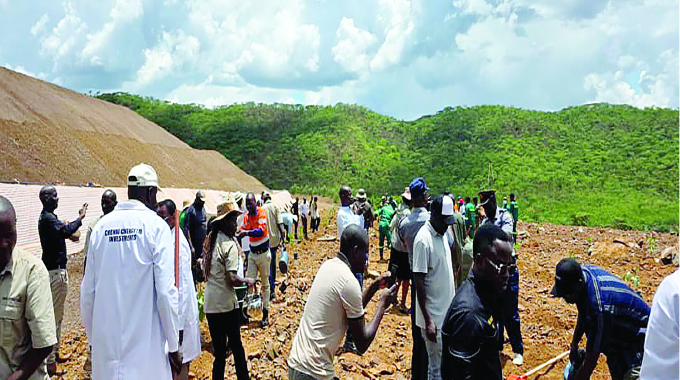
Mr Karimanzira said Chenxi is working with experts from Hunan City University in China alongside local environmental specialists and Government departments to ensure the rehabilitation is science-driven.
“We have partnered with Hunan City University of China, whose experts are on the ground working with our local environmental team and Government officials on advanced rehabilitation, slope engineering and ecosystem restoration,” he said.
The company has also collaborated with Zimbabwean universities for research, environmental monitoring and shared restoration initiatives.
“This ensures that our restoration work is science-driven and aligned with best environmental practices,” said Mr Karimanzira.
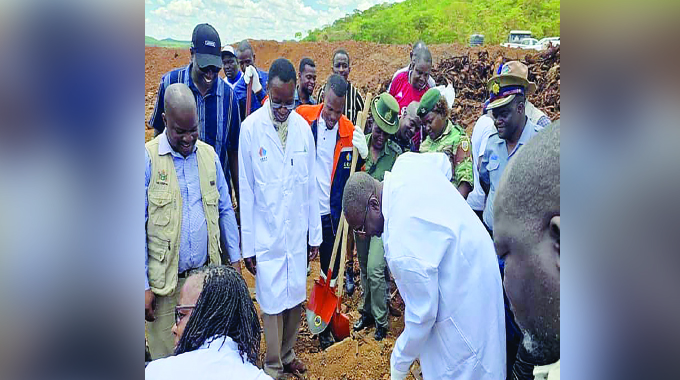
This year’s NationalTree Planting Day, under the theme “Trees and Forests for Ecosystem Restoration and Improved Livelihoods”, was officially launched by President Mnangagwa during the Zanu-PF 22nd National People’s Conference in Mutare.
Minister Ncube said the provincial commemorations bring the national vision closer to communities and strengthen public participation in forest restoration.
“Trees and forests are more than part of our landscape, they are central to our health, ecosystems and economy. They purify air, preserve water quality, offer habitats for diverse species and provide the backbone of our tourism,” he said.
The minister warned that Zimbabwe continues to face unacceptable levels of deforestation driven by illegal logging, charcoal production, agriculture, urban expansion and veld fires.
Globally, the world loses 10 million hectares of forest per year, with Africa accounting for nearly four million, which is almost double the global average. Zimbabwe alone loses an estimated 262 000 hectares annually.
Minister Ncube said the Government is committed to developing bioprospecting and bio-trade to unlock economic value from non-timber forest products such as medicinal plants, wild fruits, fibres and craft materials.
“These measures will position biodiversity as a driver of inclusive growth, ecological sustainability and industrial development. They ensure our forests contribute meaningfully to livelihoods while supporting national industrialisation,” he said.