Online Reporter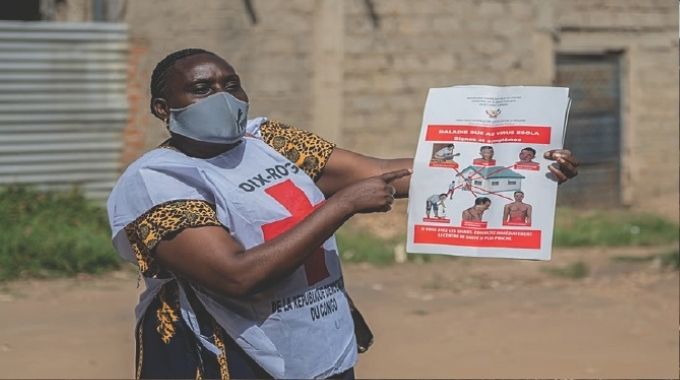
IN the United Kingdom, a team of scientists who helped develop the first Covid-19 vaccine and worked during the 2013 Ebola outbreak are now racing to create a new vaccine to combat the rare Bundibugyo strain of Ebola, which is responsible for the current outbreak in the Democratic Republic of Congo (DRC).
The urgency is high, as the strain currently spreading in the DRC has no approved vaccine or specific treatment. This has made efforts to control the outbreak even more difficult, forcing health workers to rely on prevention measures and early detection to limit its spread.
The return of Ebola has also brought back grim scenes witnessed in previous outbreaks. People wearing protective suits are once again carrying out burials, a necessary step to prevent infection but one that often causes distress in communities.
Health and aid workers are working under pressure to maintain strict contact tracing systems. Their aim is to trace every person who may have come into contact with an infected individual, in an effort to break the chain of transmission.
However, as seen in past outbreaks, medical teams are facing suspicion and resistance from some communities.
At the centre of vaccine efforts is Professor Teresa Lambe, Head of Vaccine Immunology at the Pandemic Sciences Institute at the University of Oxford. She was part of the team that developed the Oxford/AstraZeneca Covid-19 vaccine and has long been involved in research to prevent diseases such as Ebola.
Lambe says contact tracing remains the most important first step in controlling the outbreak.
“Truthfully, I think contact tracing and case isolation is absolutely the first thing that we should be doing and are doing in country, the WHO and the government bodies. And that is what we should be focusing to make sure that we’ve got all of the potential cases identified and hopefully under control,” she says.
Drawing from experience gained during earlier Ebola outbreaks, the Oxford Vaccine Group has moved quickly to begin work on a vaccine targeting the Bundibugyo strain.
“We have been, able to pivot rapidly and to start to make a vaccine against the Bundibugyo, I think it’s important to note that, I and others, many people within the field, were involved in the 2013, 2016 outbreak. I helped some of the testing of the vaccines that were tested for the Ebola outbreak. During that period. that amount of knowledge, has really helped us be able to, pivot and try and make a vaccine against this, that is happening in the DRC,” says Lambe.
She explains that the current strain is different from the one responsible for the major Ebola epidemic between 2013 and 2016, which claimed more than 11,000 lives.
“The outbreak that happened in 2013 to 2016 and claimed over 11,000 lives was caused by the Zaire Ebolavirus and that is a filovirus that causes a quite high degree of disease and it’s a haemorrhagic fever. Now, within that family of viruses, you have relatives, almost cousins if you will, that can cause disease. And one of those cousins for want of another word is Bundibugyo. So it is a virus that is like the outbreak causing virus from 2013 to 2016, but distinct enough that, we are accelerating new vaccines that target just that viral strain.”
The 2013–2016 epidemic remains the worst on record. It affected several countries in West Africa, including Guinea, Liberia and Sierra Leone, with more than 28,000 cases reported.
The outbreak also spread beyond Africa, with a small number of cases recorded in the United States, the UK, Italy and Spain, mainly involving travellers and returning health workers.
No shortcut
Despite the speed at which scientists have begun work on a new vaccine, Lambe cautions that it will not be ready in time to help those currently affected by the outbreak.
She stresses that safety cannot be compromised.
“I’ll be very blunt and say from the get go – there is no shortcut that we could or should or would want to take with human safety. So there is no test that we will not do. What we will try and do is run a number of those tests in parallel.
“So frequently when you’re doing a vaccine development, it will take you 5 to 10 years because you will do one aspect, such as the pre-clinical testing, and then you will make a batch that can go into humans, and then you will start your phase one is so what we are trying to do now is to run those in parallel. So doing the animal testing along with the manufacture with humans and start the clinical testing as soon as we can. And we won’t know whether these vaccines are effective or efficacious until we actually use them in an outbreak setting. So, truthfully, I wouldn’t want to shortcut anything. But I’m mindful, as will, many people in the field, that we do these things in parallel. And when you do that, you do them at risk. And that’s financial risk, because you don’t know that your vaccine is going to be one that will be effective. But we certainly done this before for Covid and for other diseases. So that’s why we’re doing it again.”
Public anger
On the ground in the DRC, the situation remains tense and dangerous.
Suspicion among communities has put aid workers at risk. The country continues to grapple with ongoing conflict, with armed groups having killed thousands and displaced many more people in recent years.
This insecurity has made it difficult to spread public health messages about Ebola. Many people remain wary of outsiders, even those trying to contain the outbreak, which experts believe was discovered too late.
Surveillance systems have also been weakened by cuts in international aid, including funding from the United States and other partners.
Ebola cases are now approaching 1,000, but response efforts have been disrupted by violence.
In the past week alone, healthcare facilities have been attacked three times. On Sunday, a group of angry youths stormed a hospital treating Ebola patients, forcing medical staff to evacuate patients as gunfire was heard.
On Saturday, residents set fire to a tent used for suspected and confirmed Ebola cases run by Doctors Without Borders in Mongbwalu. More than a dozen patients fled during the incident, raising fears that the virus could spread further.
On Thursday, another centre in Rwampara was burned after relatives were denied access to the body of a man suspected of having Ebola.
Such anger is often fuelled by strict prevention measures that stop families from performing traditional burial rites. These measures, although necessary, have created tension, as families are unable to handle the bodies of their loved ones.
People in affected areas describe the disease as sudden and severe, with symptoms such as vomiting and bleeding.
Ebola spreads through close contact with bodily fluids, including sweat, blood, faeces and vomit. Healthcare workers and family members caring for the sick are at the highest risk of infection.
Mortality risks
Lambe says there is still much to learn about the current outbreak, although early evidence suggests the Bundibugyo strain may have a slightly lower death rate than other forms of Ebola.
“So what we know from previous outbreaks of the other family members is that mortality can be 50 to 80 percent, whereas what we know from this, about this virus from the last two outbreaks is that mortality is lower. It’s generally 30 to 50 percent. That’s still pretty high and not something that, you know, you would you would want to catch and I think there’s a lot of ongoing work that will delve into the epidemiology and the case fatality rates right now that is happening, that the W.H.O. and other partners in country are enabling. As to the spread. it is spread with true bodily fluids so individuals that have gotten sick and then they may have bodily fluids, especially when you’re cleaning bodies of the deceased. That is how it is transmitted. So it is not as transmissible as something like Covid, nor is it as transmissible as something like measles.”
Efforts to contain the outbreak are further complicated by limited infrastructure. There are few facilities capable of testing for the Bundibugyo strain, and many clinics depend on generators for power.
In addition, a key airport used for humanitarian operations has reportedly been under the control of rebel groups for more than a year, making access even more difficult.
The DRC has experienced 17 Ebola outbreaks, and while the World Health Organization says the country has some capacity to respond, delays in identifying the current strain have already cost valuable time.
Early tests focused on a more common form of Ebola, allowing the virus to spread undetected for weeks. Experts are still trying to establish exactly when this outbreak began.
For now, the race continues — both to contain the outbreak and to develop a vaccine that could prevent future ones.–African News