

 Online Reporter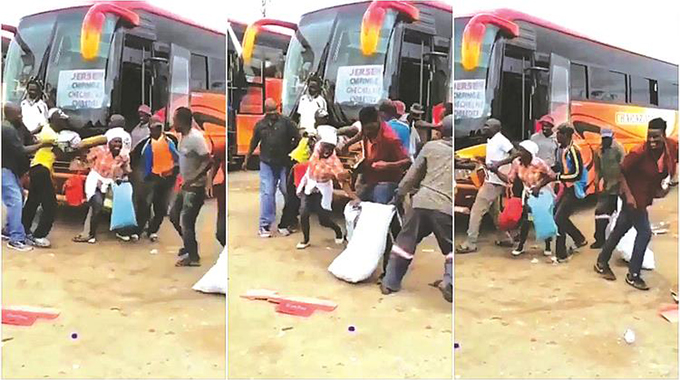
Rodgers Irimayi
Cultural Perspectives
IN Zimbabwe, touting locally known as “chihwindi”, has become an upsetting issue affecting travellers, primarily at bus termini across the nation.
As passengers arrive to board buses on their journeys, they practically lose their rights as they are met with a barrage of aggressive and abusive touts who harass and intimidate them in a bid to secure customers for their preferred bus operators.
This disturbing trend particularly targets vulnerable individuals, such as the elderly and women, exacerbating fears around travel and mobility within the country.
Most of the touts are on the payrolls of bus operators and are protected by them when the law enforcement agents arrest the hwindis.
There are also many freelance touts who operate at various passenger pick-up points where they charge and demand cash from motorists who pick passengers from where they claim are their territories.
These often fight on their own as they fail to agree on their illegal boundaries.
Touting’s impact on travellers is multifaceted and harsh. Travellers frequently recount harrowing experiences of both physical and verbal abuse at the hands of these touts.
Such confrontations can escalate quickly, creating a chaotic atmosphere that intimidates the innocent travellers simply trying to catch a bus. It is not uncommon for touts to demand that passengers board specific buses, threatening dire consequences to those who resist.
Beyond harassment, several passengers have reported loss of valuables. Armed with a range of tactics, touts employ sleight of hand and distractions to steal belongings, further adding to financial pressures on those already grappling with the burdens of everyday life.
The fear of robbery often weighs heavily on travellers, transforming what should be a simple journey into a source of significant anxiety. Many have been physically attacked, slapped or kicked for refusing to follow orders from the hwindis.
To combat these rising troubles, the Zimbabwe Republic Police (ZRP) launched initiatives like “Operation Chihwindi Chapera” and “No to Touts” to stem the tide of touting.
Despite these efforts, the outcomes have been frustratingly ephemeral. Many touts return to their old haunts as soon as police presence wanes, revealing a systemic issue that requires a clearer, more sustained approach.
The ZRP has stated that so far, more than 410 touts have been apprehended nationally, with those found guilty subjected to strict legal procedures and loss of deposit fines.
However, without a long-term strategy to address the root causes of touting, these operations may prove to be little more than a temporary fix, leaving passengers vulnerable once again.
The impact of touting on passengers has become unbearable and traumatic, and thinking of going to a bus terminus becomes a burden.
For many travellers, the environment at bus termini has transformed from one of anticipation to one of dread.
The constant fear of harassment and theft fosters an atmosphere of anxiety. For parents, this added stress is compounded, as they must remain vigilant over their children while navigating a chaotic environment.
The emotional impact can be significant; for the elderly and women, the trauma can lead to a reluctance to travel altogether.
Passengers detailing their experiences of intimidation and theft illustrate the toll touting takes on mental health and general well-being.
The financial loss resulting from stolen belongings can exacerbate already difficult economic situations, reinforcing a cycle of vulnerability among those most affected.
The cultural implications of touting in Zimbabwe depict a practice that undermines traditional values deeply woven into the fabric of Zimbabwean society, notably the respect for elders and a sense of communal harmony.
Traditionally, elders are revered sources of wisdom; however, the harassment associated with touting fosters a culture of disrespect that threatens these cultural norms.
Touting also erodes the spirit of hunhu/ubuntu, an African philosophy that emphasises communal relationships and togetherness.
When selfish motives overrule community-oriented values, community cohesion is compromised, leading to distrust and fragmentation. What was once a supportive collective society is at risk of becoming a hostile environment where self-interest prevails over the well-being of others.
Family structures may also be impacted as touting increasingly becomes a source of income for some. The involvement of family members in touting activities can strain relationships and disrupt traditional family roles, which traditionally emphasise mutual respect and support.
While the challenges of touting are significant, the road to resolution is achievable.
A sustained police presence at bus termini is one approach that could help deter these activities and assure travellers that they are in a secure environment.
Moreover, improvements in lighting and security measures will help mitigate opportunities for touting to occur, while public awareness campaigns could educate passengers on personal safety and how to report these crimes effectively.
The ZRP encourages the public to report touting activities to their nearest police station, outlining the importance of community participation in eradicating this issue.
Collaborative efforts are vital; by standing together, travellers and law enforcement can create a safer environment at bus termini that reflects the dignity and respect all Zimbabweans deserve.
Touting is a pressing issue in Zimbabwe that significantly impacts the daily lives of many, infringing, not only on personal safety, but also on cultural values and community cohesion.
While efforts such as the ZRP’s “No to Touts” operation are a step in the right direction, enduring change will require a more comprehensive strategy that addresses both enforcement and community support.
In recognising the value of collective effort, Zimbabwe can pave the way for a future where travelling within the country is, not only safe, but also reflects the fundamental dignity and respect that all individuals deserve.
Only through a united front can the scourge of touting be overcome, restoring a sense of peace and security to the traveling public.
Rodgers Irimayi is the Ministry of Information, Publicity and Broadcasting Services Masvingo Provincial Information Officer. He writes in his personal capacity and can be contacted on +263778246098 or [email protected]. He can also be followed on his YouTube channel, Culture Views with Judah Kalispokaz



Police have been turned into a joke by touts, Kombi and mushikashika operators and commuters alike. One must just go and observe what happens at the junction of Remembrance Drive and Simon Mazorodze Road near the ZBC Mbare Studios to get the picture I am talking about. And that picture is replicated everywhere where police is expected to stamp authority and take control. The reason why this menace isn’t subsiding is because police is ineffective. And one of the reasons why it has been rendered a joke on the roads is because of corruption. Police actually get more out of corrupt activity than they earn from salaries. And besides, they get free rides to and from work on the same mushikashika and kombis. So how can one expect them to take their job seriously ?