

 Chronicle Editor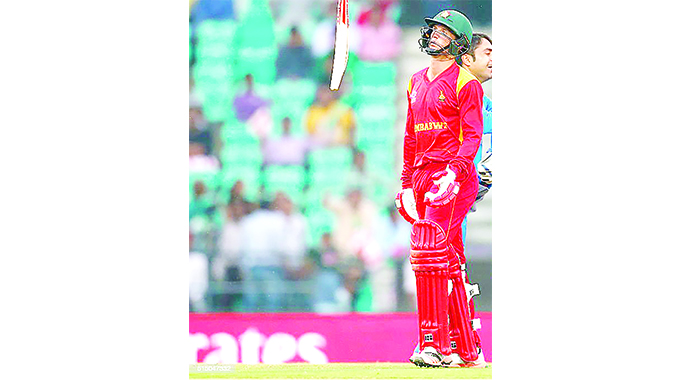
Brandon Moyo, Sports Reporter
Heath Streak, Tawanda Mupariwa, Chris Mpofu, Dave Houghton, John Nyumbu, Keith Dabengwa, Paul Strang, Njabulo Ncube, Mluleki Nkala – what do these players have in common?
They were all born and bred in Matabeleland and went on to represent Zimbabwe at international level, writing their names in stone as some of Zimbabwe’s best ever cricket players.
However, at a time when the national team is doing well again after years in a quagmire of their own making, only one player from the Matabeleland region is in the squad and the player is veteran all-rounder, Sean Williams.
Having only one player in the national side speaks to the state that Bulawayo cricket is in at the moment. Cricket in the province is in the doldrums and part of that can be blamed on the poor state of grounds and poor development structures.
Not only is the province facing challenges of not having enough representation at international level, its clubs are also going through difficulties. Bulawayo Athletic Club (BAC), the only club from the province playing in the ongoing T10 league, has won one out of their first four games played so far.
“What preparation did they get? There was no practice at all, some of them work during the day and only play on weekends and we also need to have serious coaches, not player coaches,” said former Matabeleland Tuskers player, Dumisani Mankunzini.
Bulawayo Metropolitan Cricket Association (BMCA) chairperson Godwin Dube believes that not having a huge number of players representing the country at international level has nothing to do with the state of cricket in the province. He says most of the key players from Matabeleland left the country for overseas.
“Firstly, I would like to point out that a number of key players who were round about the fringes of national setup such as Ainsley Ndlovu (UK), Ernest Masuku (Ireland), Brian Chari (Denmark) opted for opportunities with clubs overseas during our off season and this obviously has made it slightly difficult for them to be included in the team especially when there has been a change in the coaching structure at national team,” Dube said.
Dube also believes that the trio that has played for the Chevrons before would walk back to the national team if they avail themselves.
“I have no doubt that when they return, they will work their way back to the national setup and this will boost the representation of local players,” he said.
Mankunzini holds a contrary view as he believes that poor representation in the senior national team is due to “regionalism”.
“If the teams are picked on merit, there would be more players from Tuskers, however regionalism is killing the game. It has nothing to do with performance,” said Mankunzini.
Cricket development at a young age has been said to be key at producing world class cricketers who will go on to represent the country at international level. Development should begin at grassroots level and this is what both Dube and Mankunzini believe would be crucial at having more representation at national level.
“Lack of development is killing us, development does not only start at club level but at grassroots level at primary school, some of us started playing cricket at Grade three,” said Mankunzini.
He added: “It is not the role of Zimbabwe Cricket (ZC) to assist the province, but the cricket development officer is supposed to make sure that there is cricket in primary schools.”
According to Dube they have channelled a lot of resources towards schools cricket, and over the past few years they have been able to run junior leagues and tournaments which have received support from both public and private schools.
“A lot of emphasis and resources have been channelled towards school cricket (age groups) and over the past few years we have been able to consistently run a number of junior leagues and tournaments, under 11, 13, 16 and 19,” said Dube.
With three of the city’s cricket grounds BAC, Queens Sports Club and Emakhandeni having been of late turned into nightclubs and bars, the former Tuskers bowler believes this benefits cricket. He is not convinced that it has negatively affected the game.
“All proceeds from these shows are ploughed back to the maintenance and repairs of other areas within the stadium that ordinarily we would not have finances to maintain,” said Dube. Mankunzini is not convinced.
“We cannot have grounds for nightclubs, it’s disappointing as sometimes players have to pick bottles from the ground before games.”
The province’s junior policy is however paying dividends as they have provided six players out of the selected 25 for the U19 national team. This is the biggest number the province has produced in the last decade.
“This is really encouraging considering that these boys represent and are early fruits of our development programs,” said Dube.



 Blessing Chizhande
 Online Reporter