

 Chronicle Editor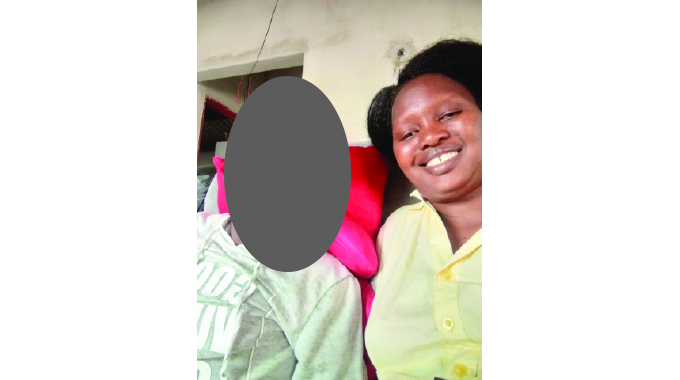
Thandeka Moyo-Ndlovu, Senior Health Reporter
FOR the past years, Samkeliso Mhlanga has watched her daughter struggle to talk, move and eat like her peers due to hydrocephalus.
Many times, she has had to withhold herself from confronting friends and relatives who pass nasty comments about her child’s condition.
With more than four surgeries since 2006, neurosurgeons have failed to alleviate the impact of hydrocephalus on her daughter’s body. She relies on a wheelchair for navigation.
Although unable to do what a normal 15-year-old can do physically, Ms Mhlanga says her daughter is a precious gift that has brought her so much joy despite the disability.
The term hydrocephalus is derived from the Greek words ”hydro” meaning water and ”cephalus” meaning head.
As the name implies, it is a condition in which the primary characteristic is excessive accumulation of fluid in the brain. Although hydrocephalus was once water in the brain, the water is actually cerebrospinal fluid (CSF) — a clear fluid that surrounds the brain and spinal cord.
The excessive accumulation of CSF results in an abnormal widening of spaces in the brain called ventricles. This widening creates potentially harmful pressure on the tissues of the brain.
Hydrocephalus affects one in every 500 babies born and just like in Lothando’s case there is no known cure for the condition.
Hydrocephalus is most often treated by surgically inserting a shunt system that moves the flow of CSF to another area of the body.
Shunt systems are not perfect and require regular medical follow-ups which are costly if complications occur, the system usually requires some type of revision.
In an interview, Ms Mhlanga said support from a local pastor, Lynne Ndlovu has kept her family emotionally and financially stable as taking care of Noluthando comes with a lot of pain and sacrifices.
“My daughter had her first shunt inserted on her when she was only eight months old and unfortunately her system did not respond. Two months later, another one was inserted without any luck and to date she has had five of them to help drain the fluid in her head,” said Ms Mhlanga.
“She can’t walk, she can’t talk, her speech is not that good. She started sitting up properly when she was a four-year-old. She tries to eat by herself, most times we feed her and that is the life we have accepted to be hers.”
She said the family cannot use public transport and have to incur extra costs when she needs medical attention.
“Her father is employed, but we struggle a lot, we cannot provide for all her needs including a balanced diet, but we are grateful. We have also managed to pull through because of Pastor Lynne and her organisation. We hope for a better future and access to resources for children with hydrocephalus.”
Unlike Ms Mhlanga, Ms Tatami Shava’s seven-year-old daughter has had a second shot at life after having a shunt inserted when she was first diagnosed with hydrocephalus in 2020.
She is an ECD A learner at a local school and although the condition almost left her unable to walk and sit upright, the shunt system has enabled her to function normally.
“My daughter fell sick and was admitted for two weeks to Mpilo as we assumed that she had meningitis. She received an injection for those two weeks but her head kept on growing,” she said.
“She grew up well, but could not develop physically like others. She started walking at three years. The head kept growing and we thought it would stop. However, one day as my daughter was playing with her friends, one of the neighbours asked if she had heard about the Hydrocephalus Association before linking us up with Pastor Lynne.”
“We went to Mpilo and that is how we started treatment as the organisation helped us. She wasn’t walking then but now she can walk and keeps improving. She doesn’t have balance however the head is quite big but I am happy she is alive and doing so well at school,”
“Some children laugh at her at school, sometimes I get uncomfortable when I am walking and people stare at me until I lose confidence. She doesn’t even attend assembly as she can easily fall. Teachers now understand, especially her class teacher, and make it easy for us.”
Pastor Ndlovu said since September is hydrocephalus awareness month, members of the public should take time to know about the condition so they do not perpetrate stigma.
She said, fortunately for those in Bulawayo, there was now a neurosurgeon at Mpilo Central Hospital.
“Children with hydrocephalus don’t live long, especially here in Zimbabwe we do not have access to information, resources and many are diagnosed late when there is less than can be done to improve their quality of life. Some of our patients become worse with time and die while others end up with permanent physical disability,” she said.
“Swelling head affects vision, eyesight and hearing and even the backbone hence the need for residents to be aware of this condition so they seek help in Bulawayo.”
She said the condition is also expensive to treat as patients need to do CT scans and tests on a regular basis.
“In Zimbabwe, however, check-ups are so expensive and not within reach for ordinary people hence our call for the public and policymakers to increase efforts in ensuring that hydrocephalus patients have access to resources.
Early diagnosis and immediate treatment is important as this condition can be easily detected in the womb. This is also a challenge because only a handful of women go for scans during pregnancy.”
Pastor Lynne started the association in 1996 after realising the hardships faced by children living with hydrocephalus. She has passion and faith that combined efforts can make an immense difference in alleviating the plight of the children living with hydrocephalus.
“Most husbands run away and at the moment out of the 18 children I have, only two are being supported by their fathers. They treat it as a curse but it is not, it is just a condition.
These kids need diapers even when they are above ten years, some need glasses, hearing aids among other needs. We need to work together as communities, understand this condition and be willing to help everyone with hydrocephalus so that they too live normal lives.” — @thamamoe


 Blessing Chizhande
 Online Reporter