Chronicle Editor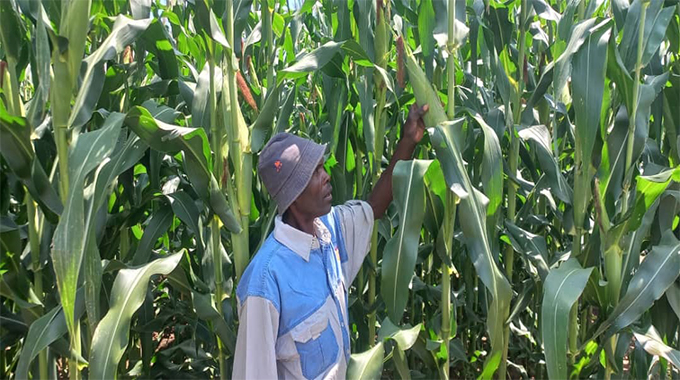
Sukulwenkosi Dube-Matutu, [email protected]
SEBASA Irrigation Scheme in Gwanda district, Matabeleland South, has been ranked as the fourth best-performing irrigation scheme in the country in terms of production following its rehabilitation in 2017.
Each of the 97 plot holders has seven hectares of maize which is at the early vegetative stage, and they expect a yield of 10 tonnes per hectare.
The farmers are producing cash crops such as sugar beans, groundnuts, wheat, and maize. They have also managed to start a goat-rearing project using proceeds realised from selling crops.
The farmers are also operating a peanut butter-making project.
The 65-hectare Sebasa Irrigation Scheme was rehabilitated by Government under the Small Holder Irrigation Revitalisation Programme (SIRP) in November 2017.
The diesel-powered engine pumps have since been solarised and eight boreholes were drilled including the construction of canals and a barrage.
SIRP, a Government-led programme funded by the International Fund for Agricultural Development (IFAD), aims to assist in the revitalisation of irrigation schemes across the country.
The irrigation scheme has a 66kw solar plant which can also supply power to the surrounding community.
The vice chairperson of the irrigation scheme, Mr Limakatso Sibanda said the conversion of the irrigation scheme from diesel to solar has brought huge relief to farmers as they could not afford to buy diesel to pump water.
“This irrigation scheme was established in 1968 and at that time it had 120 farmers. Our numbers gradually dropped as we were struggling to purchase diesel to pump water,” he said.
“In 1999, Cyclone Eline swept away some of the engines that had been installed in the river and this affected our operations. Some of the crops that we had planted wilted because of water challenges, forcing some farmers to pull out.”
SIRP came in 2017 and drilled eight boreholes which enabled more farmers to come to the irrigation scheme.
“A solar plant was installed which made it possible for us to produce without the challenge of diesel. Now that the irrigation scheme has been rehabilitated we have been able to farm on 37 ha and our target is to produce on the entire 65ha, and be able to take some to the GMB,” said Mr Sibanda.
A farmer operating at Sebasa Irrigation Scheme, Ms Privilege Dube said they are now able to fend for their families using the income from their produce.
She said they are optimistic that the irrigation scheme will become a major supplier of farm produce around Gwanda and beyond.
Ms Dube said they have a marketing committee that looks for buyers of their produce.
“Our hope has been restored as we are now able to feed our families and also pay school fees for our children. This project will go a long way in alleviating poverty within families, and I would like to thank the Government and its partners for financing the project and empowering,” she said.
Another plot holder, Ms Thabiso Dube said they contributed money to buy a peanut butter-making machine
Last year, the farmers contributed money and started their goat-rearing project.
The government and its development partners poured about US$40 million into rehabilitating 42 irrigation schemes across the country under the SIRP.
The programme is targeting to rehabilitate 60 irrigation schemes to boost production on about 5 200 hectares of land that were lying idle
SIRP is being implemented in Manicaland, Masvingo, Midlands and Matabeleland South.
In Matabeleland South irrigation schemes that have been rehabilitated under SIRP include Sebasa, Guyu, Tshikwalakwala, Makwe, Valley, and Silalatshani.
Work is underway to revitalise Bambanani Irrigation Scheme, Mankonkoni Irrigation Scheme and Rustlers Gorge Irrigation Scheme.
Under the Second Republic, the Government is prioritising the revival of the agricultural sector through the development of irrigation schemes to alleviate food insecurity and poverty, particularly in rural communities in line with rural industrialisation.
Through rural industrialisation, Government hopes to stem rural-to-urban migration, which saps growth from the African countryside, transferring it to towns and cities.
Rural industrialisation, which hinges on the Second Republic’s devolution policy, involves nurturing agro-processing start-up enterprises in rural areas through financial and technological support via venture capital funding and Government agencies.
Farmers have also been capacitated with inputs through various programmes to ensure productivity. They are also being equipped with technical skills to run their schemes as businesses and improve production.
The government is targeting to rehabilitate and develop 350 000 hectares of land by 2025 across the country to safeguard the country against the negative effects of climate change and ensure food security. — @DubeMatutu


 Online Reporter