Tendai Gukutikwa
Post Reporter
THE clang of steel doors and the shuffle of prison uniforms gave way to something softer this week— relief, disbelief, quiet tears, and the fragile hope of beginning again.
On Tuesday, 123 men at Mutare Farm Prison walked free after President Emmerson Mnangagwa granted them clemency under Clemency Order No. 1 of 2026.
Each carried a past they cannot erase, and a future they are determined to rebuild.
They were among 485 inmates across Manicaland who benefited from the order, 440 released outright, while 45 had their sentences reduced in the province’s five prisons.
They left not as statistics, but as fathers, sons, artistes—men who say prison reshaped them in ways they never imagined.
The Manica Post spoke to four of them as they tasted freedom beyond the prison gates.
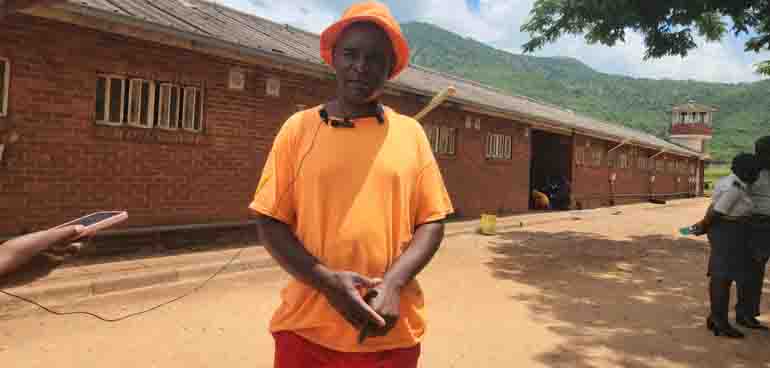
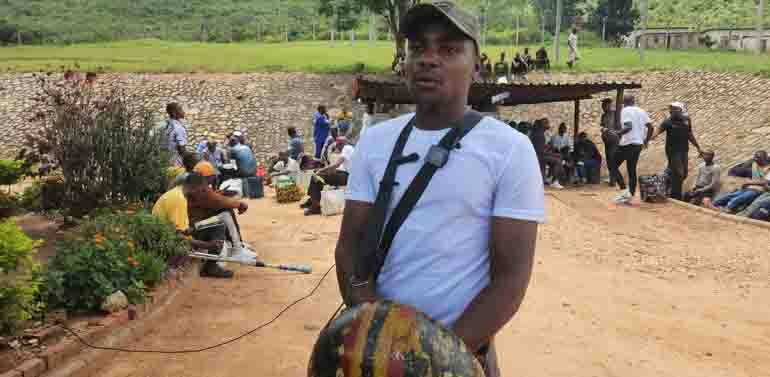
Carrying his mbira, Pfumai Dukwende (25), once known in artistic circles for playing with Deze raWasu, stood among those preparing to return home. Convicted of fraud, he had served two years and one month of a two-year, eight-month sentence, and was only due for release in September.
Regret was etched across his face.
“Being behind bars was very painful. I am glad that I am now going home. I was supposed to be released later this year, but I am going home right now. I am happy,” he said quietly.
Before prison, his life revolved around music. Now, he hopes to return to it with renewed purpose.
“I will not commit crime again. I want to get back to artistry and play my music. I have big plans for Manicaland traditional music. I have learnt a lot behind bars, and will help support young artistes in their musical journeys,” he said, clutching his mbira like a lifeline.
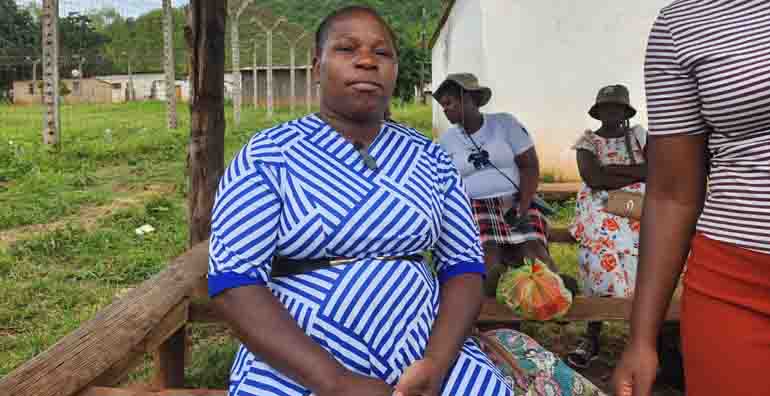
For Shingirirayi Musinachirevo (27), freedom arrived just four months before the end of his three-year, nine-month sentence for fraud—a failed car resale deal involving his cousin’s Nissan Sylphy.
“My cousin gave me the car to sell it. I was involved in an accident with it and had to reimburse her. I paid her US$1 200 and was supposed to give her the remaining US$3 800, but I was arrested a day before the agreed reimbursement date,” he explained.
Despite everything, his cousin forgave him and visited him in prison.
“That kept me going even though it was very hard being in jail,” he said.
Inside, he learnt a skill he believes can anchor him on the outside world, caring for horses.
Now he plans to make and sell horseshoes.
“In prison, I learnt to take care of horses. Out there, I want to make horseshoes and sell them to people who have horses so that I can take care of my family, and not defraud anyone again. I have three children and for their sake, I do not want to land back here,” he said.
In his eyes was determination and fear, fear of repeating mistakes, fear of stigma, fear of doors that may remain closed even after the prison gates have opened.
At 52, Changa Matsveta of Buhera had spent three years and two months of a nine-year sentence for stock theft.
A father of 15, he will return to a family that grew while he was away.
“My oldest child is 29, and my youngest is five. I have five grandchildren. Some were born while I was here,” he chuckled.
He insisted that he was only a go-between in a cattle sale involving two beasts given to him by friends, that went wrong.
“When I was arrested, I did not tell the police the truth because I thought my friends would come forward and confess stealing the cattle. They never did that. Up to now, I have kept their secret. They never visited me while in prison,” he said.
Prison, he said, changed him spiritually.
“In jail, I became a born-again Christian. I received God as my personal survivor. I want to become a pastor because this is a testimony in itself,” he said.
For him, release is, not only about returning home, it is about returning transformed.
Comfort Gwishiri (47) left prison very remorseful.
Convicted of culpable homicide after assaulting his friend, Innocent Magigwana, who died two days later, he spent over three years behind bars.
“I am very sorry about what happened. I have been rehabilitated. I am better now,” he said.
He was due for discharge in March next year, but will now rejoin society earlier.
“I thank Zimbabwe Prisons and Correctional Service for rehabilitating me. We were taken care of in jail. I missed my family, yes, but we were rehabilitated,” he said.
His voice faltered as he added: “I plead with the society to welcome me back. To my friends who were not released, I say keep holding on.”
Just outside the gate stood Precious Mutengeraro, who was waiting for her brother, Patrick Mutengeraro, who had served four years of a stock theft sentence.
“I cannot hide my joy. We have been praying for this day. Our family is whole again. He is my only brother. His wife left when he was imprisoned, and I was the one taking care of their children, but I am so happy that my brother is being released today,” she said, wiping away tears.
She acknowledged that reintegration will not be easy.
“People talk. Some will judge. But he has paid for his mistake. Now he must be allowed to live and work,” she said.
The Presidential Amnesty programme was officially launched in Harare on Monday by Justice, Legal and Parliamentary Affairs Minister, Honourable Ziyambi Ziyambi.
Minister Ziyambi said the initiative was rooted in the constitutional mandate to temper justice with mercy and to promote rehabilitation and reintegration.
“This programme recognises that correctional facilities are, not only places of punishment, but of rehabilitation. Those who have demonstrated good behaviour and reformation deserve a second chance to reintegrate into the society and contribute positively to national development,” he said.
He urged communities to receive the released inmates with understanding, while also encouraging the beneficiaries to remain law-abiding.
The men and women released this week embody the complex layers of that second chance gratitude mixed with uncertainty, faith intertwined with fear.
Each carries a different burden.
Dukwende must rebuild trust in a community he defrauded. Musinachirevo must convince potential customers that his word is now solid.
Matsveta must re-enter a family that learnt to survive without him. Gwishiri must live with the irreversible consequence of a moment of violence. Patrick Mutengeraro must navigate a society quick to remember but slow to forgive.
Yet all five share something else, the weight of expectation.
They must prove that prison did what it promises to do, which is to correct, reform, upskill and rehabilitate.
As the prison gates closed behind them on Tuesday, they stepped into sunlight that felt unfamiliar, but welcome, marked by their past, but hopeful that the future will not be defined solely by it.