Victor Maphos-Mashonaland East Bureau
THE Second Republic, under the leadership of President Mnangagwa, continues to make significant strides in transforming rural communities through strategic infrastructure developments, with the Rural Electrification Agency spearheading impactful energy projects aligned with Vision 2030 and the National Development Strategy 2.
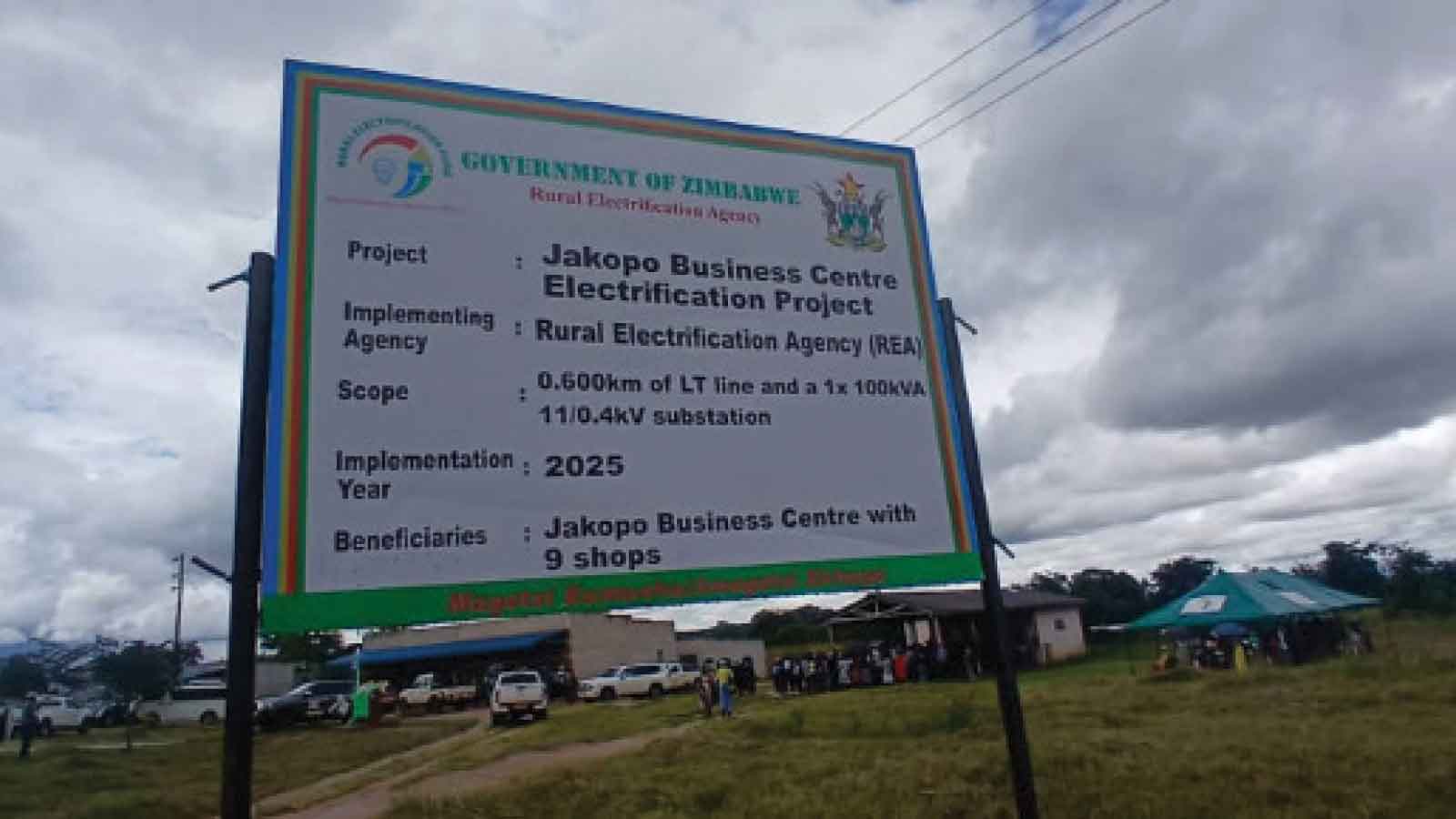
In a major boost to sustainable energy provision and rural industrialisation, REA has installed a US$30 000 bio-digester at St Paul’s Musami Mission High School in Murehwa district, while also connecting Jakopo Business Centre in Ward 14 to electricity — milestones that underscore Government’s commitment to leaving no one and no place behind.
The projects, which were recently commissioned by Mashonaland East Minister of State for Provincial Affairs and Devolution, Advocate Itayi Ndudzo, are set to transform livelihoods, enhance service delivery and stimulate economic growth in line with the country’s development blueprints.
A bio-digester is an enclosed oxygen-free system that converts organic waste into usable energy, providing an environmentally friendly solution to both waste management and energy generation.
The 50 cubic metre facility installed at St Paul Musami Mission High School is already producing biogas used for cooking, significantly reducing the school’s electricity costs.
Speaking at the commissioning ceremony, Advocate Ndudzo hailed the Second Republic’s people-centred approach to development.
“We are a Government of the people, by the people for the people and everything that is being done by the Second Republic under President Mnangagwa is intended to transform Zimbabwe into an upper middle-income economy,” he said.
“Today we have commissioned two critical projects in terms of energy provision in Mashonaland East Province. First, we have been at St Paul’s Musami where 50 m3 bio-digester has been commissioned and is now providing energy for all the cooking needs at the school. It is one of the oldest schools that we have in Zimbabwe and Mashonaland East province.”
Advocate Ndudzo said the projects were useful to a greater extent because the institution is a public school, and it is now reducing its electricity bills, enabling proper waste management.
Importantly, the digester is an environmentally friendly as it does not affect the environment.
The bio-digester is also producing organic fertiliser, which is being used by the school’s agriculture department, complementing its piggery and poultry projects.
This integration of energy and agriculture is in line with NDS2 priorities, which emphasise sustainable resource use, climate resilience and value addition in rural economies.
REA provincial manager for Mashonaland East, Engineer Edward Kandare, said the project guarantees a reliable energy source for the boarding institution.
“This project is specifically to assist the high school in management of its waste from piggery and cattle as well as from chickens.
“At the moment, they are getting gas from the digester for the boarding school kitchen. So, the source of energy for all their cooking is now gas.
“In this case, the school has actually reduced the electricity bill and they are guaranteed of constant supply of that particular energy at the school as it is not affected by load shedding,” said Eng Kandare.
The school is also getting other by-products as a result of that digester, such as production of liquid fertiliser.
Eng Kandare said the school has an organic garden being run from the waste generated from the digester.
Beyond the Musami area, the electrification of Jakopo Business Centre marks another significant milestone in the Second Republic’s rural industrialisation agenda, a key pillar under NDS2 and Vision 2030. Advocate Ndudzo spoke about the broader developmental impact of the electrification project.
“Again, the other project is at Jakopo Business Centre in Ward 14 of Murehwa district and this a very rural place but, in line with Government’s mantra of leaving no one and no place behind, we are commissioning electricity for all the businesses and villages around here.
“The intention being that we must have energy available to every citizen as we journey towards an upper-middle-income economy by 2030,” he said.
The availability of electricity is expected to unlock economic potential in the area, enabling small and medium enterprises to thrive, improving access to essential services and creating employment opportunities, particularly for youths and women.
Eng Kandare said REA remains committed to connecting all public institutions to electricity by year-end, reinforcing Government’s drive to accelerate rural development.
Since independence, the Government has prioritised rural infrastructure development, with REA playing a central role in expanding access to electricity.
Under the Second Republic, this programme has gained renewed momentum, contributing to inclusive growth and economic empowerment. The electrification of rural business centres such as Jakopo is already transforming livelihoods, allowing communities to fully use their skills and participate in the economy.
Local businessman, Mr Blessing Nehanda, welcomed the development, saying it would stimulate business growth.
“We are looking forward to a boom in business at this business centre. There should be business expansion and a growth at this centre which is good for the people. We are now able to sell perishables as well as cold drinks to the people. There are schools and clinics in this ward, so our wish is for those to be connected also since we have electricity nearby.
“I want to commend the Second Republic led by President Mnangagwa for leaving no one and no place behind in terms of development. It is true that when there is electricity, there is growth and thank you REA for considering the people of Jakopo,” he said.
Youth empowerment is also set to receive a boost, with young people now able to establish businesses within their communities.
Mr Admore Kasora said the development would bring services closer to the people.
“We have people who are into welding and they could not do that here simply because there was no electricity. Some of us were doing that in Murehwa, but since there is power in my ward now, I will definitely come and start my welding projects near my home.
“We do not have even printing and photocopying services here. Imagine travelling to Murehwa Centre just to print or photocopy some documents; it is time consuming and expensive at the same time. But that is all going to be history, thanks to the astute leadership of President Mnangagwa who is not turning back on his mantra of ‘leaving no one and no place behind,” he said.
Women in the area are also poised to benefit from the electrification drive. Mrs Catherine Makungwa said access to electricity has opened new opportunities for income generation.
“I am going to install a grinding mill here focusing on peanut butter. I am also going to start a sewing project right here at Jakopo Business Centre. I used to be relaxed since we did not have electricity, but now we do not have any excuses for make money,” she said.
The ongoing projects are a testament to the Second Republic’s commitment to inclusive development, as articulated in NDS2 and Vision 2030. By expanding access to clean and reliable energy, Government is laying a solid foundation for rural industrialisation, improved livelihoods and sustainable economic growth.
As Zimbabwe moves steadily towards becoming an upper-middle-income economy by 2030, initiatives such as the Musami bio-digester and Jakopo electrification projects highlight the transformative impact of visionary leadership and people-centred policies.