Online Reporter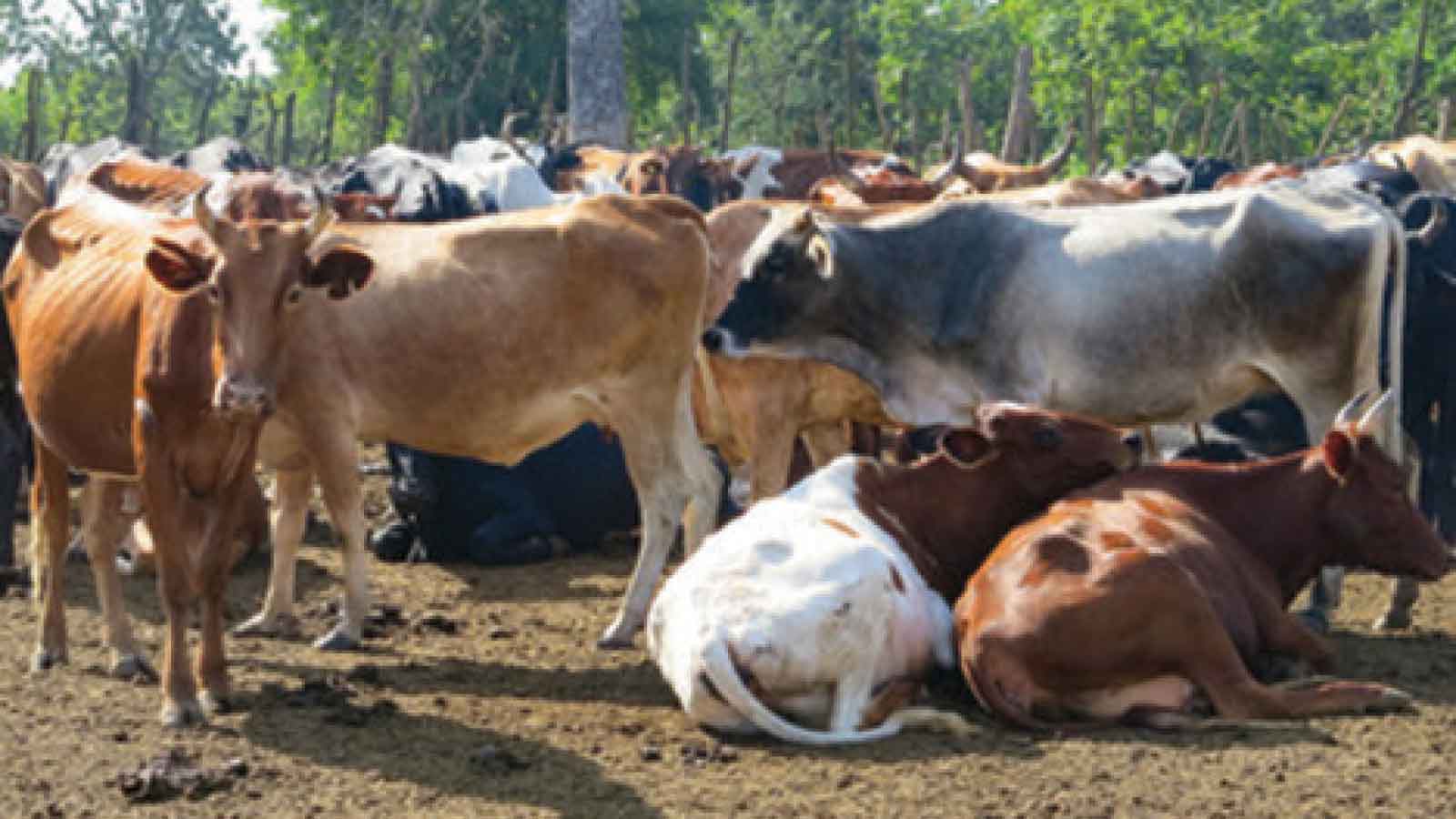
Richard Muponde
Zimpapers Politics Hub
THE Government’s adoption of a six-pillar drought mitigation plan for the 2026/27 summer season demonstrates that President Mnangagwa and the Second Republic are prioritising preparedness and protecting citizens before losses become irreversible.
Cabinet approved the plan after the national seasonal outlook projected below-normal rainfall under an El Niño-influenced season.
The Meteorological Services Department says the October to December period is expected to be predominantly drier than normal, with an erratic onset of rains and warmer conditions extending into early 2027.
This makes preparedness central to protecting food supplies and livelihoods.
The significance of the plan lies in its breadth. It does not treat drought as merely an agricultural challenge.
Food reserves, production, financing, livestock, imports, weather intelligence and coordination are being addressed as interconnected elements because a failed harvest can quickly become a household income, nutrition and water crisis. The approach therefore, places citizens at the centre of national risk management.
El Niño and the warning from recent experience
The country enters the coming season with painful experience of El Niño.
During the 2023/24 drought, the Government declared a national disaster after rainfall deficits caused widespread crop failure, depleted water resources and damaged grazing.
Official assessments put cereal production at about 744 271 tonnes against a much higher national requirement, demonstrating how quickly dependence on rain-fed agriculture can expose households to food insecurity.
That experience makes early action essential.
El Niño is a recurring climate phenomenon that alters atmospheric circulation and rainfall patterns. In Southern Africa, it is commonly associated with hotter and drier conditions, although local outcomes vary. The forecast does not mean every part of the country will experience identical conditions, but it represents a serious risk that warrants preparation.
The Government has previously responded through disaster declarations, grain imports, food assistance, cash-for-cereal interventions, agricultural inputs, livestock support and water interventions. The lesson is clear: protecting people requires several safety nets operating simultaneously.
Enhanced Strategic Grain Reserve
The planned Strategic Grain Reserve of 600 000 tonnes is fundamentally about protecting households from an uncertain harvest.
Grain reserves create a buffer between production shocks and consumers, allowing authorities to release stocks when supplies tighten instead of leaving communities exposed to market volatility.
The projected domestic cereal production of 1,6 million tonnes must therefore, be considered alongside reserve management. Production, storage and distribution are equally important. A harvest may exist at national level while vulnerable households remain exposed if grain cannot reach deficit areas at the right time.
This pillar builds on the Second Republic’s emphasis on food security.
During the 2024 drought, the Government combined domestic interventions with grain imports and social protection measures. The current approach seeks to strengthen that buffer before shortages deepen.
The objective is to protect ordinary families’ access to staple food.
Accelerated climate-smart production
The climate-smart pillar tackles Zimbabwe’s heavy dependence on rainfall.
Pfumvudza/Intwasa, conservation agriculture, soil rehabilitation and irrigation are designed to improve productivity under increasingly unpredictable climatic conditions.
The Ministry of Agriculture continues to identify climate-smart production and irrigation as central components of drought response.
The emphasis on liquid lime to correct acidic communal soils is significant because drought resilience begins before planting. Healthy soils can use available moisture more effectively, while improved agronomic practices can help farmers obtain better yields from limited rainfall.
Pfumvudza/Intwasa also embodies a people-centred approach by concentrating production on manageable plots and promoting conservation practices.
Instead of abandoning smallholder farmers when rainfall becomes unreliable, the policy seeks to equip them to produce under difficult conditions. This connects agricultural resilience with household resilience, particularly for communities whose food and incomes depend heavily on farming.
Integrated financing architecture
Drought mitigation cannot succeed without resources reaching productive activities quickly.
The integrated financing pillar recognises that resilience requires coordination between public resources, financial institutions, private capital and development partners.
Financing can support inputs, irrigation, mechanisation, water development, livestock feed, storage and climate-smart technologies.
Its importance becomes clearer when drought reduces household incomes at the same time that farmers need additional resources to maintain production. Without coordinated financing, vulnerable farmers can be forced into distress sales of livestock and productive assets.
The new architecture can deepen the Second Republic’s agricultural financing approach by directing resources towards preparedness rather than waiting until crisis conditions make intervention more expensive.
Livestock drought mitigation
Putting people first also means protecting the animals on which rural families depend.
Cattle, goats and other livestock represent household wealth, food, draught power, breeding capacity and security against future shocks.
The livestock pillar provides for monitoring cattle at risk, assessing water availability and mobilising emergency feed.
This matters because drought can trigger distress sales, with farmers selling animals cheaply simply to survive. Preventing unnecessary livestock deaths and distress sales protects the productive base from which rural recovery can begin. Zimbabwe’s previous drought experience demonstrated this vulnerability. Government records during the 2023/24 crisis recorded thousands of cattle losses and serious grazing shortages. Subsequent responses included supplementary feed, water interventions and veterinary support.
The new plan incorporates livestock protection from the outset, addressing livelihoods rather than focusing solely on grain statistics.
Enhanced imports and the consumer
The imports pillar recognises that food security sometimes requires looking beyond domestic production.
Allowing private-sector grain and feed imports for commercial users can supplement local supplies while reducing pressure on public resources. Reviewing household import thresholds for basic commodities can also widen consumer access when domestic availability is constrained.
This does not amount to an abandonment of local production. Rather, it provides a safety valve.
A people-first food policy must ensure families can obtain basic commodities when adverse weather reduces domestic output. Imports can operate alongside strategic reserves and climate-smart production, providing another layer of protection.
Coordination, early warning and capacity building
The final pillar may be the mechanism that makes the others work.
Early warning turns climate information into action. Stronger monitoring by the Meteorological Services Department can help authorities identify changing rainfall conditions, while provincial and national coordination can ensure responses reach communities before shortages become emergencies.
Zimbabwe has already used anticipatory action, including drought-response coordination involving Government, development partners and technical agencies.
The lesson is that information has value only when it triggers timely action. Forecasts must therefore, translate into seed distribution, water planning, livestock feed, grain movement and social protection.
Taking the response into provinces and grassroots structures also helps identify local vulnerabilities rather than relying solely on national averages. This puts people first because drought is ultimately experienced at community and household level.
From disaster response to resilience
The six-pillar plan reflects lessons from President Mnangagwa’s earlier interventions, including the 2024 disaster declaration and measures spanning food assistance, grain imports, agricultural inputs, livestock protection and water support.
The Government has also adopted anticipatory approaches to drought risk, reflecting an evolving understanding that waiting for hunger to become visible is too late. The 2026/27 strategy goes beyond emergency relief. It seeks to protect food stocks, production capacity, household purchasing power, livestock assets and institutional preparedness simultaneously.
Its people-first character will ultimately be measured by whether grain reaches vulnerable families, farmers plant successfully, livestock survive and communities receive timely assistance.
For the Second Republic, the coming El Niño risk is a test of preparedness and resilience.
By planning before the rains fail, diversifying food-supply options and protecting human and productive assets, the Government is seeking to ensure that drought does not automatically become hunger.
The central message is straightforward: when climate threatens livelihoods, national policy must move ahead of crisis and put people first.